Table of Contents
- Sanepid and HACCP requirements do not start with a document, but with the risk on the pallet
- What Sanepid and HACCP actually check for materials used with food
- Most common hazards that a pallet liner should limit
- How to select pallet liners for contact with food in real processes
- Documentation expected by a food plant and usually sought by inspectors
- Where food companies most often lose control of the issue
- Brief context of the situation
- Client's problem
- Situation analysis
- Step-by-step actions
- Difficulties that arose along the way
- Implemented solutions
- Results
- Practical conclusions from this implementation
- Summary
- FAQ: Sanepid and HACCP requirements when choosing pallet liners for contact with food
- Comparison of solutions: which pallet liners work with food and where the real differences come from
- Practical checklist for selecting pallet liners for food under Sanepid and HACCP
Sanepid and HACCP requirements do not start with a document, but with the risk on the pallet. When selecting pallet liners for contact with food, the most common mistake occurs very early: the material t...
Sanepid and HACCP requirements do not start with a document, but with the risk on the pallet
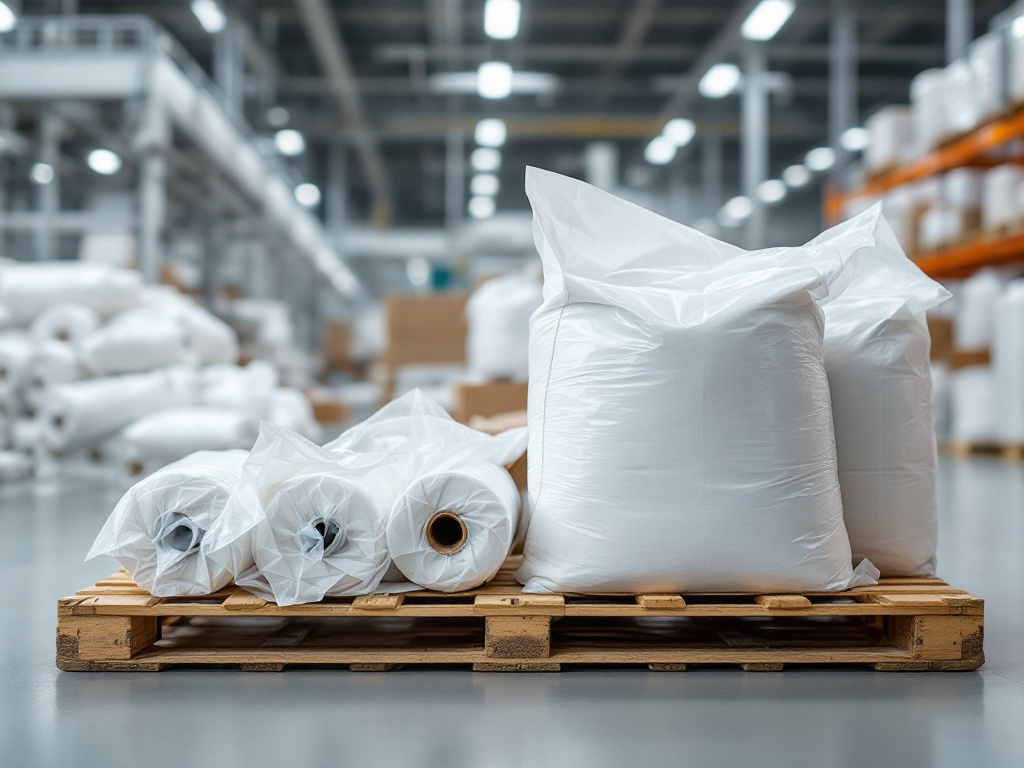
When selecting pallet liners for contact with food, the most common mistake appears very early: the material is treated as an ordinary auxiliary transport element. In practice it is part of the environment in which food is stored, moved and sometimes temporarily set aside between operations. If the liner has direct or indirect contact with the unit packaging, collective packaging or the product itself, it ceases to be "just a sheet on the pallet". It becomes an element that must be assessed for health safety, cleanliness, substance migration and compliance with company procedures.
During inspections Sanepid does not only check whether the company has some paper in a binder. It verifies whether the applied solution makes technological sense and whether it is consistent with the hazard analysis. This is precisely where the topic of pallet liners connects with HACCP. The system does not require excessive formalities for the sake of formality. It requires control over risk. If cartons with raw materials, unit packages with finished products or sacks with semi-finished products stand on a pallet, the liner should limit contamination from wood, dust, moisture and mechanical damage. If it does not, or if it introduces a new hazard itself, a problem arises.
In food plants the most misunderstandings concern the difference between direct and indirect contact. Theoretically it sounds simple. In practice many companies assume too broadly that since the product is still in packaging, any auxiliary material "will do". Not always. If the unit package is thin, prone to abrasion, leaks or condensation, the quality of the pallet liner has a real impact on the safety of the batch. Especially for dairy, meat, packaged baked goods, freezers, fresh vegetables and bulk products.
What Sanepid and HACCP actually check for materials used with food
Material compliance for contact with food
The basic question is not: "does this liner look clean?". The question is: "can the material from which it was made be used in a food-contact environment according to its declaration and intended use?". For films and plastic liners the key is compliance with EU regulations concerning materials intended for contact with food. A general commercial statement from the supplier is not enough if the composition, intended use and conditions of use cannot be determined.
In warehouse and production practice three things must be distinguished: the base material, additives used in production and the method of use. The same polyethylene may be suitable in one application and inappropriate in another. Temperature, contact time, type of food, presence of fat, moisture and pressure matter. That is why companies that base selection solely on thickness or unit price often do not control the most important parameter: the conformity of the use with the manufacturer's declaration.
A good reference point is to organize documentation and understand how formal compliance with EU standards differs from other documents circulating in the trade. This topic is explored more broadly in the text PZH certificate and EU standards do not mean the same — and this is where most misunderstandings begin. In practice this is precisely where most purchasing mistakes start.
Traceability and batch repeatability
From the HACCP perspective the material itself is not enough. The ability to demonstrate where it came from and whether subsequent deliveries are repeatable also matters. Pallet liners used with food should come from a controlled source, with a defined specification, preferably consistent from batch to batch. If the plant sometimes buys liners from primary raw material and other times a mixture with an unclear composition, it loses control over the risk. In a quality audit or official inspection such inconsistency is revealed quickly.
This is particularly important in organizations where emergency purchases are made by several people and each follows different criteria. The warehouse needs a liner "right now", purchasing looks for a substitute, production assumes that if the format fits the issue is closed. It is not. For HACCP an auxiliary material without a stable specification is a variable that cannot be properly described in a procedure.
Hygiene of use, not just hygiene on delivery
Even a correct material can be used incorrectly. This is a common problem, especially in areas receiving raw materials, buffers between production and finished goods storage and in cold stores. A pallet liner intended for contact with food must be clean, undamaged and stored so that it does not become a source of contamination itself. If rolls or packs of liners lie open by the gate, collect dust, moisture or contact the floor, their formal compliance matters little.
In well-operated plants the standard is simple: hygienic material must remain hygienic from delivery to use. This includes the method of storage, batch rotation, protection against soiling and control of damage to collective packaging. Without this even a good liner will not fulfill its role.
Most common hazards that a pallet liner should limit
Separating food from pallet wood
Wood in food logistics is necessary but problematic. It has an uneven surface, sheds dust, absorbs moisture and can be a source of splinters, contaminants and environmental microflora. If cartons are thin, welded plastic sacks are soft, and unit packages are placed without much distance from the base, the lack of a separation layer quickly becomes apparent in practice. One damp pallet, slight abrasion of packaging or longer transport is enough to trigger complaints or the need to block a batch.
The liner acts here as a technical barrier. It does not replace proper packaging but limits contact with the pallet surface and improves the hygienic conditions of the whole load unit. This is especially important where the product is cooled, frozen or goes through multiple handling stages.
Moisture, condensation and local packaging damage
In cold zones the problem is not only temperature. Much more often condensation causes trouble. Packages placed directly on wood or on a soiled, moisture-absorbing surface are more prone to deformation, seepage and bottom weakening. For transport cartons this ends in delamination and instability of the entire pallet. For plastic sacks there are abrasions and localized stress points.
In such conditions the choice of material has practical, not theoretical significance. The liner must maintain surface continuity, not crack at low temperatures and not wrinkle in a way that creates pressure points. Therefore choosing between different types of film should not be random. A material that is too thin may perform well on paper but fail under real load.
Secondary contamination during picking and transport
A large part of the risk does not appear in production but later: during picking, cross-docking, pallet stacking and mixed transport. In these stages the pallet liner serves another function — it stabilizes the lower layer and reduces friction between the packaging and the supporting surface. This limits shifting, corner damage and tearing of delicate collective packaging.
If the goods are going to a retail chain, distribution center or an export customer, the hygiene problem combines with aesthetics and packaging integrity. A soiled, abraded or damp package does not always mean a health hazard, but very often triggers complaint procedures. In food logistics a suspicion of irregularity is enough for a batch to be held for clarification.
How to select pallet liners for contact with food in real processes
Start with the type of contact and working environment
Selection must begin with a simple division: will the liner have direct contact with food, or only with the packaging? Then consider the environment: dry warehouse, cold store, freezer, wash area, domestic transport, export, long storage. These conditions change film requirements more than the product name itself.
In a dry warehouse with a multiwall carton you can work with different parameters than in a cold store where the package gives off moisture and stands on the ramp for several hours. For fresh food packed in thin sacks or trays with top film greater caution is needed than for tight hard packaging. It's not about exaggeration. It's about the material's conformity with the real usage scenario.
The importance of raw material: LDPE and HDPE in warehouse practice
Many plants reduce the choice to the question: LDPE or HDPE. It's a sensible start but an overly simplified conclusion. Both materials are widely used but behave differently under load, during welding, friction and contact with moisture. HDPE usually provides greater stiffness and good resistance at small thickness, LDPE more often works better where flexibility and conformity to the surface matter. The decision is not determined by the abbreviation but by the material's function on a specific pallet.
If the liner only has to separate a carton from wood, one type may be sufficient. If it also has to improve slip during stacking, reduce abrasion and retain properties in a cold store, the decision requires a broader assessment. That is why in practice one does not choose the "strongest" or the "cheapest" film, but a material appropriate to the load, environment and type of packaging. This mechanism is described in more detail in the material Why the choice between LDPE and HDPE has a real impact on cargo safety.
Thickness, format and operational stability
Technical parameters must match the pallet geometry and load mass. A format that is too small will not secure edge zones. One that is too large will roll up, create folds or protrude beyond the outline, increasing the risk of soiling and damage. A liner that is too thin may tear when stacking the first layer. One that is too thick increases cost and does not always provide additional user benefit.
Here you can clearly see the difference between buying "for the warehouse" and process-based selection. In a food plant the liner should be compatible with the most commonly used pallet format, type of packaging and picking method. If operators have to adjust it manually for every pallet, the material was chosen poorly. Such an operation lengthens time, increases the risk of contamination and ruins process repeatability.
In practice ready-made formats intended to protect the lower layer of the load are often used, such as a pallet pad 900x1300, but the dimension alone does not determine suitability. It must be related to the actual outline of the load unit and the nature of the goods.
Documentation expected by a food plant and usually sought by inspectors
Declaration of conformity and usage specification
For liners intended for contact with food the most important thing is a clear declaration of material conformity and the technical product specification. The document should indicate what polymer the product is made from, what type of contact it is intended for and under what conditions it can be used. If the documents are general, outdated or do not refer to the specific product, the plant is left with the risk on its side.
This is also important from the perspective of customer audits. Large retail chains, exporters and plants operating under BRCGS or IFS standards very often expect not only confirmation of compliance, but also consistency of naming, item codes and batches. The more organised the documentation, the fewer problems during inspections and quality system reviews.
Consistency with the HACCP hazard analysis
The set of documents from the supplier alone does not close the matter. The plant must also demonstrate that it understands why it uses the pallet liner and what risk this reduces. In a well-prepared hazard analysis, a pallet liner does not appear as a random consumable but as a means of preventing specific physical contaminants and indirectly microbiological ones. If a company declares the use of a protective barrier, but some pallets on the floor lack it or a random substitute is used, the procedure stops working.
From the practitioner's perspective, most problems do not come from a lack of documents but from a divergence between the procedure and everyday use. On paper everything is fine. In the warehouse the stock of the correct material runs out and someone reaches for whatever "looks similar." These are exactly the gaps that inspections are most interested in.
Where food companies most often lose control of the issue
Purchasing a "similar" material that is not intended for food
The market is full of plastic products that visually resemble pallet liners used with food. The problem arises when technical, waste or ambiguously sourced material ends up in the food area simply because it fits the dimensions and is available immediately. For the warehouse it's a substitute. For the HACCP system it's a new material previously not evaluated.
In practice the riskiest situations are emergencies: supply interruptions, a sudden increase in production, purchases made outside the standard channel. That's when it's easiest to overlook the difference between protective film for technical use and film intended for food contact.
Mismatching the material to refrigerated conditions or load
The second group of problems is not about formal compliance, but usability. The material is approved, but in the actual process it does not perform correctly. It tears at low temperature, slips too much or too little, rolls under the weight of cartons, or does not hold its dimensions during rapid stacking. The effect is simple: operators stop using it as intended because it impedes work.
This scenario is especially visible where picking speed is high and pallets are stacked in series. If the solution is not practical, the system itself will start to bypass it. Therefore, selecting pallet liners for food must consider not only regulatory compliance but also ergonomics and repeatability of operations.
No distinction between clean and dirty zones
Food plants often describe requirements for primary packaging well, but control auxiliary materials moved between zones less strictly. A liner used during receipt of goods from outside should not always be treated the same as material used with the finished product. If the plant has clearly separated hygienic zones, the liner should also be assigned to a specific use and circulation.
This is not excessive caution. It's simple organisational consistency. The more complex the flow of raw materials and products, the more important a simple, unambiguous material standard becomes.
Brief context of the situation
A few months ago we worked with a client in the food industry who was preparing for an internal audit after a series of quality control remarks and one unpleasant incident during a delivery acceptance by a large contractor. It was not about product contamination or a batch recall. The problem was more mundane but very typical: the lower layers of collective packaging regularly bore signs of dampness, scuffs and dirt from pallets, and the plant did not have a consistent explanation for why pallet liners were used in some areas and not in others.
It was a plant producing food packed in collective cartons and unit bags, with its own finished goods warehouse and a refrigerated buffer zone. Goods were dispatched both to wholesalers and to retail chains. On paper the procedures looked correct. In practice different shifts worked, several types of pallets, two kinds of packaging and three sources of auxiliary material purchases. That's enough for the pallet liner issue to become less obvious than it seems at the desk.
Client's problem
The client came to us with an apparently simple question: which pallet liners to choose so there would be no objections from Sanepid and so that the HACCP entry would have support in practice. After a short conversation it turned out that behind this question were four separate problems:
no single standard for the dry and refrigerated areas,
use of substitutes purchased ad hoc by the warehouse,
insufficient identification of batches of auxiliary materials,
discrepancy between what was written in procedures and how operators stacked pallets under time pressure.
The most troublesome thing was that no one in the company questioned the need for using liners itself. The dispute was about when they are mandatory, which material is appropriate and how to justify it in the documentation so as not to create a dead procedure.
Situation analysis
We did not start with a product catalogue, but by going through the actual pallet flow. That usually yields more than checking specifications alone. In this case we inspected three places: the picking area, the refrigerated buffer and the loading area. After the first hour it was already clear that the source of the problem did not lie solely in the material.
In the dry area some pallets were built correctly, with the liner placed evenly and without overhangs. In the cold store the situation was different. Operators used a different format that formally fit the pallet, but when stacking cartons quickly it creased at the corners. With heavier layers the carton settled on the fold of the film, and after a few hours of idling at a lower temperature the lower packages lost rigidity. This was not a material failure in the laboratory sense. It was a simple mismatch to the process.
The second problem emerged when checking deliveries. The company had two material codes in use, but in practice during stock shortages emergency purchases of "anything similar" occurred. From the floor's perspective this looked reasonable. Dimension close, colour similar, a roll arrived quickly. From a quality system perspective chaos began: there was no certainty whether each batch had the same performance specification, and the entry in the workstation instruction referred to a single specific product.
The third issue concerned the hazard analysis itself. The client had recorded the use of a liner or interlayer as an action limiting the risk of contamination from the pallet side. The problem was that the description was too general. It did not distinguish where a bottom liner was required, where an interlayer between layers was needed, and where the standard resulting from the construction of the collective packaging was sufficient. This created room for arbitrary interpretation during shift changes.
Step-by-step actions
1. Listing applications by process, not by product name
We did not create one general table "liner for food". Instead we divided applications into four working scenarios:
pallets with collective cartons in a dry warehouse,
pallets passing through a refrigerated buffer,
mixed loads with more transshipments,
goods prepared for recipients requiring full documentary compliance of auxiliary material batches.
This was an important moment, because only then did the client see that a single material standard for the entire plant does not have to be the best solution. Sometimes it is convenient for purchasing, but operationally it leads to workarounds and exceptions.
2. Verifying parameters on the floor, not just in the specification
We prepared short usability tests on actual pallets. Not laboratory ones, but those that show material behaviour where a person works and a pallet truck runs. We checked:
whether the liner holds its position during rapid stacking of the first layer,
whether it does not roll under the corners of cartons,
whether after a few hours in a colder zone deformations appear that worsen base stability,
whether the format does not protrude beyond the outline in a way that increases the risk of soiling during transport.
In practice a simple comparative test worked very well: the same cartons, the same pallet, the same shift and two different material solutions. Such a comparison quickly ends theoretical disputes. If an operator adjusts the liner three times before placing the first layer, it's clear something is wrong, even if the "on paper" parameters look correct.
3. Matching the format to the actual load outline
For the client some problems stemmed from the habit of using one format everywhere. On standard pallets with cartons this still worked acceptably, but with loads that had a slight excess of outline and with a softer bottom of the packaging folds appeared. In such applications a format matched to the bottom layer and the method of stacking works well, not just the pallet dimension. In similar implementations we often use ready solutions such as a pallet liner 900x1300, but we always relate it to the real arrangement of packages, not just the carrier number.
4. Organising documentation for audit and daily work
The most time-consuming task was not changing the material but organising the way it is approved. Together with the client we prepared a simple acceptance scheme for auxiliary material:
one approved code for a given application,
linking the code to a compliance document and technical data sheet,
clear record of where a given product may be used,
blocking emergency purchases without quality approval,
batch marking upon receipt of auxiliary materials into the warehouse.
We did not overcomplicate this. From experience we know that an overly elaborate document flow is often omitted precisely when it should work most. The idea was for the warehouseman, shift leader and quality department to use the same simple standard.
5. Separating applications: bottom liner and interlayer are not always the same
In this company these concepts were used interchangeably, which led to errors. For some products a distinct separation layer from the pallet side was needed. In others a thin interlayer between packaging layers, which limited sliding and abrasion of printing, was more important. Where the client needed a lighter interlayer, we considered solutions like an interlayer 600x645, but not as a substitute for a bottom liner. This distinction organised the workstation instructions and eliminated some misunderstandings on the floor.
Difficulties that arose along the way
The biggest obstacle was not the material but operational habits. One shift claimed that the new standard slowed down picking. After observation it turned out the problem was not the liner itself but its storage location. Packages were placed too far from the workstation and operators took several pieces at once, which increased the risk of soiling and bending. After moving the drop-off point closer to the workstation the issue practically disappeared.
There was also resistance from the purchasing department. From their perspective, limiting the number of approved substitutes meant less flexibility during stock shortages. That's understandable. Therefore, instead of closing the topic with a single product, we established a list of two approved solutions for different working conditions, but with a clear assignment to applications. This allowed the company to maintain continuity of supply while at the same time not reverting to uncontrolled emergency purchases.
The third problem emerged during training. Some employees were convinced that since the food is already in unit packaging, the bottom liner matters mainly for aesthetics. This couldn't be resolved with a slide. We showed several real photos from our own observations: scuffs from a pallet board, softened carton bottoms after standing in a cooler zone, edge soiling from contact with wrapped film. Such material works better than general instructions.
Implemented solutions
Ultimately the client implemented three practical changes.
First: they introduced a separation of standards for the dry warehouse and the cold zone, instead of using one material for everything.
Second: they assigned specific item codes to specific processes and ended the practice of freely selecting “similar” substitutes.
Third: they added to the HACCP procedure not just the obligation to use a liner, but also the conditions of use, an operational control point and the way to respond in case of material shortage.
The latter was particularly important. In many plants the procedure says that a liner is to be used, but does not say what to do when it runs out during a shift. And that's precisely when improvised decisions begin. Here a simple rule was established: lack of an approved material means suspending the building of a specific type of pallet until the correct product is delivered or an approved alternative is used.
Results
There was no spectacular revolution, just a few concrete improvements that could be noticed after a few weeks:
the number of remarks regarding damage to lower packaging after storage and transport decreased,
the number of situations in which pallets had to be corrected before shipment decreased,
the quality department gained a simple and consistent set of documents to present during an audit,
operators stopped using random substitutes because they had a clearly defined standard and the material at hand,
it became easier to explain to recipients which auxiliary material was used and from which batch it came.
The client highlighted two things above all. First, they reduced losses resulting from packaging complaints, which had previously been treated as a “natural cost of logistics.” Second, they organized the compliance issue in a way that did not unduly burden the warehouse's workload. This is important, because a solution that only works in the binder will not last long on the shop floor.
Practical conclusions from this implementation
This implementation clearly shows that the selection of pallet liners for contact with food rarely comes down to a single document or a single declaration. Much more often the problem is the lack of translation of quality requirements into the daily organization of work. If the material is correct but poorly matched to the process, employees will start to bypass it. If the procedure is correct but allows too broad an interpretation, each shift will do things its own way.
The second conclusion is more technical: it is not worth evaluating a liner solely by thickness or unit price. In practice, what matters more is how it behaves with a specific type of packaging, pressure from the lower layer, performance in a cooler environment and the speed of stacking at the workstation. The same material can work well in one process and poorly in another.
The third observation concerns documentation. Food plants often have a complete set of formal papers, but they lack a simple link between the material, the place of use and the responsibility for its approval. When this is organized at the purchasing and material receiving stage, audits run more smoothly and the quality department does not have to later reconstruct the history of use from employees' memory.
If the topic also concerns distinguishing documents that confirm the suitability of materials for food applications, in practice we often return to the issue discussed in more detail in the article Certificate PZH and EU standards do not mean the same — and this is where most misunderstandings begin. Meanwhile, when comparing the behavior of different types of film in transport and storage, the material Why the choice between LDPE and HDPE has a real impact on cargo safety is helpful. In practice these decisions are rarely separated from each other.
Summary
In this case the client did not need a “more formal” solution, but a more practical one. Only the combination of on-floor observations, order in material indices and clarification of HACCP entries produced an effect. The choice of liner itself was only part of the work.
From our experience, with materials used in food environments a process approach works best: first see how a pallet is actually built and moved, then select the material, and finally tie it together in documentation. The reverse order very often ends with the plant having correct paperwork and recurring operational problems.
FAQ: Sanepid and HACCP requirements when choosing pallet liners for contact with food
Can Sanepid question a pallet liner even if the food product does not touch it directly?
Yes, and in practice this happens more often than many plants assume. An inspection does not look only at the exact moment of physical contact between the material and the food. It assesses the whole risk picture: storage method, type of packaging, transport conditions, possibility of moisture ingress, damage and secondary contamination.
If the food is packed in unit packaging but that packaging is thin, prone to abrasion or sits in a carton that easily absorbs moisture from below, the liner still matters. In such a setup it is not "far from the product". It is an element that affects the condition of the protective packaging. And if the protective packaging loses its integrity, a quality and hygiene risk appears.
Inspectors usually pay attention to three situations. First: soft sacks or plastic packages placed on an uneven, dusty surface. Second: bulk cartons standing on a wet or soiled pallet. Third: pallets prepared for shipment that go through several transloads and return with visible damage to the lower layers. In each of these situations the question is not only about the liner itself, but about how the facility limits the risk of contamination from the support.
From a HACCP perspective the safest approach is to assess not only "whether there is direct contact" but also "whether the lack of an appropriate separating layer could worsen the condition of the packaging or increase the risk of claims". That distinction often helps structure the discussion between quality, warehouse and purchasing better than general declarations alone.
How to prepare an argument for an audit if the recipient or inspector asks: "why do you use this liner?"
The worst answer is: "because we've always bought that". The second bad answer: "because the supplier said it's suitable". A good argument should show a logical chain of decisions, not just point to a producer's document.
In practice it's worth basing the justification on four points. First: indicate the process application. Not "liner for food", but for example "a separating layer under bulk cartons in the finished goods warehouse and in transport to customers". Second: demonstrate which risk is being mitigated. This could be protection against contamination from the pallet, reduction of moisture at the bottom of the carton, decreased risk of packaging abrasion or maintaining cleanliness of the bottom layer. Third: refer to the material documentation and the conditions of its use. Fourth: show that the product works in operational practice, not only in theory.
Short records from practical validation are very helpful. You don't need to build an elaborate report. Sometimes an internal form with the test date, description of application, a photo of the pallet and the evaluation result after a defined storage time or after a trial transport is enough. Such material is very valuable during an audit because it shows the decision was not random.
If a facility works with demanding retail chains or export customers, it's also good to keep consistency between the commercial name of the material, its ERP index and the declaration of conformity. It is precisely on such details that companies often fail: formally they have good products, but cannot clearly defend them in documentation.
Does the color of the pallet liner matter in a food facility, or is it just an organizational issue?
Color by itself does not determine compliance of the material for food applications, but it can have significant operational importance. In a well-organized plant it helps differentiate applications, zones or material status. It's a seemingly small detail that greatly improves discipline on the shop floor.
Practical example: one color for liners used under finished goods, another for materials intended only for technical or warehouse uses outside high-hygiene zones. Thanks to this the shift supervisor, warehouse operator and quality department immediately see whether the material ended up where it should. There's no need to unroll the roll every time and check the index on the bulk label.
Color can also support training systems. A new employee will remember a simple rule "green only for this operation" faster than a multi-point instruction with an index table. This does not replace documentation. It reinforces it at the level of daily work.
However, be careful about one mistake: color cannot be the only acceptance criterion. It happens that plants get used to a visual mark and stop checking the specification when the supplier changes. That's risky. Two materials of similar color do not have to have the same intended use or the same parameters. If a company wants to base organization on color coding, it should combine it with a clear material index and batch control.
How to approach pallet liners for exported food when the recipient's requirements are stricter than national practice?
For export the problem rarely concerns only Sanepid. Customer requirements, corporate standards, retail chain specifications and very concrete documentary expectations are added. As a result, a material acceptable locally may prove insufficient at foreign acceptance.
First you need to separate two levels of requirements. The first is legal compliance and safe use. The second is the contractual requirements of the recipient. Exporters often focus on the first level, assuming that if the material is permitted, the matter is closed. Meanwhile the recipient may additionally expect full batch traceability, consistent supply from a single manufacturer, a specific type of polymer or a ban on the use of certain pigments or additives.
In such cases a good solution is to create a separate list of materials approved for selected sales destinations. Not everything for everyone. Only where requirements are more restrictive. This division reduces chaos and lowers the risk that the warehouse will send goods with a material acceptable locally but not acceptable to the final customer.
In export practice the consistency of document descriptions also matters. If the name on the declaration of conformity differs from the name on the order or warehouse label, the recipient may request additional explanations and sometimes withhold acceptance. This is not bureaucratic excess. It's standard in companies that have developed control of incoming packaging and auxiliary materials.
If a facility serves several markets and different customers, a predefined compliance matrix usually works better than checking requirements "just before shipment". That requires order at the start, but later significantly reduces the risk of disputes and claims.
Can the same pallet liner be used for food and for other products if the material is formally compliant?
Technically sometimes yes, operationally often it's not worth it. The mere fact that the material meets requirements for food applications does not mean it should circulate between different areas of the plant without separation. The problem concerns less the composition of the product and more the risk of secondary contamination and loss of control over circulation.
If the same liner type is used once in the finished goods zone and another time in the technical warehouse, at larger scale operations it quickly becomes unclear which batches are kept under the correct conditions and which are not. Simple mistakes occur: leaving opened packs in the wrong place, joint transport of material from dirtier areas, uncertainty whether a batch had contact with dust or returnable packaging.
From a quality system perspective it's better to separate not only documentation but also the physical flow of the material. Sometimes a separate SKU/index, a separate storage location and a clear issuing rule are enough. That's far simpler than later explaining during a nonconformity why a material that was "supposedly the same" was used in several different environments.
Plants that pass audits well usually do not rely on the argument "it's allowed because the document permits it". They follow the principle "we use it in a way that does not create room for mistakes". In food logistics this approach works better than excessive flexibility.
How long can pallet liners for food contact be stored and how to tell when the material is no longer suitable for use?
This question comes up often with larger warehouse stocks, but the answer is not a single number of months. Not only time matters, but also the storage method. The same material can retain properties for a long time in a clean, dry warehouse and lose suitability much faster if stored near a sunlit gate, a heat source or in an area exposed to soiling.
When assessing suitability you need to look for several signs. First is a change in mechanical behavior: the liner becomes excessively stiff, brittle or, conversely, too soft and unstable. Second is a change in surface appearance, for example matting, discoloration, signs of aging or localized sticking of sheets. Third are usability problems at the workstation: poorer stacking, cracking when unfolding, difficulty in maintaining a flat surface under the bottom layer of packages.
Also pay attention to the bulk packaging of the material itself. If the pack was torn, stored without protection or had contact with the floor, the formal suitability of the raw material ceases to be the only criterion. For the food area the hygienic condition of the batch before use also matters.
When managing stock a simple rule works well: batch rotation, control of storage conditions and a short visual-functional check before issuing to the floor. If the material has been stored for a long time, it is also worth considering the effects of temperature and light. The broader context of polymer durability is well described in the material Factors affecting the durability of polyethylene film: exposure to UV radiation, temperature and microbiological degradation.
What to include in the procedure for dealing with non-conforming pallet liners so the entry is useful on the shop floor?
The procedure must work under time pressure, not only in quality documentation. Therefore the entry should be short, unambiguous and based on decisions the worker can actually take without interpreting half a page of instructions.
First clearly define what you consider a nonconformity. Not only the lack of a declaration of conformity. Also damaged bulk packaging of the material, visible contamination, lack of batch identification, mistaken index, use of a product outside the approved list or deterioration of performance noticeable during work.
Next the procedure should resolve three issues. First: who has the authority to stop use of the material. Second: where to place the suspected batch and how to mark it so it does not accidentally return to circulation. Third: what is the substitute decision path. Is it allowed to use an approved alternative, or must pallet building for the given assortment be stopped.
Good procedures do not end with the sentence "report to the quality department". That's not enough. The operator needs to know what to do now, at this minute, with the started pallet and the next orders. If that is missing, they start improvising. And improvisation with materials used in contact with food usually leads to inconsistent standards.
In practice procedures with simple decision logic work best: use / separate / block / replace with an approved equivalent. Without unnecessary descriptions. But with specific assignment of responsibility. Companies with operational experience in food logistics usually simplify this element because they know that an overly elaborate instruction on the shop floor will not work.
Do pallet liners for food need to consider allergens and the risk of cross-contamination?
Yes, especially if the plant runs multiple lines, handles different product groups or has complex flows of packaging and auxiliary materials. The film liner itself is not a source of an allergen in the classical formulation sense, but it can become a carrier of secondary contamination if the material flow is not well separated from environments with elevated risk.
The biggest problem appears where auxiliary materials are stored or unpacked near operations that generate dust, crumbs, spills of bulk products or residues from allergenic raw materials. A carelessly organized workstation, open packs and lack of zone separation are enough for a theoretically clean material to end up under the finished product after secondary contamination.
In plants with elevated allergen control an approach similar to other materials that have indirect contact with packaging works well: separate storage area, sealed packs until use, limiting repackaging and clear rules for issuing material only to specified zones. If the company maintains an allergen hazard map, the pallet liner does not have to be a central point in it, but it should not be completely omitted.
This topic is particularly important in bakery, confectionery, powdered mixes, spices and protein product production. There small environmental contaminations matter more than in plants working with sealed, rigid packs. The risk assessment should therefore result not from the liner type itself, but from the whole process environment.
How to check whether the liner doesn't worsen the operation of automatic palletizing and depalletizing lines?
This is a very practical topic and often overlooked at purchase. The material can be compliant and hygienic while still causing problems on the machine: shifting of the first layer, grip errors, unstable placing or disturbances in depalletizing at the recipient.
The assessment should cover not only strength but also tribological behavior, i.e. friction and slip in the real pallet–liner–package system. Too slippery a material can be troublesome with fast movements of the layer placer. Too "dull" can cause jerking during layer positioning or difficulties when picking up and unfolding a sheet. Equally important is dimensional stability. If a sheet curls after removal from the pack, becomes electrostatically charged or does not lay flat, the machine may run fine on one shift and problematically on another.
It makes most sense to run a test in the normal production rhythm, not during a demonstration run of a few pallets. You need to check how the material behaves after dozens or hundreds of cycles, with different operators, different package formats and with changes in ambient temperature. It's good to measure concrete indicators: number of line stops, number of manual corrections, downtime, percentage of pallets requiring rework and the condition of the bottom layer after internal transport.
Only such a trial shows whether the liner supports the process or merely meets minimal requirements on paper. In highly automated plants this stage can be more important than the unit price of the material, because even small disturbances generate real efficiency losses.
Is it more cost-effective to standardize one liner for the whole company or allow several variants?
There is no one good answer for all plants, but from the perspective of quality and logistics extremes usually don't work. One universal liner for everything gives simplicity in purchasing and warehousing, but often loses out in operational practice. Conversely, too many variants mean chaos, higher risk of mistakes and harder documentation control.
The most functional model is often intermediate: a limited number of clearly assigned standards. For example, a separate variant for finished goods in dry conditions, another for cold rooms or for more demanding soft packaging. The aim is not to multiply indexes. The aim is that each approved variant has a clear process justification.
When assessing such a division consider not only purchasing convenience but also hidden costs. If one "universal" material causes more pallet rework, damage to bottom cartons, palletizing downtime or complaints from customers, the apparent simplicity quickly stops being beneficial. On the other hand, if a plant allows five similar products without clear usage boundaries, people on shift start using them interchangeably and the quality system loses control.
Standards that can be defended with a single operational sentence work well. If you have to spend five minutes explaining when to choose variant A and when B, the procedure is most likely too complicated. Where the topic is well organized, warehouse and production understand it intuitively because the division corresponds to real differences in the process.
## Most common mistakes when selecting pallet liners for food: what in practice spoils compliance, audits and logistics### 1. Reducing the topic to a single question: „is there a paper?” This is one of the most costly shortcuts in thinking. The company has a declaration of conformity, so it considers the matter closed. The problem is that during an inspection or audit it quickly becomes apparent whether the document actually corresponds to the specific use or is just “in the folder”.This is common because purchasing, quality and warehouse view the material from different angles. Purchasing sees the product and the document. Quality wants confirmation of compliance. The warehouse wants the liner to simply work on the shift. If no one ties this into one process decision, apparent compliance begins.Consequences are fairly typical: - the material is formally approved but used outside the scope of the declared application, - difficulty defending the decision before an auditor, - mismatch between HACCP documentation and actual practice on the shop floor, - risk of questioning the entire procedure, not just the product itself.How to avoid this? Don’t evaluate the liner solely through the supplier’s document. You need to link three elements: the specific product, the specific place of use and the specific risk it is meant to mitigate. If that connection is missing, the paper won’t help much.From experience: the most problems are not with companies lacking documents, but with those that have documents that are “too broad” or not matched to the real process. Auditors usually don’t ask whether you have something. They ask why you use that here.---### 2. Assuming that if the product does not touch the liner directly, requirements are less important This is a very common mistake in plants that work with outer cartons, unit sacks or plastic packaging. The argument appears: “but the food is already packaged.” Formally that sounds reasonable. Operationally it often leads to bad decisions.Why does this mistake repeat? Because many people equate risk solely with direct contact between the material and the product. Meanwhile, in practice problems start earlier: moisture from below, abrasion of the carton bottom, contamination from the pallet, deformation of the bottom layer or damage to the protective packaging.The effects are usually not spectacular immediately. It’s rather a series of minor events: - cartons soften from the bottom after standing in a colder area, - sacks get scuffed on an uneven base, - the bottom layer looks worse upon receipt, - the number of packaging complaints and quality holds increases.How to avoid this mistake? Assess not only the direct contact but the entire system: pallet, liner, packaging, storage and transport conditions. If the absence of a separation layer can worsen the packaging condition, the issue stops being secondary.Practical observation from implementations: it is precisely with “indirect contact” that companies most often oversimplify the risk assessment. And then they defend not the material’s compliance, but why they allowed deterioration of the packaging condition.---### 3. Buying “something similar” when the correct material runs out This is logistics classic. The stock is gone, production can’t wait, so the warehouse or purchasing orders a quick substitute. The size fits, the color is similar, the film looks “more or less the same.” The problem starts when visual similarity replaces verification.This is common because operational pressure is real. No one wants to stop order picking because of an auxiliary material. But it is precisely at such moments that companies lose control over compliance and consistency.Consequences: - lack of certainty about the origin and composition of the material, - inconsistency with the index approved in the quality system, - difficulty tracing the lot used for a specific shipment, - chaos during a complaint or client audit.How to prevent this? Have a pre-approved list of alternatives, not improvise under stock pressure. If the plant wants stable operation, the substitute must be evaluated beforehand, assigned to the process and clearly described in documentation.In practice two solutions work best: one standard baseline and one approved alternative for a specific application. Not five “similar” options. The greater the freedom, the quicker the topic gets out of control.---### 4. Mixing applications: using the same liner for finished products, technical areas and different flows On paper this looks economical and simple. One material for the whole company, fewer indices, fewer stock items. The problem arises when the same product starts circulating between areas with completely different hygiene levels and operational risks.This is common because standardization is often interpreted too literally. Instead of limiting the number of sensible variants, the company tries to impose one universal material for everything.The consequences are predictable: - loss of control over material circulation, - higher risk of secondary contamination, - ambiguity for operators about when a given variant is allowed, - difficulty proving that the material was maintained under appropriate conditions.How to avoid this mistake? Not by endlessly multiplying indices, but by logical division. A separate standard for truly different processes. In many plants two or three variants are enough if they have clear assignments.From a practical perspective: companies pass audits best when their material system is simple but not naive. “One liner for everything” very often ends with more exceptions than a well-planned two standards.---### 5. Choosing the format according to the pallet size, not the real load outline This is a purely operational mistake, but its effects return later as a quality issue. Many companies choose the liner solely by the carrier. Meanwhile how the material behaves under the first layer of packaging depends on the whole load configuration, not the pallet itself.Why is this mistake common? Because the pallet dimension is easy to put into the order. It is much harder to analyze how different cartons, sacks or bundles behave when stacked quickly and under load.Practical effects: - corner curl, - folds under the bottom layer, - protrusion beyond the outline and picking up contamination, - point pressures damaging the carton or soft packaging, - poorer stability of the entire pallet base.How to prevent this? Test the material on the actual packaging arrangement. Not on an empty pallet and not on a single demo piece. If the liner is to work under a specific load type, it should be tested in that arrangement.From experience: many problems blamed on “poor quality film” are actually due to the wrong format or mismatch with the bottom layer outline. The material itself can be fine. Its application is wrong.---### 6. Ignoring material behavior in cold storage, freezers or high humidity Some plants approve the liner in neutral conditions, then use it where the working environment looks completely different. This is one reason why a material that is fine in a dry warehouse starts causing problems in a cold room.This error is common because tests are often done “quickly” and in convenient conditions. Without a full pass through the cold buffer, without dwell time, without checking after several hours.Consequences are concrete: - deterioration of material flatness, - slipping or excessive friction, - loss of stability of the bottom layer, - weakening of cartons by moisture from below, - increased number of corrections before shipment.How to avoid? Validate the liner where it will actually work. If the pallet goes to a cold room, the test must include the cold room. If the goods stand on a dock and go through a temperature change during a shift, that scenario must be checked.Practical note: rarely does the whole pallet topple. First small symptoms appear: wrinkling of the material, worse arrangement of the first layer, damp carton bottoms. These are warning signals that many companies ignore until a complaint arises.---### 7. Lack of linkage between the material index, lot and conformity document This is an error that usually surfaces only when something needs to be clarified quickly. For example after a client remark, during an audit or an internal nonconformity. The company has documents, deliveries and used material — but cannot unambiguously connect them.Why does this happen? Because traceability for auxiliary materials is often treated less strictly than for raw materials or unit packaging. Until someone asks about the specific lot used for a specific shipment.Consequences: - prolonged explanations during a complaint, - problems reproducing the usage history, - risk of questioning control over the auxiliary material, - weaker company position in discussions with a customer demanding a full identification path.How to prevent this? The trade name, ERP index, warehouse label and conformity document must refer to the same product in a clear way. If the system uses abbreviations, local names and “working” descriptions, chaos will appear sooner or later.In practice these are not administrative details. It’s one of the more frequent reasons why a good material “fails” an audit. Not because it was bad, but because the company couldn’t defend it unequivocally.---### 8. Treating the liner as a material that does not need monitoring after implementation Many companies do a one-time evaluation, approve the product and return to the topic only when a problem occurs. That’s a mistake because real working conditions change more often than documentation assumes: a new customer, different carton, different pallet, faster line, new cold room, increased number of transshipments.This is common because the auxiliary material seems like a stable process element. In reality it depends on many variables.Consequences: - gradual build-up of problems that no one links to the liner, - loss of fit with the current process, - increase in small damages and corrections on the shop floor, - false belief that “it worked before, so it still works”.How to avoid? Introduce a simple usage review after process changes. You don’t need to do a full requalification every time. A short check after a change in packaging, carrier, storage conditions or work rhythm is enough.From experience: most losses come not from one big mistake but from failing to react to small signals. If operators start adjusting the liner more often than before, that’s not a “normal deviation.” It’s information that something in the process has stopped fitting.---### 9. Too general an entry in HACCP: “use a pallet liner” Such an entry looks correct but solves little on the floor. It doesn’t say when the liner is mandatory, which exact material may be used, what to do when an approved lot is missing and who makes the decision in case of deviation.Why do companies write procedures this way? Because they want to keep flexibility or avoid too many details. The effect can be the opposite: every change interprets the rule differently.Consequences: - different standards across shifts, - use of material “at discretion”, - lack of clear reaction in case of nonconformity, - difficulty demonstrating that HACCP works operationally, not just formally.How to avoid? The procedure should resolve at least four things: - where the liner is required, - which variant is permitted, - how to proceed when material is lacking, - who has the authority to stop use of a nonconforming lot.Practically short entries with decision logic work best, not descriptive instructions. If an operator has to interpret half a page of text, under time pressure they will still make their own decision.---### 10. Omitting the liner’s impact on automatic palletizing and depalletizing This is an error especially common where quality or purchasing primarily choose the material and less attention is paid to automation and process maintenance. The material can be compliant and clean, yet work very poorly with the line.Why is this topic often overlooked? Because approval often checks only basic parameters, not behavior in longer production runs.Operational consequences can be costly: - more machine stops, - manual corrections of layer positioning, - instability of the first layer, - problems picking up and placing the sheet, - drop in efficiency despite formal material compliance.How to prevent? Test the liner in normal working rhythm, at real line speed and with different operators. It’s worth measuring not opinion but data: number of stops, manual interventions, downtime, percentage of pallets requiring rework.In practice automated plants lose more from downtime caused by poorly chosen material than from the material’s purchase cost. If the topic of comparing functions of different films keeps returning when evaluating line behavior, it is well organized by material stating that food packaging films are not interchangeable### 11. Succumbing to pressure for a "more environmentally friendly" solution without checking whether it fits the process This mistake is happening more and more often. A company wants to simplify environmental communication or meet a customer's expectations and reaches for a solution perceived as more environmentally friendly. The direction itself can make sense. The problem begins when the change is implemented without a full usability and quality assessment.This is common because the pressure to change can be faster than the technical procedure. And a material that looks good in an environmental declaration may not perform equally well under the weight of cartons, in a cold store, or during rapid palletizing.Skutki: - an increased number of package damages from the bottom, - reduced process repeatability, - operators' reluctance toward the new solution, - a return to old habits and circumventing the standard.How to prevent this? Treat a material change as a process change, not as an image change. First a usability test, then documentation validation, and only then implementation. If a material is meant to limit risk, it cannot increase it just because it meets other organizational goals.From experience: the most problematic rollouts are those carried out "as shortcuts", without tests on actual goods. Then the quality department approves the idea, and the production floor rejects the execution. In such decisions it's wise to stay cool-headed, similar to the broader discussion that environmentally friendly food films do not solve the problem by themselves### 12. Lack of simple criteria for rejecting a batch of material on the shop floor The last mistake is less spectacular but very practical. In many plants workers do not know when a liner should be considered nonconforming. Is a torn outer packaging enough? Does contamination disqualify the batch? Is it allowed to use material without clear identification?This is common because procedures are created from a quality perspective, not from the real decision made by the operator. On shift no one has time for interpretation.The consequences are simple: - some reject material too late, - others too early, - the standard becomes inconsistent, - a nonconforming batch may return to circulation.How to prevent this? Establish a short, visible list of rejection criteria. For example: lack of batch identification, contamination, damaged outer packaging, incorrect item code, degraded performance behavior. Add a clear decision for each case: use, segregate, quarantine, replace with an approved alternative.From practice: if the plant does not give people simple rules, informal rules will arise anyway. The difference is that then every shift has its own.## What links most of these errors? It's not a lack of knowledge about regulations. Most often the problem is the failure to translate requirements into everyday logistics. Companies rarely fail on the idea of using liners. They fail on details: substitutes, traceability, incompatibility with cold storage, overly general procedures, and the assumption that an auxiliary material will “somehow manage”.If the topic is to work in practice, a liner must be at the same time: - compliant, - unambiguously assigned to an application, - convenient to use, - defensible with documentation, - resistant to everyday operational pressure.Only then does it reduce losses instead of creating another point of contention between quality, warehouse, and purchasing.Comparison of solutions: which pallet liners work with food and where the real differences come from
With Sanepid and HACCP requirements the worst decision is choosing a “sufficiently similar” solution. In practice the differences between variants are not cosmetic. They affect whether the material can be defended in documentation, whether operators will use it without bypassing procedure, and whether the bottom layer of cartons will withstand storage and transport without quality remarks.
Below are the most important comparisons that actually help select a liner for the process, not just for the purchasing item code.
Plastic film liner versus cardboard interlayer
Both solutions are used in food logistics, but they perform their function differently. A plastic film liner provides a continuous barrier from the pallet side and copes better where moisture, wood dust, or contamination from pallet circulation need to be limited. A cardboard interlayer stiffens the layer better, but it absorbs moisture and loses its properties faster in cold storage, with condensation, or during longer stops at the loading dock.
In a dry warehouse, with stable outer cartons and short storage time, cardboard can be a sufficient solution. In cold zones, with frozen goods, dairy, fresh products and anywhere the packaging from below works under moisture influence, a plastic film liner usually gives a more predictable effect.
Who is cardboard for? For plants that need more of a pressure-distributing element than a sealed separating layer and operate in a dry environment. Who is film for? For companies that want to reduce the risk of bottom carton wetting, contamination from the pallet and quality drift between shifts.
The limitation of cardboard is simple: if storage conditions are variable, it quickly ceases to be a neutral material. The limitation of film is different — it does not stiffen the base like a stiffer interlayer and must be well matched to the load outline, otherwise it will start to roll up or wrinkle.
From observations in food plants: cardboard more often fails not at the start but after several hours of working in a cooler zone. At the beginning it looks fine, and the problem only appears at pallet receipt or after transport. This topic is well complemented by the comparison cardboard and plastic slip sheets, because in practice it is the working environment that decides which solution makes sense.
HDPE vs LDPE as material for pallet liners
On paper both plastics may look similar, but in use the differences are clear. HDPE is generally stiffer, more dimensionally stable and works well where a flat surface and lower tendency to “drag” the material during fast laying of the first layer matter. LDPE is more flexible and adapts better to the surface, which helps in some interlayer applications or where a softer contact with the packaging is needed.
In practice a bottom liner for a pallet with outer cartons more often favors HDPE, especially when flatness, repeatability and less tendency to form creases at the corners matter. A good example of a ready solution is a 900x1300 pallet pad used where a bottom separating layer is needed under a larger load footprint. LDPE more often works well as a lighter interlayer or where the material must “work” with the packaging rather than create a rigid base.
The best use of HDPE is serial palletizing, higher speed of placing the first layer, warehouses with repetitive carton layouts and processes where reducing reworks at the station matters. LDPE can be a better choice for more delicate packages, for interlayer uses as well as bottom, and where too stiff a material worsens stacking.
The limitation of HDPE is that with some soft packages it can be less forgiving than LDPE. The limitation of LDPE is the opposite: in some pallet applications it's easier to get curling, shifts or worse geometric stability.
In plants that have one answer to everything like “we always take PE”, the same problem usually returns: the material is formally correct, but sometimes it works well and sometimes it interferes with the shift. That is why simply specifying the plastic type is not enough. The material that shows differences between LDPE and HDPE illustrates this well.
Ready-made liner format versus format chosen for the real cargo footprint
Many companies face the choice: use one standard format for all pallets or choose the format for the specific way of stacking goods. From a purchasing perspective one dimension is convenient. From quality and operations that convenience can be illusory.
A ready standard works where the plant has few packaging variants, a stable pallet outline and low process variability. It simplifies inventory, staff training and documentation control. The problem arises when the bottom layer of the load extends beyond the typical layout, cartons have soft bottoms or some pallets go to cold storage and some to a dry warehouse. Then one format becomes a compromise that only partially suits each area.
A format tailored to the real outline better reduces wrinkles, overhang and point pressures under the bottom cartons. It is better for plants with a larger number of SKUs, mixed palletizing or a clear division into different storage zones.
The downside of the “process-based” approach is greater organizational discipline. You must enforce assignment of item codes, places of use and availability of the correct variant. If the company can't maintain warehouse order, a larger number of formats may increase mistakes.
In practice what works best is not extremes but a sensible narrowing: two or three formats assigned to real scenarios. One universal sheet for the entire plant often fails not because it is bad but because it forces too many exceptions.
Bottom liner versus interlayer
These solutions are often thrown into one category, which leads to incorrect substitutions. A bottom liner's primary role is to separate the load from the pallet and limit the influence of the substrate. An interlayer works differently: it stabilizes the layer layout, reduces shifting or protects printing and package surfaces.
If the problem is contact of the bottom packages with the pallet board, replacing the bottom liner with a light interlayer does not solve the cause. Conversely, if goods abrade between layers or “float” during mixed transport, a liner from below alone will not fix the issue.
In practice light solutions such as a 600x645 interlayer make sense as an interlayer or auxiliary element, but should not be automatically treated as a replacement for a pallet bottom liner on the load-bearing side. It is a different function and a different risk point.
For plants with simple palletizing often a bottom liner alone is enough. For companies handling delicate cartons, higher pallet heights or more transshipments, separating these functions usually improves the outcome. The limitation is of course a larger number of materials in circulation, but operationally this is often a smaller problem than claims from damage that one element could not prevent.
From experience: when a company says “we use liners but still have scuffs”, very often it turns out that the wrong type of material was used in the wrong place in the pallet layout, not that the product quality was poor.
Uniform solution for the whole plant versus separating standards by zones
This is one of the most important comparisons from the HACCP perspective. A uniform standard has the advantage of being easy to manage. One item code, one training, fewer ordering mistakes. For small plants with a homogeneous process this can be a reasonable approach.
The problem starts where the plant has different working environments: a dry warehouse, cold storage, finished goods area, shipping buffer, sometimes a separate export flow. Then one material rarely gives equally good results everywhere. What behaves well in a dry picking area may not perform equally under a wet carton at low temperature.
Separating standards by zones is better for medium and large companies with greater process variability and higher audit pressure from customers. It allows adding specific logic to each use: where the material should be only a barrier, and where it must also maintain the stability of the bottom layer despite tougher conditions.
The limitation of such an approach is organizational. You must clearly label the material, storage location and application. Without this people will start treating variants interchangeably. But if the plant has a mature quality system and a warehouse working to standards, zoning usually organizes the subject rather than complicating it.
In the food market the most problems are had by companies in the middle: too large for one simple standard, but not yet having full material discipline. This is exactly where it usually makes sense to move away from the “one liner for everything” model.
A constant, approved product versus a wide list of substitutes
From the perspective of production continuity the temptation is understandable: the more approved substitutes, the lower the risk of downtime. However, for materials used around food a wide list of similar products usually weakens process control.
A constant, approved product works best where the company has demanding customer requirements, frequent audits and needs full repeatability in use. It is then easier to train staff, easier to defend the decision in documentation and quicker to detect a quality deviation.
A list of substitutes makes sense only when alternatives are pre-evaluated, assigned to specific uses and truly behave comparably in the process. Without that you get “flexibility” that on the shop floor ends in arbitrariness.
The best solution in practice is usually one basic standard and one approved alternative for a specific zone or scenario. Not five similar items. The more variants are allowed without strict distinction, the harder it is later to prove what was actually used and why.
This is also important from a documentation standpoint. If a company wants to clearly understand the difference between colloquial “certification” and actual compliance of the material with food contact requirements, note that the PZH certificate and EU standards do not mean the same thing. In practice it is with substitutes that it most often becomes apparent that documents do not mean what the plant assumed.
Liner as a standalone barrier versus liner as part of the whole stabilization system
Some companies expect that a well-chosen liner will at the same time solve hygiene, moisture, shifting and transport damage problems. That happens, but not always. There are processes where the liner plays only one role: it cuts the packaging off from the pallet. The stability of the entire load unit then depends mainly on layer layout, carton type and wrapping method.
If the load moves in a simple chain, has few transshipments and is well stabilized, the liner alone can be a sufficient bottom protection. But if the goods pass through cross-dock, mixed transport, long storage or frequent rehandling, the liner must be evaluated together with the rest of the system. Otherwise the company tries to treat consequences with one element, while the source lies elsewhere.
For more demanding operations the comparison should not be “which liner to buy?”, but “how the liner works with the outer packaging, interlayer and wrapping”. Then it is easier to avoid two extremes: oversizing the material or assigning it tasks it cannot handle alone.
From warehouse practice: if the bottom layer stands correctly but the whole pallet “acts” in transport, the problem rarely stems solely from the liner. More often it is from an incomplete view of the load unit.
When which approach makes the most sense
If the plant mainly operates in a dry environment, has repeatable cartons and a simple warehouse flow, one approved standard bottom liner with a stable format and clear assignment to the process usually works well.
If the company has cold storage, greater packaging variability, higher customer requirements or more frequent complaints about bottom layers of packages, better results come from separating standards: a dedicated bottom liner for specific conditions and a separate interlayer where it truly reduces shifting or abrasion between layers.
If the problem is not so much compliance as matching the material to the task, it also helps to look more broadly at the fact that food packing films are not substitutes for each other. The same rule applies to pallet liners: similar appearance does not mean the same function or the same level of operational safety.
The most practical conclusion is simple. From the Sanepid and HACCP perspective the winner is not the “strongest” or the “most universal” solution. The winner is the one that can be unambiguously justified, applied consistently and maintained in daily work without improvised measures on shift.
Practical checklist for selecting pallet liners for food under Sanepid and HACCP
This checklist helps to check not only whether a pallet liner “has documents”, but whether it actually fits the process, can be defended during an inspection and does not create problems in the warehouse. It’s best to go through it together: quality, warehouse, production and purchasing. Each of these departments sees different risks.
Describe one specific use instead of approving the liner “generally for food”
Check exactly where the liner will be used: under raw material, under finished product, with secondary packaging, in a cold room, in a freezer, for export or only in a dry warehouse. Add the type of packaging, storage time, temperature, pallet weight and number of transfers.
Why does it matter? The same product can work well under cartons in a dry warehouse, but worse under sacks or damp packages after a few hours in a cold room. If the approval is too broad, employees start using the material where no one actually assessed it.
Skipping this step usually ends in a dispute between quality and warehouse: documentation says one thing, practice another. From experience, a short usage card works best: “this index — this zone — this type of load — these limitations”. One page is enough if it’s specific.
Compare the product name in the documents with the name in the system and on the label
Verify whether the declaration of conformity, technical specification, secondary packaging label, ERP index and the name used by the warehouse refer to the same product. It sounds administrative, but in audits this is one of the most common flashpoints.
If a document describes “PE film” and the warehouse receives “green liner 900x1300”, you need to be sure it’s the same approved product. In case of a complaint no one will analyse local abbreviations used on the shop floor.
Consequence of omission? It’s hard to prove what actually ended up under the pallet. Practical advice: do not allow working names like “food film”, “green liners” or “substitute A” without linking to a formal index. When documenting, sort out the difference between a colloquial certificate and the material’s compliance with EU requirements right away — the text PZH certificate and EU standards do not mean the same.
Check odor neutrality and appearance after real contact time with the packaging
For food, it’s not enough to assess the liner right after opening the package. Do a simple test: place the liner under a typical package, weight it as on a pallet and leave it for a time similar to real storage. Then check the smell, discoloration, marks on the carton, presence of dust or residue.
This is especially important for products with high sensory sensitivity: dairy, bakery, dry products, fatty goods and paper packaging. Even if there is no direct contact with the product, the recipient may question a batch because of a foreign smell from the transport packaging.
If this test is skipped, the problem may only appear at the customer, where it is already difficult to separate blame between the packaging, pallet, transport and liner. From practice: the smell test is best done after opening the secondary packaging and after 24 hours, because some materials “calm down” after airing, while others reveal an odor only under load.
Test the liner on a full pallet cycle, not only when placing the first layer
The trial should cover the entire process: picking the liner, placing it on the pallet, stacking the load, wrapping, driving with a truck, standstill, transshipment and unloading. The moment of palletizing alone only shows part of the material’s behaviour.
Why? Some problems only appear after stretch film tension, when lifted by forks or after the pallet is moved on the ramp. The liner may look fine at the start, then create folds, shift carton corners or collect dirt if it protrudes beyond the outline.
Without such a trial, the company approves the material based on the best moment, while using it in much tougher conditions. Good practice: test at least several pallets with different operators. If the difference between shifts is large, the problem may be not only the material but also the lack of a simple stacking standard. When assessing plastic behaviour, material about why the choice between LDPE and HDPE affects load safety is helpful.
Set a minimum standard for delivery acceptance at the warehouse
For each delivery check not only quantity but also cleanliness of the secondary packaging, completeness of the label, batch number, dimensional conformity, visible damage, dampness and method of securing during transport. Material intended for use with food should not enter circulation if it already raises doubts upon receipt.
This step is often treated too lightly because the liner is not a production raw material. The problem is that a dirty or unidentified package of liners very quickly mixes with correct stock and is later hard to separate.
Skipping the incoming inspection may result in using the wrong batch, incorrect format or material with damaged packaging. From experience: it’s worth having a simple inspection card with three decisions — accept, accept conditionally pending clarification, block. The warehouse employee should not interpret on their own whether “slightly dirty” is still acceptable.
Check that the liner is not meant to repair a faulty pallet
Before implementation, define which pallets may be used for food: dry, without protruding nails, without splinters, without traces of chemicals, mould, heavy soiling and damaged boards. The liner is a separating layer but should not mask a pallet that is unacceptable on its own.
This is important because in some companies the liner becomes an “excuse” for poor sorting of carriers. As a result, the film material works on an uneven, damp or sharp surface, and then abrasions, punctures and complaints about the bottom layer appear.
If you don’t separate this, the liner takes the blame during nonconformity analysis, though the source was the pallet. Practical tip: make a photo standard of approved and rejected pallets. The operator will react faster to a photo of a wet or damaged pallet than to a description in a procedure.
Verify liner behaviour after wrapping with stretch film
During the test check whether the stretch does not pull in the liner edges, whether corners do not roll up, whether the film does not cut protruding parts and whether the bottom layer does not shift after several wraps. This stage is often omitted, yet very important for the unit load stability.
Why? Even a well-chosen liner can start behaving badly if the wrapper program, film tension or height of the first wrap are not adjusted to it. With light packages the bottom layer can shift precisely during wrapping, not in transport.
Without this control, the company looks for the cause in carton quality or driver behaviour, while the problem arises a few minutes after palletizing. From practice: when changing liner format always check the setting of the first turns of the wrapper. A small correction to the start height can be cheaper than changing the material.
Check storage conditions of the liners themselves before use
Liners should be stored in a dry, clean place, protected from UV radiation, heat sources, strong odours and movement of dirty pallets. Open packages must be protected from dust and accidental floor contact.
This has practical significance because plastics can change their properties under the influence of temperature, light and long storage. Material that was fine on delivery may become stiffer, more prone to cracking or electrostatically charged after a few months by the gate or under skylights.
Omitting this point creates a risk of secondary contamination and deterioration of usability, even though formally “the product was compliant”. Good practice: use FIFO and mark the date of opening of the secondary package. For longer storage of PE materials, knowledge from the text about the influence of UV, temperature and storage conditions on the durability of polyethylene film is useful.
Prepare a usage instruction in the form of photos, not just a description
At the workstation show: correct placement of the liner, acceptable margin, unacceptable folds, bad overhang beyond the outline and situations requiring material replacement. A short photo instruction works better than a long procedural text.
Why? Operators make decisions in seconds. If they have to interpret text, each change will develop its own standard. A photo of a properly arranged pallet reduces corrections and limits touching the material with hands.
Without such an instruction, even a well-chosen liner may be used carelessly: placed crookedly, bent, dragged on the floor or adjusted several times. From experience: one A4 sheet at the liner pick-up point with a maximum of five photos works best. Overly extensive instructions stop being read.
Consider customer requirements, not just internal requirements
Check whether specific clients, retail chains, distribution centres or export recipients have their own requirements regarding auxiliary materials, pallets, separating barriers or cleanliness of the unit load. Sometimes the requirement does not stem directly from regulations but from the client’s standard.
This is important because a batch can be safe and internally compliant yet be held up at receipt for failing to meet logistical specifications. In food the difference between “compliant with the law” and “accepted by the recipient” is very practical.
If this point is omitted, the company learns about the problem only at delivery or on the other party’s audit. Practical tip: for demanding recipients create a separate field in the logistic product card. Don’t rely on the planner’s or foreman’s memory.
Introduce change control with the supplier and inside the plant
Agree that a change of raw material, thickness, colour, packaging method, format, technological additives or production location requires re-evaluation. The same applies to changes on the plant side: new carton, different pallet, automatic palletizing, different cold room or longer transport route.
Why is this important? The liner is part of the system. Even a small change in one element can alter friction, flatness, susceptibility to damage or behaviour under load. If the supplier introduces a modification without notice, the plant may use a formally similar but functionally different material.
Failure to control changes leads to a situation where “the same product” suddenly starts causing problems. Practical tip: include in supplier agreements an obligation to inform about changes affecting compliance or use. Inside the company apply a simple rule: a new load or new working conditions mean a short confirming trial.
Build an evidence package in case of complaint or inspection
For each approved batch it’s worth having an easily accessible set: declaration of conformity, specification, batch number, acceptance document, incoming inspection result, photo of the label and information to which process the material is assigned. It’s not about multiplying papers, but about quickly reconstructing facts.
Why? In a complaint time works against the company. The longer it takes to find documents, the weaker the position in discussion with the recipient. A well-prepared package allows you to quickly show that the material was approved, correctly received and used according to purpose.
If this is missing, even a correct process looks uncontrolled. From experience: it’s best to store such data with the material index, not in several separate places. Then quality, warehouse and purchasing use the same version of information.
Match the product to the real scenario, not only to the available dimension
Finally compare the checklist result with the specific product: material, thickness, format, secondary packaging and how the operator picks it. If a lower separating liner is needed for a larger load outline, consider solutions such as a pallet liner 900x1300, but the decision should result from a test on the given pallet, not only from a size chart.
This is important because a catalog-correct product may be poorly matched to a specific unit load. Too small will not protect edge zones, too large will collect dirt or roll up during wrapping.
Skipping the final fit causes the company to buy a “good material” but for the wrong task. Practical advice: before permanent implementation run a short trial series on a normal shift and ask operators to report only facts: how many corrections, where folds, when shift occurred, with which load. Such data are more useful than a general opinion that “the film is good” or “lays badly”.