Table of Contents
- PZH certificate and EU standards do not mean the same thing — and this is where most misunderstandings begin
- What the safety of films for food packaging means in practice
- PZH certificate — what it is and what it is not
- Which EU regulations really matter for food films
- Not every food film operates under the same conditions
- What proper verification of film before implementation into production or catering looks like
- Film safety is also process hygiene, not just material compliance
- Differences between films and real effects for a venue, catering and production
- Brief context of the situation
- The client's problem
- Situation analysis
- Step-by-step actions
- Difficulties that arose along the way
- Applied solutions
- Results
- Practical takeaways from this implementation
- FAQ: PZH certificate, EU standards and the safety of films for food packaging
- Most common mistakes when assessing the PZH certificate and film compliance with EU standards
- Myths that most often mislead companies when assessing the PZH certificate and the compliance of film with EU standards
- Comparison of approaches to assessing film safety: what really gives an advantage in practice
- What few people talk about regarding PZH Certificates and EU standards for food contact films
- Checklist: how to practically verify the safety of packaging film for food
- Market trends and direction of change: how the approach to safety of food packaging film is changing
A PZH certificate and EU standards do not mean the same thing — and that's where most misunderstandings begin. With films for food packaging, the mistake usually isn't buying the "wrong roll." The problem starts earlier...
PZH certificate and EU standards do not mean the same thing — and this is where most misunderstandings begin
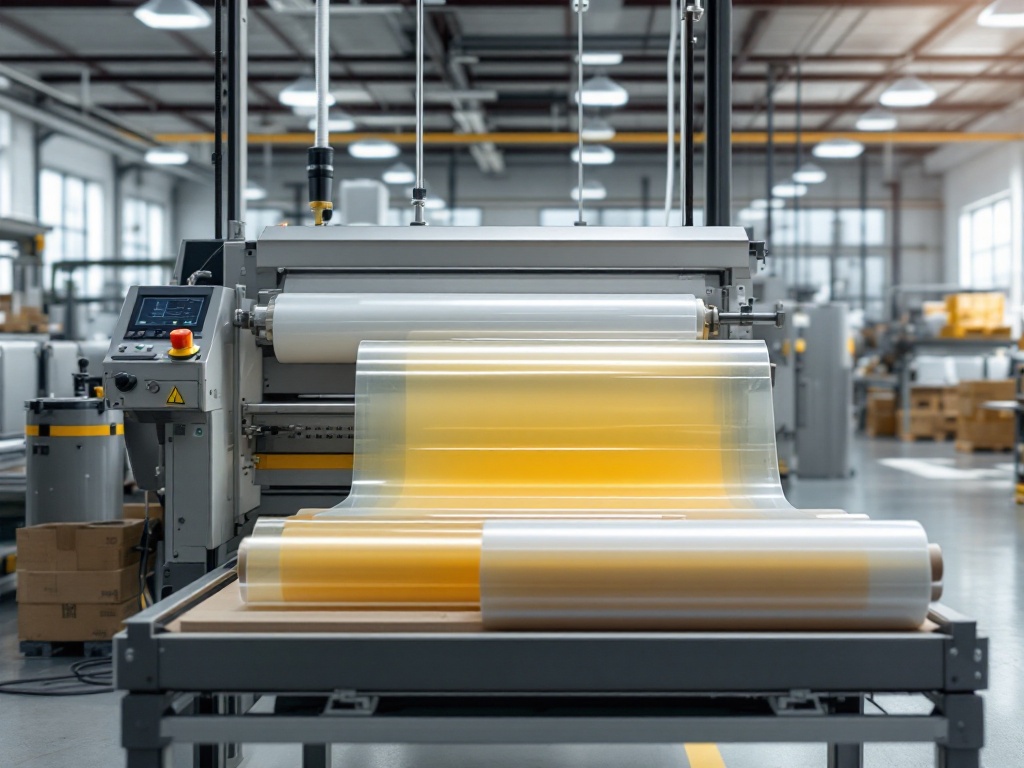
When it comes to films for food packaging the mistake usually isn't buying the “wrong roll”. The problem starts earlier: at the stage of misjudging the documents. In practice many companies ask only for a “certificate for food contact”, as if there were a single universal paper that closes the matter of safety. There isn't. Approval of a material for food contact in EU circulation is based on compliance with EU regulations, a declaration of conformity, migration testing and traceability of the material, not on a commercial slogan or a supplier's general assurance.[4][19]
This distinction has operational significance. Film used for manually wrapping sandwiches in a venue is assessed differently than a bag for packing half-carcasses, different again from sealing film for trays with a ready meal, and yet different from an interleaf or a bulk bag used exclusively in the transport of individual packages. A material can be safe in one application and inappropriate in another if the temperature, contact time, type of food or method of use changes.
Therefore, when assessing film you don't ask only: “does it have a certificate?”. The correct question is: for what type of food contact has the material been intended and what confirmation is there for that. It's a completely different level of verification.
What the safety of films for food packaging means in practice
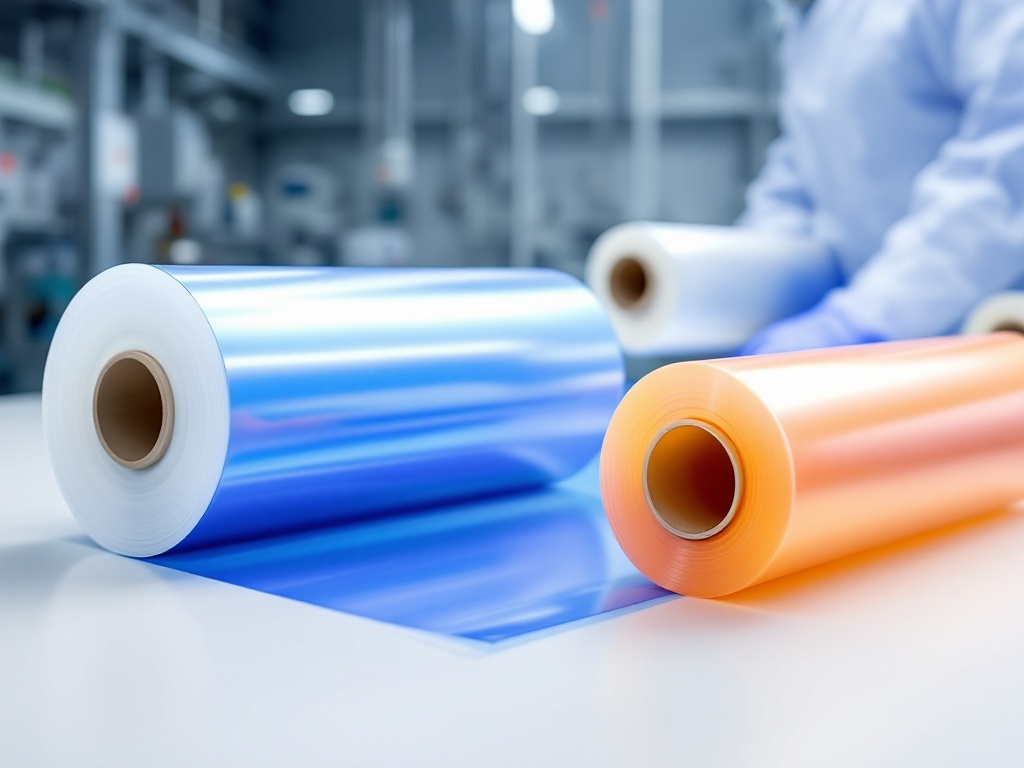
The safety of a packaging material does not end with the film being “new” and “clean”. From the point of view of law and food technology, a material cannot release components into the product in quantities that could endanger human health, cause an unacceptable change in the composition of the food or deteriorate its organoleptic properties.[4][19]
That's the foundation, but in practice several layers are added. The type of polymer, processing additives, colorants, slip agents, processing conditions, and later also storage and usage methods matter. The same film may behave correctly when cool-packaging bread, but not necessarily when in contact with a fatty filling, hot sauce or vacuum packaging carried out at elevated temperature.
In gastronomy one often encounters the simplification: if something is suitable for food, it's suitable for everything. It's not. Dry, watery, acidic, alcoholic and fatty foods affect the material differently. That is precisely why migration tests are performed using so-called model liquids that simulate different types of contact.[19]
Substance migration — the concept that really determines the risk
Documents for materials intended for food contact repeatedly return to the issue of migration. It concerns the transfer of substances from the packaging to the food product. EU law provides for an assessment of overall migration and, in certain cases, specific migration of selected substances.[4][19]
Overall migration answers the question of how many components in total may transfer from the material to the food or model liquid. Specific migration concerns particular compounds for which limits have been established. For the end user one thing is most important: test results must be related to the real application. The mere fact that the material passed a test, without information about the test conditions, says little.
A production example is simple. A film may have acceptable results for short contact with a dry product at room temperature, but the same results do not yet determine safety for prolonged contact with a fatty product or when sealing a hot product. In that case it is necessary to adapt the documentation to the usage scenario, not just to the product name.
PZH certificate — what it is and what it is not
The term “PZH certificate” still exists on the market, although it is used very broadly and often imprecisely. Historically, documents issued by units associated with the National Institute of Public Health concerned confirmation of certain hygienic properties or the suitability of products for the declared use. However, they should not be treated as a substitute for the full conformity assessment required for materials intended for food contact in the EU.[17][19]
In market practice the “PZH certificate” can be a signal for the buyer that the product has undergone some form of verification. That's understandable, but from the perspective of the quality department or the venue owner it's not enough. If a film is to have direct contact with food, the basis should be documents referring to EU regulations, especially the declaration of conformity and data that allow linking the product with specific usage restrictions.[4][19]
The most common practical problem looks like this: the client demands a “PZH certificate”, the supplier sends a general document, and nobody checks whether it concerns exactly that film, that composition, that thickness, that manufacturer and that application. In case of an audit or complaint such shorthand thinking quickly backfires.
When the hygiene document alone does not solve the problem
If a company packs ready-to-eat food, meat, dairy, prepared foods or products that release fat, it needs not a marketing slogan but a coherent package of confirmations. The document should answer whether the material is intended for food contact, under what conditions it can be used, whether temperature restrictions apply and which model liquids were considered in the tests.[4][19]
In plant practice this is where the difference between an “off-the-shelf” material and a well-chosen material emerges. The latter has documentation that can be defended before a technologist, auditor and inspection. It's not a formality. It's an element of the food safety system.
Which EU regulations really matter for food films
The basis for materials and articles intended for food contact is Regulation (EC) No 1935/2004. It sets out the general principle that a material should not transfer constituents to food in quantities that endanger human health, change the composition of the product or deteriorate its characteristics.[19]
The second pillar is Regulation (EC) No 2023/2006 on good manufacturing practice. For the end user this means that the packaging manufacturer should produce the material under controlled conditions, with quality procedures and process supervision.[19]
In the case of plastics, Regulation (EU) No 10/2011 is also of key importance; it regulates plastic materials and articles intended to come into contact with food, including lists of substances authorized for use and rules for documenting compliance.[19]
From the practitioner's perspective these regulations boil down to three questions. First: what is the material made of. Second: has it been tested and described for the appropriate contact conditions. Third: can the supplier document this compliance unambiguously.
The declaration of conformity is the document to start with
The declaration of conformity for plastic materials serves a very specific function in the market. It confirms that the product meets legal requirements and has been assessed in accordance with the relevant regulations. It should contain data identifying the material, the manufacturer or the entity placing it on the market, information on the regulations it concerns, as well as conditions of use and possible restrictions.[4][19]
In practice a well-prepared declaration allows distinguishing film genuinely intended for food contact from a product that merely “is suitable for packaging”. It's not the same. Commercial phrases do not replace formal documentation.
If in a catering establishment or a small plant nobody checks the declaration of conformity, usually one of two scenarios occurs. Either the material is over-documented and used correctly but nobody can demonstrate it. Or conversely — the film looks professional, but in reality it doesn't have a confirmed scope of application for the specific product.
Not every food film operates under the same conditions
From the outside rolls can look similar. Differences begin in use. PVC cling film for wrapping fresh food behaves differently than PE film, and sealing film is governed by yet other requirements. Not only the material itself matters, but also its thickness, stretchability, sealability, puncture resistance and behavior at process temperature.[1][3][8]
In gastronomy and the food industry this choice affects safety, product shelf life and work pace simultaneously. If a material doesn't withstand a given process, problems appear quickly: leaking seals, fogging, leakage, product weight loss, poorer display at the counter, and sometimes complaints resulting from the packaging itself, not the food quality.
For simple applications, such as packing bread, vegetables or dry items, solutions from the PE films group often work, provided that their suitability for food contact is confirmed by appropriate documentation. For more demanding processes selecting the polymer alone is not enough — the whole system must be assessed: the product, temperature, time, machine and distribution method.
Temperature and type of food change the material assessment
What works well in a cold store may not be suitable for hot packing. This applies both to migration safety and to the functional stability of the film. Elevated temperature increases demands on the material and may change permissible contact conditions, as does long storage time.[19]
One more factor is fat. Fatty products or those containing oils are more challenging for many packaging materials than dry food. Therefore documentation must refer to the type of product, not just the general category “food”. In practice this is a common point overlooked by small companies that buy packaging by size instead of by use conditions.
What proper verification of film before implementation into production or catering looks like
The process should start from the application, not from the catalog. First determine whether the food contact will be direct, what type of product it is, what temperature occurs during packing and storage, and whether the material will be exposed to sealing, vacuum, pressure or long transport. Only then are the documents and technical parameters checked.
In plants that do this well, the quality department does not analyze the product name alone. It verifies the product number, material composition, thickness, intended use and conformity of the batch with the documentation. It makes sense, because even within one product group construction differences can be significant.
Auxiliary packaging also requires attention. If, for example, plastic sacks or bags are used for the intermediate protection of semi-finished products, direct contact must be distinguished from secondary contact. Solutions from the category of LDPE film products work well in many warehousing and picking operations, but authorization for food contact must still come from documents for the specific item, not from the material type alone.
What should raise concern when evaluating documentation
Experience shows that problems most often arise with documents that are too general. If a declaration does not clearly specify the product or material group, does not refer to the relevant regulations, does not contain conditions of use, or looks like a universal template for everything, it is worth being cautious. The same applies when the seller uses only the slogan "for food use" without being able to show source documents.
A second warning signal is inconsistency between the documentation and the product. This concerns, for example, differences in film thickness, changes in the raw material, a different color, or a different manufacturing technology than described in the declaration. Such changes may seem minor from the outside. In food-contact documentation they are not.
Film safety is also process hygiene, not just material compliance
Even a correctly tested film will not solve the problem if the usage process fails. In gastronomy and food processing the packaging comes into contact with a countertop, the operator’s hands, a knife, a feeder, the surface of a machine, sometimes with condensation in a cold room. If work organization is poor, a formally compliant material can become secondarily contaminated before it contacts the product.
That is why packaging safety must be understood more broadly. The way rolls are stored, protection against dust and moisture, batch rotation, cleanliness of the packing station, and supervision of what enters the food-contact zone all matter. We expand on this topic in the material Packaging food is an element of safety, not just logistics.
In audit practice the same paradox often appears: the company has a full set of papers, but the film stands unpacked by the gate, next to technical supplies or in a highly dusty area. Formal product compliance does not remove the obligation to maintain proper hygiene in use.
Batch traceability matters more than is usually assumed
EU regulations emphasize the ability to identify materials intended for food contact at subsequent stages of the supply chain.[19] For a small catering operation this sometimes sounds too "plant-level", but the point is very practical. If a complaint arises, there is doubt about the material, or a batch needs to be recalled, you must know which film was used, who supplied it, and where it went.
Without this it is difficult to manage risk. Lack of traceability does not necessarily mean an immediate health hazard, but it quickly complicates explaining the causes of a problem. That translates into work organization, accountability, and the company’s legal safety.
Differences between films and real effects for a venue, catering and production
At the user level differences between materials are not limited to the convenience of unrolling a roll. A more flexible film gives a different tension when wrapping, another better resists puncture by sharp product edges, and another provides better sealing properties. Added to that are transparency, susceptibility to sweating, and resistance to damage during transport.[1][3][8]
For a restaurant this means more or fewer losses when storing semi-finished products. For catering — greater or lesser stability of meals during delivery. For a manufacturer — impact on line tightness, packing speed and batch repeatability. In each of these cases documentary safety and technical functionality must go together. Formal compliance alone is not enough if the packaging does not withstand real working conditions.
This is the moment when the choice of film ceases to be a purchasing decision and becomes part of the technological process. From that perspective both the "PZH certificate" and EU standards should be read not as product labels, but as part of a wider system of food safety, packaging quality, and risk control.
Brief context of the situation
This case concerned a client from the prepared-food sector who supplied ready portions to local shops and food service points. The scale was not large, but the packing process was already intense enough that recipients began asking for documentation for films in direct contact with the product. It was not only about "paperwork for inspection." The problem began to affect daily operations: suspended deliveries, extra calls from quality departments and increasing doubts whether the material used actually met the packaging conditions.
The client came to us after an incident that looked harmless from the outside. One of the recipients challenged a batch of packaged product not because the food was defective, but because the document provided for the film did not match how the film was actually used in practice. That was the moment to sort the issue out operationally, not just formally.
The client's problem
The plant packed two main types of products: salads with dressing and chilled dishes with a fatty component, sealed with film on trays. Additionally, some semi-finished products were temporarily protected with plastic sacks and bags during picking and storage between production stages. The client himself was convinced that he "had a certificate", so the matter was closed.
In practice the problem consisted of several layers:
the document sent by the previous supplier was general and did not clearly indicate the scope of application,
several visually similar materials were used on the shop floor, but not all were described in the same way,
some rolls were repackaged internally, losing batch identification,
employees treated all "food-grade" films as equivalent,
the end recipient began to require more precise documentation than just a general hygiene confirmation.
The biggest trouble was that the material itself did not have to be bad. The problem was the inability to demonstrate that a particular product, from a particular batch, was properly selected for a specific use. That alone is enough to trigger a complaint or a delivery block.
Situation analysis
We did not start with the documents, but by walking the entire packing path. That usually yields more than reviewing emails and attachments. On site it turned out that one film was used to seal trays with chilled products, another for short-term protection of semi-finished products in the cold room, and yet another for transferring portions between stations. For the client’s team all of this belonged to one group: "food film". For safety and compliance assessment these were three different use scenarios.
We also checked how documents circulated. Here the first practical problem appeared: the client had scans sent several months earlier, but without linking them to warehouse indices. As a result no one could immediately say which document related to which roll or which bag. For a production plant this risk is greater than usually assumed, because during an audit not only the possession of a document matters, but the ability to assign it to the product actually used.
The second stage was assessing the contact conditions. Some products contained fatty and acidic ingredients, and packing took place after cooling but still with fairly high surface humidity. This matters because the choice of material and the confirmed scope of use must match the real usage scenario, not the commercial description of the product.[4][19]
Analysis also revealed something that regularly happens in similar plants: procurement ordered material by dimensions and unit price, while production evaluated it by work convenience. No one connected this with the end recipient’s requirements concerning batch tracking, conditions of use and compliance with EU regulations.
Step-by-step actions
1. Separating uses instead of treating all films the same
The first change was organizational. We separated the materials used into three groups:
films for direct contact with the finished product,
auxiliary packaging for semi-finished products and picking,
transport-protective materials that did not have direct contact with food.
This sorting quickly showed where the most restrictive documentation was truly needed and where an assessment focused on protective function and process organization was sufficient. Thanks to this the client stopped mixing bags used as auxiliary items with materials used at the final stage of packing.
2. Verifying documents against the specific product
Next we matched each used material with its identifier, parameters and documents. We were not interested in the mere slogan "for food use", but in consistency between the product and the conformity statement. For plastic materials intended for food contact, compliance with the EU framework requirements is of basic importance, including Regulation (EC) No 1935/2004, the good manufacturing practice rules from Regulation (EC) No 2023/2006 and, for plastics, Regulation (EU) No 10/2011.[19]
In the documents we looked not only for references to regulations, but also for usage limitations, contact conditions and the ability to identify the material. Some of the client’s papers were correct, but they were stored in a way that in practice made quick use during an inspection impossible.
3. Restoring traceability in the warehouse
This was the least "spectacular" but one of the most important stages. In the warehouse we introduced a simple rule: no roll or pack of bags can go to production without batch labelling and attachment to the material card. We did not build a complicated system. Clear labels, a single register and assignment of documents to indices were enough.
Incidentally the client also organized auxiliary materials. For some uses LDPE film products worked better because they provided suitable flexibility for short-term storage and transferring semi-finished products. In other areas, especially for protecting collective elements, we considered solutions from the HDPE film products group, where the main considerations were separation function and logistical order.
4. Reducing the risk of mistakes on the production floor
Next we labeled stations so that the operator did not have to guess which material could be used for which product. It seems trivial, but previously it happened that when one roll was depleted an employee would reach for a "nearly the same" one from another place. On paper everything matched, but substitutions prevailed on the shop floor. No certificate can justify that.
For auxiliary materials used to separate and protect batches we tested, among others, thin plastic interleaves functionally similar to solutions like interleaf 600x645, where cleanliness, dimensional repeatability and quick changeover between batches were important. In the semi-finished products area we also tested formats close to bags 300x400 and bags 470x600, because the client needed simple, repeatable packaging for brief technological contact.
5. Brief training for foremen and the warehouse
We didn't do a long training about regulations. That usually doesn't help much. We focused on four practical questions:
whether this material has direct contact with food,
whether we can identify its batch,
whether we know which product it is assigned to,
whether its bulk packaging has been opened and stored hygienically.
That format worked better than theory. The foremen began to catch situations themselves in which material was put aside without a label or stored too close to the technical area.
Difficulties that arose along the way
It wasn't without problems. The greatest resistance appeared when changing habits. Production claimed that until now "it somehow worked", and the warehouse complained that additional markings slow down the issuing of material. That's typical. As long as there are no complaints, organizing traceability seems like unnecessary work.
The second problem concerned the documentation itself. Some materials previously purchased from intermediaries had documents that were too general or hard to link to a specific product. In practice this meant having to withdraw several item codes from circulation and replace them with materials for which it was possible to build an unambiguous set of confirmations.
A technical difficulty also appeared. One of the films used to seal trays was acceptable from the machine operation standpoint, but after requirements were organized it turned out the client needed a clearer description of the conditions of use for products with a more demanding composition. Changing it "on paper" was not enough. It was necessary to re-check the material's behavior in the actual packaging and storage cycle.
Applied solutions
The most important thing was that we didn't try to solve everything with one document. Instead we built a simple procedure model:
first, a description of the material's intended use,
then the assignment to the correct product,
next, verification of documents,
finally, a check that the same material actually reaches the production floor.
In the warehouse area the client also implemented auxiliary solutions for protecting raw materials and bulk batches. For internal transport and separation of pallet units we considered products from the PE film group, and in the area of protecting logistic layers functionally similar elements to pallet pads. These were not materials for direct contact with the finished meal, but they improved process order and reduced accidental secondary contamination of unit packaging.
At the same time the client organized rules for storing rolls and packages after opening. This element is often overlooked, but it affects usage hygiene. We also discuss a similar problem more broadly in the material Food packaging is an element of safety, not just logistics. For this client changing the storage location and clearly separating the clean materials zone from the technical zone was sufficient.
Results
About two months after implementing the changes the client achieved three tangible results.
First, requests from recipients like "please send some certificate" stopped returning. Instead of nervously searching for files, the plant had a complete set of documents assigned to specific material item codes. This shortened query handling and reduced the risk of supply holds.
Second, the number of mistakes on the production floor decreased. Not to zero, but noticeably. Previously there were unplanned swaps of rolls and auxiliary packaging. After introducing markings and a simple batch register such situations became rarer and easier to detect.
Third, the client saw that material compliance with EU requirements and documentation order affect not only inspections but also daily work organization. Less time was spent explaining what was used for a given batch and where the material came from. In case of complaints it was possible to reconstruct the sequence of events more quickly.
There was no spectacular story of an immediate revolution. Instead there was a rather typical but very valuable effect: a decrease in the number of ambiguities. In the food industry that is often worth more than a one-time saving on buying a roll.
Practical takeaways from this implementation
A few observations resulted from this case that regularly prove true when working with clients in catering and food processing.
First, the problem with film safety very often does not start from a defective material, but from incorrect assignment of the material to its use. A document may exist, but if it cannot be linked to a specific product and conditions of use, its practical value drops sharply.
Second, the "PZH certificate" is often a starting point for the client, but in real work a broader set of confirmations and consistency with EU requirements for food contact materials matters.[17][19] Especially where fatty, acidic products occur or are packaged in more demanding conditions, a general assurance from the supplier alone does not provide sufficient operational safety.
Third, traceability of batches of packaging materials is not exclusively a requirement for large plants. It is a tool that organizes work. EU regulations foresee the need to track materials intended for food contact at subsequent stages of circulation, and in practice this helps mainly with complaints, inspections and nonconformity analysis.[19]
Fourth, it is not worth judging film solely by how easy it is to unroll or by the price per piece. In many plants the differences between LDPE, HDPE, heat-sealable films and auxiliary materials only become apparent when hygienic requirements, storage methods, process flow and customer expectations are combined. Then packaging selection ceases to be a simple purchase and becomes an element of the food safety system.
This case clearly showed one thing: documentation compliance only works when it is combined with order on the production floor. Without that, even a correctly selected film becomes a source of unnecessary risk.
FAQ: PZH certificate, EU standards and the safety of films for food packaging
Does the declaration of conformity need to be updated if the film manufacturer “didn't change” anything?
Yes — and more often than many recipients assume. The problem is that the conformity of a material for contact with food is not a document that is valid “forever”, but the result of a specific raw material, technological and legal state. Even if the film looks identical, the manufacturer may change the supplier of the granulate, auxiliary additives, process parameters or the method of testing the product. From the end user's perspective these are not technical details. They are elements that can affect the permitted scope of use.
The other issue is legislative and interpretative changes. It happens that the product itself has not been reconstructed, but the content of the declaration, the way restrictions are described or references to applicable regulations need to be corrected. A well-managed supplier does not wait for a problem at the customer, but organizes the documentation in advance.
In practice, a simple rule works best in food plants: do not archive documents as dead PDFs, but maintain revision control. If the declaration version number has changed, it is worth checking whether the scope of contact, type of food, temperature, time or process conditions have also changed. This is especially important for sealable films, where not only the contact with the product matters, but also the material's behavior under thermal load. Professional suppliers can usually clearly indicate whether an update was formal or concerned real functional parameters.
How to prepare documents for a sanitary inspection or customer audit so you don't have to look for them in a hurry?
The best system is simpler than many companies think. It's not about elaborate software, but about logically linking four elements: material index, trade name, batch number and the set of documents. If any of these points is missing, problems begin. The inspector does not assess whether a declaration exists “somewhere in an email”. They assess whether it can be assigned to the material used for a specific production batch.
In practice it is worth creating a card for each packaging material that comes into contact with food. Such a card should include the product name, a photo or description distinguishing it from similar rolls, the supplier, place of use, date of the last verification and the set of documents. Add a register of batches issued to production. That is enough for most small and medium-sized companies.
A good solution is also to divide documentation by application zones. Separately films for direct contact, separately auxiliary packaging, separately transport materials. This way no one shows a document for a bulk sack during an audit when the question concerns the film for the finished product. If the company also uses simple auxiliary products, such as 300x400 bags or 470x600 bags, each item should also have its own documentation trail. This is not bureaucracy. It is a way to avoid a delivery blockage at the most inconvenient moment.
Does printed or colored film require more caution than transparent film?
Usually yes, because an additional layer of risk appears related to printing inks, pigments and the construction of the whole laminate or print. Color alone does not automatically mean a problem, but it means you must not assume equivalence with the transparent version. Two films may have similar thickness and mechanical behavior, and at the same time a completely different compliance profile due to the additives used.
Most mistakes occur when a company orders “the same film, just with a logo”. From the purchasing perspective this is a detail. From the material safety perspective it may not be. You need to confirm on which side the print is, whether the printed layer has direct contact with food, and whether the material was assessed as a finished structure, not only as a base without print.
In some applications the risk does not even come from migration into the product, but from friction, moisture condensation and film-to-film contact after rolling. This is often overlooked in small facilities that package by hand. If packaging is personalized, it is sensible to require documentation referring to the final version of the product, not to the “clean” starting film. Here the supplier's experience really matters, because many problems only appear when combining printing, sealing and cold storage.
What to do when the supplier only sends a general assurance that the film is “approved for contact with food”?
I would treat such a document exclusively as a preliminary signal, not as a basis for implementing the material. A general commercial statement does not answer questions that matter during an inspection or complaint: for what type of food the film is intended, under what conditions it can be used, whether there are time or temperature limits, who is responsible for the product and how to unambiguously identify it.
If the supplier does not provide more complete documentation, you need to assess the practical risk. For material used only as auxiliary, outside of direct contact, the margin of tolerance is often greater. For film that comes into contact with the finished product — not. In that case lack of a specific declaration of conformity or absence of identification data should stop implementation, even if the material itself looks correct and “everyone uses it”.
In well-run companies a simple blocking procedure works: without a complete set of documents the material does not go to the food packaging area. This sometimes seems too strict, but it saves a lot of nerves later. Especially in gastronomy and smaller facilities, where one wrong batch of packaging can paralyze several menu items or an entire day's shipment.
Should a small restaurant or catering also maintain traceability of film batches?
Yes, although the scale can be much simpler than in large industry. There is no need to build a complex system if the place uses a few rolls a week. It is enough to keep the bulk label, delivery date, product name and assign the material to the place of use. It's about being able to answer one specific question: which film was used during a given period to package that group of products.
This is especially important in diet catering, prepared meal production and establishments preparing food in advance. There the packaging is not an addition, but an element of the quality maintenance process. When a customer reports a problem, lack of a material trail makes it difficult to assess whether the source was the food, storage method or packaging.
The simplest model? A binder or digital folder with documents, a photo of the label of each new batch and a short issue register. It takes a few minutes and provides real protection. The same goes for auxiliary materials — if separators or protective bags are used at work, it is good to separate functions. For example, 600x645 separators or pallet liners tidy logistics and limit secondary contamination, but should not be mistaken for material for direct contact with a finished dish.
How long can food film be stored before its documentation or performance properties stop being reliable?
It depends on the material itself, storage conditions and the manufacturer's recommendations. In practice companies often look only at the roll's visual condition. That is not enough. A film may look fine and yet have lost some functional parameters: flexibility, sealability, resistance to tearing or dimensional stability. Durability is influenced by light, temperature, humidity fluctuations and storage method. For PE films exposure to UV radiation and material ageing also matter, which in warehouse practice is often underestimated. This is described in more detail in the material about the durability of polyethylene film on the Stoplast blog: factors affecting the durability of polyethylene film.
A separate issue is the validity of documents. A declaration of conformity does not always have an “expiration date” in the classic sense, but that does not mean it can be used indefinitely while ignoring changes in the product or storage conditions. If a roll lies for a long time, has been partially unpacked, moved between zones or no longer has a legible batch label, the problem grows not only technically but also evidentially.
A sensible practice is simple: apply the rotation rule, do not buy excessive stock without a usage plan and regularly assess the material condition before allowing it into production. If the film unwinds poorly, crumbles, loses transparency or changes behavior during sealing, there is no point in defending it “because it has papers”. Safe packaging requires both documentary compliance and functional suitability at the same time.
Can packaging made from recycled material have contact with food?
It can, but this is an area requiring significantly greater caution than standard products from virgin material. The slogan “eco” does not determine anything by itself. For materials containing recycled content you need to know from which stream the raw material comes, whether the recovery process has been assessed for food contact and whether the final product has appropriate confirmation of conformity for the specific application. Otherwise it is easy to confuse an environmentally beneficial solution with one that is permissible for direct contact with the product.
In market practice some recycled packaging works very well for external, transport or storage functions, but not necessarily in the zone of direct contact with finished food. This distinction should be very clear in the documentation and on the shop floor. If a company wants to develop more environmentally responsible packaging, it is safest to start with intermediate elements: logistical protection, separators, bulk bags or pallet covers, where it is easier to reconcile operational goals and material compliance.
This is precisely where the supplier's practical experience is more important than marketing declarations. You need to be able to separate a “more sustainable” packaging from packaging truly permissible for a given type of food.
Why does one film perform well in tests but later cause problems only in distribution?
Because legal compliance and logistical functionality are two different things. A film can be safe from a food contact perspective and at the same time not cope with the real supply chain. A typical example: the material passes packaging on the line, looks fine after sealing, but after several hours of cold transport it begins to behave differently — condensation appears, slack in the packaging, micro-leaks or increased susceptibility to puncture.
In the laboratory certain parameters are tested. In real life there is also vibration, pressure on crates, stacking, sudden temperature changes and contact with moisture. That is why when implementing a film it is worth doing tests not only “on the machine”, but also through the full cycle: packaging, cold storage, trial transport, retail display, opening by the user. Only then can you see whether the material is suited to the process.
This stage is often omitted by companies that buy solely according to catalog parameters. Then the classic dispute occurs: the supplier claims the film is compliant, production that it behaves poorly, and quality ends up in the middle. This can be avoided if, before full implementation, the material is evaluated in conditions as close as possible to real operation. In the field of food packaging practice almost always verifies theory.
Most common mistakes when assessing the PZH certificate and film compliance with EU standards
Most problems do not start with the film quality itself, but with incorrect assumptions on the buyer, production or catering side. In practice clients rarely fail because of a single big mistake. Usually it is several small simplifications that individually seem harmless, but together end in a complaint, a batch hold or a frantic search for documents before an audit.
1. Treating the “PZH certificate” as a document that solves everything
This is one of the most common shortcuts in thinking. The client receives a document with a name associated with hygiene and assumes that the issue of material compliance for food contact is closed. The problem is that for packaging materials circulating in the EU the primary concern is compliance with the relevant EU regulations, including Regulation (EC) No 1935/2004, the GMP rules from Regulation (EC) No 2023/2006 and — for plastics — Regulation (EU) No 10/2011.[19] The hygiene document itself does not replace a full conformity assessment for a specific application.[17][19]
Why does this mistake occur so often? Because from a purchasing perspective it is easier to ask for one “certificate” than to analyze the scope of contact, the conditions of use and the limitations. In smaller companies there is also the habit: “we’ve always bought it this way”.
The consequences usually emerge only when the recipient or an inspection asks a more precise question. Suddenly it turns out that the document is general, it is unclear whether it concerns that particular film, or it does not describe the conditions of contact with food of a specific composition. Then the classic chaos begins: calls to the supplier, suspension of shipments, attempts to salvage the situation with old PDFs.
How to avoid this? Don’t ask solely for a “certificate”. Demand documentation that clearly refers to the specific product and its use. In practice a simple rule works well: if the document does not state exactly what the material is approved for and on what basis, it does not provide real operational security.
From experience: the biggest confusion occurs where the supplier’s sales department speaks in shorthand, and the client does not ask about the scope of use. As long as everything goes well, no one notices. The problem only reveals itself at the first nonconformity.
2. Assuming that a film “for food” is suitable for every product
This is a very typical mistake in gastronomy, catering and smaller plants. If the film is in contact with food, it is considered universal. Meanwhile the type of product and the contact conditions have practical significance. The material behaves differently with dry food, differently with acidic food, and differently again with fatty food. Migration tests are performed with various simulant liquids precisely to reflect specific contact scenarios.[19]
This problem is common because on the production floor or in the kitchen packaging is often assessed through the lens of work convenience. If the roll unwinds well, the seal looks fine, and the product appears protected “to the eye”, the material gets the green light. However, correct mechanical performance does not yet confirm material suitability.
Consequences? Most often they are not immediately visible. It does not have to be a spectacular failure. Sometimes it is the risk of using the material outside the confirmed scope, sometimes a documentation issue during an audit, and sometimes later disputes with a recipient who requires compliance specifically for their product type.
How to avoid this mistake? Each material must be assigned to a specific group of uses. Not “for food”, but for example: for short contact with a dry product, for a chilled fatty product, for packaging after thermal processing, for protecting a semi-finished product between stages. This seems like a minor detail, but it is precisely on this basis that a sensible verification of documents is later built.
In implementation practice it often turns out that one company used a single film for three different tasks and only after mapping the process did it become apparent that only one of them was properly documented.
3. Assessing conformity by trade name rather than by full product identification
This is a common mistake after a change of supplier, batch or product version. The client receives a film with the same trade name or a very similar description and assumes that the documentation remains valid. Meanwhile for food contact materials traceability and the ability to unambiguously link a document to a specific product matter.[19]
Why do companies fall into this trap? Because the trade name seems sufficient for the warehouse and purchasing. The problem begins when different thicknesses, raw material variants or technological variants operate under a similar index. From the outside the difference can be invisible. In the documentation it is not.
The consequences are very practical: inability to prove that a given batch was packaged with exactly the material to which the declaration of conformity applies. That is enough for the recipient to challenge the complete set of documents, even if the film itself was technically correct.
How to avoid this? Documents must be tied to the product number, version, batch and supplier, not just to the colloquial name. If the company repacks rolls internally or divides bulk packs, it must keep an identification trace. Without that, conformity exists on paper but cannot be defended in practice.
From experience: the riskiest situations are those in which the warehouse shortens names “for convenience”, and production operates only with descriptions like “the thinner one” or “the stronger one”. With two similar films this is a simple route to a mistake.
4. Implementing the film without checking how it behaves through the entire logistics cycle
Many companies test the material only at the packaging station. If the film passes through the machine, the seal looks good and the product leaves the line without issue, the implementation is considered successful. That is not enough. In practice only the cold storage, transport, moisture condensation, pressure during stacking and storage time show whether the material is truly suited to the process.
This mistake is common because the “on-line” test is quick and organizationally cheap. A full test requires time, coordination and patience. Many companies are unwilling to allow that until the first complaint appears.
The consequences are well known: micro-leaks, loss of package tension, fogging, poorer product appearance on the shelf, greater susceptibility to puncture or problems when opening. Formally the material may comply with legal requirements, yet fail functionally.
How to prevent this? Test the film over the full cycle: packaging, storage, trial transport and assessment after time. This is especially important for chilled meals, moist products and packages operating under mechanical load. If the company uses simple protective solutions between stages, it is also worth separating the test of the final material from that of auxiliary packaging, such as gusseted bags for protective applications, which serve a different function than the film having direct contact with the finished product.
Practical observation: many problems appear not on the packing day, but the next morning, after a night in the cold room. If the company does not check the material at that moment, it sees only half the picture.
5. Ignoring changes in the material because “the paperwork was there once”
This is a more administrative mistake, but its consequences are very concrete. Companies often archive declarations of conformity and return to them only during an inspection. Meanwhile documentation for a food contact material should not be treated as an attachment with unlimited validity. A change of raw material, additives, process or even the way restrictions are described may require document updates.[19]
Why is this so common? Because to the end user the film usually looks “the same as always”. If there are no problems on production, no one assumes that something significant could have changed.
The consequences are unpleasant especially during customer audits. The company presents a document from two or three years ago and the auditor asks whether it still applies to the material currently supplied. And suddenly it turns out that no one has verified that.
How to avoid such a situation? Maintain revision control of documents and check whether a new delivery arrived with a new version of the declaration, technical data sheet or label. This does not have to be a complex system. In a small company a materials register with the date of last verification is sufficient.
From experience: the most problematic plants are those that have order in binders but no order in information flow. The document sits there, but no one knows if it is still current.
6. Mixing materials for direct contact with auxiliary packaging
This is an organizational mistake that very often only becomes apparent on the shop floor. One group of materials is used for packing the finished product, another for temporary protection of semi-finished products, another for logistical protection. In many companies, however, everything ends up in the common category “food films”.
Why does this happen? Because from the warehouse perspective all these products can be similar: rolls, bags, liners, covers. If no one specifies the function of the material, employees begin to treat them interchangeably.
The result is simple: a material used as auxiliary may be substituted for direct final contact or conversely — a product intended for the clean zone ends up in applications that destroy its traceability and proper usage. This generates not only documentary risk but also hygiene risk.
How to avoid this? Separate materials by function, not just by polymer or size. It works well to have separate labeling for products intended for direct contact, separate for auxiliary and separate for transport. In internal logistics it also makes sense to use solutions assigned exclusively to bulk protection, such as protective sacks for securing batches, instead of “borrowing” material from the finished product packaging area.
In practice one of the more frequent warning signs sounds like this: the operator says they “took a similar bag because those ran out”. That means the material differentiation system is not working.
7. Focusing on the price of a roll or bag, not on the cost of a wrong decision
This is not only a purchasing mistake. It is a decision-making mistake. Companies compare materials by unit price, overlooking the costs of complaints, product losses, additional tests, repackaging and the time people spend putting out fires.
Why is this so common? Because the invoice price is visible immediately, while the cost of nonconformity spreads across the organization. Part of it falls on the warehouse, part on production, part on quality, part on customer relations. Because of that, a wrong saving often looks like a good decision for a long time.
The consequences are usually bigger than assumed. One poorly chosen film can force repackaging a batch, additional cleaning of the station, line downtime or explaining to the customer why the documents do not match the actual use of the material.
How to prevent this? When evaluating packaging consider the full process cost: implementation, documentation, repeatability of work, complaints and ease of defending the material before an auditor. Sometimes a seemingly more expensive solution is simply cheaper to maintain operationally.
From practice: the most unnecessary expenses occur where procurement is disconnected from quality and production. If these three areas don't communicate before implementing a material, the company usually pays later for corrections.
8. No procedure to block material without a complete set of documents
In many companies material goes to production because "it arrived from a regular supplier" or "documents will be sent later". This is a very common habit, especially where deadline pressure is high. The problem is that later can be too late.
This mistake occurs because operationally it's more convenient to accept material immediately and not stop work. For the warehouse it's a time saver. For quality — a potential time bomb with a delayed ignition.
Consequences are serious mainly when it turns out afterwards that the documentation is incomplete, too general, or does not match the specific product. In such a situation the company already has material on the shop floor, and sometimes even a batch of products used, for which it cannot demonstrate the correctness of the packaging selection.
How to avoid this? Introduce a simple block: without a complete set of documents the material does not enter the food packaging area. This can be a marking in the warehouse, a status in the system, or the simplest release card. Form is less important than consistency.
From experience: companies that have such a rule initially hear from production that "it makes life harder." After the first crisis situation, usually no one wants to return to the old model.
9. Ignoring the impact of storage and handling of film after delivery
Some clients assume that if the material was compliant upon receipt, it will remain trouble-free regardless of how it is stored. That's a serious simplification. Even good film loses practical value if it lies unpacked, without identification, in fluctuating temperatures or in a place where contamination or damage is likely.
This error is common because it concerns a stage many people do not consider part of packaging safety. But it should be. Especially in catering and small establishments, storage after opening the bulk packaging determines the later order at the workstation.
The effects are twofold. First, hygienic risk increases. Second, the ability to sensibly assign a batch of material to a specific use disappears. If a roll was put away without a label, it formally ceases to be "readable" for the control system.
How to avoid this error? After opening, retain batch identification, protect the material from contamination, and store it only in a designated zone. In facilities that organize this area, the number of accidental substitutions and disputes about "what exactly was used" quickly decreases. Additionally, separate protective solutions work well in storage and transport areas, and the subject of the impact of packing organization on process safety is discussed more fully in the text that "food packaging is an element of safety, not just logistics."
Practical note: if a roll after a few days on the shop floor is dusty, without a label and moved between workstations, the problem is no longer just the film. The problem is the entire way material is managed.
10. Lack of preparation for questions from the end customer
Many producers and outlets assume that since their own control raises no objections, the matter is closed. Meanwhile, increasingly the requirements are set by the end customer: a retail chain, a wholesaler, a corporate client, or an auditor from a business partner. And these questions are usually more specific than the standard "do you have a certificate?".
Why are companies unprepared for this? Because they focus on their operational minimum. Until a contracting party requests a complete set of documents assigned to the material index and conditions of use, no one builds such order.
Consequences are mainly costly organizationally: delivery delays, additional explanations, loss of credibility, and sometimes the need for an emergency material change. The food product itself may be correct, but the lack of documentary defense ruins the business relationship.
How to protect yourself? Keep a ready set of documents assigned to a specific material, with a simple description of application and batch trace. It's not about elaborate bureaucracy. It's about being able to answer a customer's question in 10 minutes, not after two days of frantic email searches.
From working with clients: companies most often start organizing this area only after the first batch is questioned. It's better to do it earlier, when you can act calmly, not under delivery pressure.
What connects most of these errors
The common denominator is simple: companies try to simplify the issue of film safety to one document, one name, or one habit. And this area works well only when four things agree at the same time: the right material, the right use, the right documentation, and the right order of use.
If even one of these elements fails, problems begin. Sometimes immediately. Sometimes only during a complaint, an audit, or a change of recipient. And that's why the most cost-effective decision is not to look for "any certificate", but to build a process in which food packaging film can be defended not only on paper, but also in real work.
Myths that most often mislead companies when assessing the PZH certificate and the compliance of film with EU standards
There are many half-truths circulating around food packaging film. Some stem from old purchasing habits, some from commercial language, and some from treating documents as a mere formality. The problem is that these simplifications are precisely what most often lead to wrong decisions on the production floor, in catering and in the warehouse. Below we have gathered the myths that regularly come up in conversations with clients and that in practice can cost more than the roll of film itself.
Myth 1: “If the supplier says the film is compliant with the EU, there's nothing left to check”
This belief usually arises from trust in the phrase “compliant with EU standards.” It sounds serious, so many companies assume the matter is closed. The trouble is that such wording is often used very broadly and without clarifying which exact material, variant and use it refers to.
Why is this approach wrong? Because compliance does not work at the level of a slogan. For materials intended to contact food, specific legal acts, a specific declaration of conformity and specific conditions of use matter, not the seller’s promise alone.[19] If the documentation does not allow the confirmation to be assigned to a given product, thickness, batch or contact scenario, then from a quality point of view such “compliance” is too weak.
The market reality is simpler than many assume: good documentation is not meant to reassure, but to be verifiable. In practice experienced recipients no longer ask whether something is “compliant,” they ask for the document, the product number and the scope of application.
From experience: the more general the assurance in an email, the more often it later turns out that the details are unclear. If the supplier uses only broad phrases, that's a signal to move from a commercial conversation to technical documentation.
Myth 2: “The PZH certificate is more important than the declaration of conformity”
The source of this myth is historical. For years the term “PZH certificate” functioned as a synonym for hygienic safety and many people still treat it as the strongest document in the packaging area. That is understandable, but for materials intended to contact food that kind of shortcut thinking is no longer sufficient.
This belief is incomplete, because for plastics intended to contact food in EU trade the key issue is compliance with EU law requirements and the documents foreseen for this group of products, including the declaration of conformity.[17][19] A hygiene certificate may have an auxiliary role, but it does not replace documentation referring to EU regulations and the real conditions of material use.[4][19]
In the industry it looks like this: the more professional the recipient, the less weight they attach to the document’s name and the more to its content. It's not about whether a recognizable abbreviation appears on paper. It's about whether the document answers quality and legal questions.
Practical observation: companies often calm themselves simply by having “some certificate,” and the problem appears only when a client asks about conditions for contact with a fatty, acidic or chilled product. Then it turns out that the most needed document was kept elsewhere or was never obtained at all.
Myth 3: “Since the film passed tests, it can be used without time and temperature limits”
This myth stems from misunderstanding the tests themselves. Many assume that a positive result means full universality of the material. Meanwhile migration tests are not an abstract stamp of safety, but an assessment of a material under defined contact conditions.[19]
Here the mistake appears. A test result only makes sense when we know for what time, temperature and type of food it was obtained. In other words: a material assessed for one scenario does not automatically get a “free pass” for all others.[4][19]
In production realities this is very important. A film may perform acceptably for short packaging of a chilled product, but not necessarily for long storage or for contact with a chemically more demanding product. Limits of use are not a detail. They are part of the safety assessment.
From practice: most misunderstandings occur when the laboratory test is correct but no one compares it with the actual exposure time of the product in the cold room, in transport and on the shelf. The document is then formally correct but used in the wrong context.
Myth 4: “The thicker the film, the safer it is for food”
This very popular simplification is common where safety is confused with mechanical sturdiness. Thicker film can indeed offer greater puncture resistance or a stronger material feel, but that is not yet proof of greater safety in contact with food.
The myth persists because the end user can easily see mechanical traits and finds it much harder to assess migration parameters and material conformity. As a result thickness is often treated as a proxy quality indicator.
This is a wrong approach. Safety is not determined by the amount of material alone, but by its composition, intended use, production conditions and confirmed scope of use. A thinner material can be properly designed for a specific application, while a thicker one may simply be poorly chosen.
In industry practice thickness is considered a functional parameter, not a safety certificate. Sometimes greater thickness helps technically, and sometimes it worsens line performance, sealing or process economics without any additional quality benefit.
It is worth viewing thickness as a tool, not evidence of conformity. Companies that buy only “stronger film” often overpay for a parameter that does not solve the real problem.
Myth 5: “Clear film is inherently safer than colored or printed film”
This belief comes from intuition: transparent looks cleaner, simpler and less “chemical.” Such a reflex is understandable but does not reflect technological reality.
Color or print itself does not decide safety or lack of it. What matters is whether the material was designed and assessed for food contact in accordance with requirements, and whether the ingredients used fall within allowable limits.[19] Assessments are made based on composition and product conformity, not visual impression.
The industry reality is more technical than intuitive. Clear film can be poorly suited to the application, and a material with a properly prepared outer layer or print can be completely acceptable if the construction and documentation confirm it.
Practical conclusion is simple: it is not worthwhile to judge a material by appearance. Choosing film only because it “looks neutral” is making a decision based on appearance, not on data.
Myth 6: “In small gastronomy and small catering, EU standards are applied less strictly”
This myth exists mainly because small companies operate faster, simpler and often without an extensive quality department. Hence the illusion that at a smaller scale one can allow more slack.
That is not true. Requirements for materials intended for food contact do not depend on whether someone packs thousands of trays a day or dozens of catering portions.[19] Smaller scale may change the level of process formalization, but it does not remove the obligation to use appropriate materials.
In practice small companies are even more exposed to the consequences of bad decisions. They usually lack organizational buffer, their own laboratory or a separate team to resolve complaints. One material error can stop production more painfully than in a large plant.
From experience: in small gastronomy problems less often take the form of major formal nonconformity, and more often start with a simple request from a business client: “please send the packaging documents.” If the company is not prepared, it immediately loses credibility.
Myth 7: “If the film has been purchased for years and nothing happened, it must still be suitable”
This is one of the most dangerous myths because it relies on seemingly reasonable experience. If the material has been used for a long time without visible problems, it's easy to consider it proven forever.
Where does the error come from? From assuming that the absence of complaints means full correctness. Meanwhile over the years raw materials, suppliers, product versions, customer expectations and even the way the film is used can change. Documentation and actual use are not fixed once and for all.[19]
The industry reality is that many nonconformities only surface when a client changes, during an audit or when a retail chain raises more detailed requirements. The fact that no one asked before does not mean everything was properly assessed. Sometimes nobody checked thoroughly enough.
Practical tip: packaging materials should be treated as an area requiring review, not as an element “set forever.” This is especially important when there are changes in the menu, recipe, packing temperature and storage time.
Myth 8: “EU standards concern mainly the film manufacturer, and the end user doesn't have to worry about them”
This view comes from the belief that since the packaging was produced by a specialized company, all responsibility ends with the material manufacturer. The user just wants to “take the finished product and pack.”
That is too convenient a simplification. The material manufacturer is responsible for the conformity of the product, but the end user is responsible for its correct application. And that already means the need to check whether the material is actually going into the process for which it was intended.[4][19]
Industry practice is clear: responsibility is shared. One party must deliver a compliant and described product, the other must use it according to its intended purpose. If a site or plant uses a material outside the declared scope, it cannot hide behind “the manufacturer didn't say anything.”
From experience: most disputes arise precisely where both parties assume the responsibility lies with the other. That is why it is so important that purchasing does not end with the order, but also includes a brief verification of documents and conditions of use.
Myth 9: “Every inspection looks at the same things, so one universal set of papers is enough”
This myth results from administrative thinking: if documents are “for inspection,” there should be one package good for every situation. Unfortunately it does not work that way.
In practice different recipients and auditors pay attention to different elements. Some are interested in the legal basis, others in batch traceability, others in usage restrictions or conformity with a specific client's specification. Regulations set the framework, but verification in trade can be more detailed than the user assumes.[19]
That is why the “universal set” often turns out to be too general. The documents exist, but they do not answer the right question. This is a common problem when cooperating with more demanding recipients from retail, HoReCa or contract manufacturing.
Practical observation: companies perform best when they do not keep only PDFs, but build a simple order: material, product number, document, scope of use and batch trace. Such an arrangement is much easier to defend than a binder full of random attachments.
Myth 10: “The greatest risk concerns only the final film, and auxiliary materials are secondary”
This is a common belief where all attention focuses on the last stage of packaging. Everything that happens earlier is treated as less important because “this is not yet the final packaging.”
Meanwhile in practice auxiliary materials can also generate problems: organizational, hygienic and identification-related. It's not that every protective sack has the same rank as the final film, but disorder in auxiliary materials easily transfers to the food contact area.
The market reality is that a well-organized process does not begin at the last seal, but earlier. If a company needs solutions to separate material functions, it makes sense to separate products intended for final contact from protective and logistical ones. In some processes auxiliary operations benefit from larger protective bags used to secure batches or containers, such as a 1020x1100 bag with a gusset, but they should not “replace” material intended for another function.
From practice: if there is no clear division of materials on the shop floor, an employee reaches for whatever is at hand. And that's when mistakes begin that no document will fix afterwards.
Myth 11: “If the film does not have direct contact with the finished dish for a long time, the risk is negligible”
This myth results from downplaying short process stages. Many companies believe that if contact lasts a moment, the topic can be treated more loosely. In practice such thinking can be risky.
It's not that every short contact has the same weight as long storage. It's that the assessment of the material still has to match actual use. Short contact does not automatically mean freedom, especially if moisture, fat, pressure or elevated temperature are present.[19]
In the food industry many problems arise precisely at the junctions of stages: during handling, assembly, short-term storage or securing a batch between operations. These are areas that are rarely spectacular but very often the source of disorder.
A good approach is to describe the function of intermediate materials and maintain order in their use. If a company wants to organize the topic more broadly, it can also be helpful to present that food packaging is an element of safety, not only logistics. In practice this broader view most often tidies up thinking about film.
Myth 12: “Safe film is a matter for quality, not for the site owner or operations manager”
This stereotype stems from role division. Quality handles papers, production handles packing, and the owner or manager looks at sales and timeliness. But with packaging that division often does not work.
Why? Because material decisions affect conformity, work convenience, product durability, warehouse organization and relations with the recipient. This is not a narrow quality department issue. It's an operational element.
In industry practice the most effective companies are those where the film topic is not “pushed” onto one person. Purchasing understands what must not be simplified. Production knows what must not be substituted. The manager can assess organizational risk. The owner sees that one poorly chosen material can spoil more than one delivery.
From experience: where packaging is treated only as an operating cost, problems recur cyclically. Where it is treated as part of the food safety process, decisions are usually calmer and much better justified.
What really separates order from chaos
Most myths have a common source: an attempt to simplify a complex subject into one word, one document or one habit. In practice the safety of food packaging film does not rely on shortcut declarations, but on conformity between the material, application, documentation and daily work organization.
If a company understands this relationship, most common problems disappear: frantic chasing of papers, material substitutions on the shop floor, false sense of security and disputes with recipients. And that is usually much more valuable than a seemingly simple answer to the question: “does this film have a certificate?”.
Comparison of approaches to assessing film safety: what really gives an advantage in practice
Different methods of "confirming" that a film is suitable for contact with food coexist on the market. The problem is that not all of them provide the same practical value. For a restaurant, catering service, ready-meal producer or packing facility the differences are very concrete: some solutions make it easier to defend the material to a recipient and during inspections, others only seemingly calm the issue.
Below it is worth looking not at the names of documents themselves, but at how different approaches work in everyday operations.
General "certificate" or hygiene document vs EU declaration of conformity with description of use
The first approach is based on a general document confirming that the product is intended for contact with food or meets certain hygiene requirements. The second is based on a declaration of conformity referring to EU regulations and indicating the scope of use of the material, limitations and product identification.[17][19]
In practice a general document is sufficient only where the recipient does not conduct in-depth verification and the use of the material is simple and repetitive. This model is still encountered in small outlets that package food for a short time without an elaborate supply chain. The problem arises when the same material is used for fatty, acidic, long-cooled products or for B2B sales. Then a "hygiene paper" alone does not answer whether the film has been assessed specifically for such a scenario.[4][19]
The EU declaration of conformity is a better solution for companies that need to demonstrate the compliance of a specific product, not just refer to a general assurance. It is particularly useful in chain gastronomy, dietary catering, processing and wherever the recipient has a quality department. Its limitation is different: the mere presence of a declaration is not enough if the document is not linked to a specific roll, bag, batch or material variant.
From industry practice: companies most often overestimate the value of a document "with a good name" and undervalue the quality of its content. Meanwhile at the first detailed audit the winner is not the one with the most attachments, but the one who can show consistency between the material, the conditions of use and the documentation.
Purchasing film by trade name vs purchasing by food contact scenario
This is one of the more important comparisons because it concerns the very way decisions are made. In many companies material is bought by name, size, thickness and operator habit. This approach is quick, convenient and at first glance logical. The second model starts with the question: with what food, for how long and at what temperature will the material be used.
The first approach can be sufficient for simple auxiliary operations, for example for briefly protecting dry items or in logistic applications where the material does not contact the finished product. Here solutions from the PE film group or specific products in the HDPE film category are often sufficient if they serve as separators or protective covers.
When in direct contact with food, this buying method becomes risky. Fatty, acidic, moist products and those packed after heat treatment place different demands on the material than bread or dry components. Regulations and migration studies assess suitability precisely with respect to contact conditions, not the trade name of the film.[4][19]
Who benefits from the scenario-based approach? Any company that wants to reduce later corrections. It is not about extensive theory but simple practice: if it is known that the film will seal a tray with a product containing fat and acidic sauce, the decision must be taken differently than when packing dry baked goods. The limitation of this model is that it requires greater discipline at the start. You need to outline applications instead of lumping everything into a common category "food film".
In market observation this moment separates organized companies from those that react only after a problem. Organized ones match the material to the process. Others match the process to the material they happen to have on hand.
One universal film for many tasks vs separating materials into final contact, auxiliary and logistic
In theory one universal film simplifies the warehouse, orders and operators' work. In practice this model works only under very limited conditions. As the facility or outlet grows, several types of applications appear and universality begins to cost more organizationally than it saves.
The "one film for everything" model is most often found in small catering points and small workshops that want to limit the number of stock items. This approach is convenient for simple operations but has two weak points. First, it makes it harder to control whether the material really suits every contact. Second, it encourages employees to interchange products where they should not be interchangeable.
Separating materials by function is more practical where different stages of packaging occur. For example, the material for final contact with the finished product works separately, a bag or pouch for short-term protection of a semi-finished product works separately, and an interlayer or cover used only between layers or containers works separately. In such auxiliary applications solutions from the LDPE film category often work well, while in internal logistics more functional items are e.g. 600x645 interlayers or pallet liners, because they solve a different problem than material for direct food contact.
The companies that benefit most from such a division are those with several work zones: preparation, picking, final packaging and internal transport. The limitation? More SKUs to manage and the need to clearly label stations. But from experience this order pays off faster than later explaining why a protective material ended up in final product packaging.
PVC film for wrapping fresh food vs PE/LDPE film for protective and auxiliary uses
This comparison makes sense mainly at the user level. Individual materials do not directly compete in every application, but are often confused simply because externally they perform a similar "wrap the product" function. However their behavior and scope of use differ.[1][3][8]
Films used for wrapping fresh food, especially where cling to the product and display aesthetics matter, are chosen for flexibility, transparency and ease of manual packing.[1][8] They work well in delicatessens, ready-meal counters and shops where the product quickly enters circulation and the appearance of the packaging has commercial significance. Their limitation is that they should not be treated as a universal material for every technological process.
By contrast, PE and LDPE solutions are more often chosen for bags, pouches, interlayers and auxiliary protections where functional resistance, simplicity of format and protective function matter more than tight cling to the product. For short assembly processes, portioning and storage of semi-finished products ready-made formats such as a 300x400 pouch or a 470x600 pouch can be practical if they are assigned to the correct process function rather than used randomly as a substitute for everything.
Which solution for whom? If priority is display, quick manual packing and retail presentation of the product, films with properties typical for fresh food packing work better. For auxiliary packing, batch protection and organizing work in the backroom, PE/LDPE bags and pouches are more practical. Industry mistakes mostly come from trying to move material from the sales counter to the production backroom or vice versa. This usually ends in a compromise that is not optimal for either area.
Sealing film dedicated to trays vs simple protective packaging
These two approaches answer completely different needs, although they are sometimes compared solely by cost or convenience. Sealing film works as part of a package closure system. It must cooperate with the tray, machine parameters, temperature and expected tightness. Simple protective packaging usually has a shorter horizon and fewer hermeticity requirements.[3][4]
Sealing is a good choice for ready meals, salads, chilled products and items that need to maintain stability in distribution. It is used by manufacturers and gastronomic outlets conducting takeaway sales in a more organized model. The limitations are obvious: the film must be matched not only to the food but also to the tray and line parameters. If any element is poorly chosen, leaks, film pulling or unstable seals occur.
Protective packaging is simpler and more flexible but does not provide the same effects. It works for short storage, protecting semi-finished products, internal transport or where the packaging mainly protects against contamination and drying out. However it will not be a full replacement for tray sealing when the product is sent to the recipient and must remain consistent across the entire cold chain.
In HoReCa practice a common mistake is expecting simple protective packaging to deliver effects that only a well-set tray plus sealing film system provides. If a product is to enter regular sale, especially via intermediaries, saving at this stage usually returns as complaints or greater labor intensity.
Purchasing from the manufacturer or specialized supplier vs purchasing from an intermediary without full documentation support
Both models operate on the market and both make sense, but not in the same conditions. Buying from an intermediary can be sufficient for simple, repetitive auxiliary materials if the supplier keeps batches and documents in order. This is convenient especially for smaller entities that need shorter runs and quick availability.
The problem arises when the intermediary sells a technically correct material but cannot quickly provide unambiguous documentation for a specific product or does not maintain consistency between deliveries. In such a setup the client buys not just the film but also operational risk.
Cooperating with a manufacturer or specialized supplier usually works better for applications requiring parameter stability, greater repeatability and meaningful documentation support. This is important especially for packing lines, sealing, network deliveries and more sensitive products. The limitation is practical, not qualitative: this cooperation model can be less flexible for very small, occasional orders.
From industry experience: when a company grows, sooner or later it begins to assess the supplier not by whether they "delivered the roll" but by whether they can maintain repeatability of material and documents. That's the point at which random purchases stop being enough.
Testing and formal compliance vs formal compliance combined with a user test
This comparison is often overlooked but is important for practitioners. A material can be formally compliant with requirements and still not perform well in the real process. The reason is simple: legal compliance answers whether the material may be used under certain conditions, but it does not yet guarantee ease of use, puncture resistance, seal quality or stability after a night in the cooler.[1][3][19]
The first model, i.e. a decision based solely on documents, can be sufficient for standard auxiliary products and simple processes. The second model — documents plus a user test — is safer when packing ready meals, moist products, fatty items and wherever the packaging goes through a full cycle: packing, cooling, transport, display.
It works best in companies that can separate two questions: "is it permitted to use this material?" and "does this material work well in our process?". These are not the same. The only limitation of this approach is that time must be spent on a trial. But from an industry point of view this is time well spent, because most packaging problems appear not at the first seal but after several hours or the next day.
Materials for direct contact vs strictly logistic and protective solutions
Many misunderstandings arise from comparing products that should not be treated as interchangeable at all. Material for direct contact must ensure the safety of contact with food. Logistic solutions are intended to protect layers, containers, pallets and collective packaging.
In warehouse practice both areas often touch, so it is worth clearly indicating the differences. Products such as a 1020x1100 gusseted bag or the aforementioned pallet liners solve the problem of collective protection, prevention of secondary contamination and maintaining transport order. Their task is different from that of a film that seals food ready for sale.
For whom does this division matter most? For facilities that want to reduce chaos between production and logistics. In small outlets the difference is often ignored because "everything is made of film". At a larger scale lack of such division quickly leads to situations where protective-area material ends up where it should not.
In practice the most operationally mature companies do not try to make one product for all roles. They build a simple system: separate materials for final contact, separate for transitional protection and separate for logistics. It is less flashy than searching for a "universal film" but works much better.
What to choose depending on scale and type of activity
For a small catering outlet a simplified approach makes sense, but not a sloppy one: material for contact with food should have unambiguous documentation, and auxiliary solutions should be clearly separated from final packaging. You do not need an elaborate system, just order.
For catering and semi-professional production the safest model is mixed: separate material for final packaging, separate auxiliary formats for backroom work, a user test through a full cycle and documentation linked to a specific product. Such a setup reduces mistakes and makes it easier to handle questions from recipients.
For processing and deliveries to retail chains the most disciplined approach works best: selection according to the contact scenario, declarations of conformity referring to EU regulations, batch tracking and separation of material functions. This is not "excessive caution" but a standard that saves time with complaints, audits and changes of recipient.
If the goal is not only to meet a formal requirement but also to have calm operational work, the best results come not from one document and one universal roll, but from well-separated material functions and selecting film according to actual use. It is precisely there that differences between solutions become noticeable on a daily basis, not only during inspections.
What few people talk about regarding PZH Certificates and EU standards for food contact films
Most misunderstandings do not appear at the first purchase. They surface later — when the material is already working on the production floor, when the recipient changes, when a complaint is filed, or when someone finally reads the documents more carefully than just the first heading. Then it turns out that the issue of film safety is not about whether there is “paper”, but whether that paper can be defended in a specific process.
1. The document can be correct but operationally useless
This is one of the less obvious problems. Companies often assume that if a declaration of conformity or a hygiene document formally exists, the matter is closed. In practice some documents are written so generally that they do not help with any more detailed question. They include a reference to regulations, the name of a product group and a general intended use, but do not give a clear answer as to whether they refer exactly to this film, this version, this thickness and this method of use.[4][19]
Few people talk about it because merely having a document looks good in an offer and at first sales contact. The problem only reveals itself when the buyer's quality department asks about usage limitations, testing conditions or material identification. From experience: then most of the time is not spent assessing the film itself, but on determining whether the attached PDF actually concerns what is currently in the warehouse.
The practical consequence is simple: the company has a “complete set of papers”, but no operational peace of mind. And that is what distinguishes a formally present document from a practically useful one.
2. Legal compliance does not keep up with changes on the supply side
In theory the product is approved, tested and described. In practice deliveries follow their own rhythm. The base manufacturer changes, the extrusion location shifts, the composition of auxiliary additives changes, the way rolls are packed, sometimes even the construction of the material itself, while the commercial name remains almost the same. For food contact materials such a “almost the same film” is not a detail.[19]
The industry rarely emphasizes this because the customer wants a simple message: the product is available and compliant. The thing is, compliance must be maintained, not only declared once. In everyday work many quiet problems arise precisely at this stage. Not immediately critical, but enough that during an audit questions begin about why the current batch looks different than described in older documentation.
You most often see this in companies that archive a document once and assume it will remain valid for years. On paper everything matches. On the production floor, not necessarily.
3. Migration tests are often read too optimistically
The mere statement that a material “meets migration requirements” can lull vigilance. Meanwhile a test result always operates under specific conditions: for certain food simulants, time, temperature and contact scenario.[19] It is not a universal seal of safety for every kitchen, every cold store and every product.
Why do few companies mention this? Because it requires getting into details that complicate sales and implementation. It's easier to say the film is for food contact than to explain that its assessment for a dry product does not automatically provide the same assurance for a fatty, acidic product or one packed after heat treatment.[4][19]
In practice this is one of those areas where the client's mistaken expectation is very common: since the material passed tests, it “should work everywhere”. It should not. A test confirms compliance under the specified conditions, not under every possible combination of processes.
4. The problem is not the lack of a document, but the lack of courage to say “it depends on the application”
There is considerable pressure in the packaging industry for quick answers. The client asks whether the film has a certificate. The salesperson wants to answer immediately: yes. Yet an honest answer very often sounds: yes, but for a specific type of contact and under specific conditions. EU regulations base conformity precisely on this approach, not on a simple division of “allowed / not allowed”.[19]
Few emphasize this because it sounds less convenient than a short declaration. But in practice the most problematic implementations begin where someone oversimplified the matter for the sake of a quick sale. Then production tries to extend the material’s range of use beyond what the documentation allows.
From experience: the more complex the packaging process, the less sense there is in buying film based on a single email answer. In well-organized companies material is assessed by the use scenario, not by a slogan about compliance.
5. Auditors and buyers increasingly check not the document itself, but its consistency with the process
A few years ago a complete set of attachments was sufficient in many places. Today something else often matters: whether the company can show where a given film is used, for which product, for how long, at what temperature and which batch it came from. Traceability requirements for food contact materials are not just a legal formality — they are beginning to be enforced in practice.[19]
This topic is poorly publicized because it concerns work organization more than the product itself. Yet this is where the most costly gaps appear. Not because the material was bad, but because the company cannot show the chain of evidence between delivery, the document and a specific batch of finished goods.
In practice the plants that handle it best are those with simple order: the batch label does not disappear after opening the bulk packaging, and the document does not live separately from the material. It sounds banal, but such “banalities” most often save the situation during complaints.
6. The difference between a “safe” material and a material “easy to defend” is bigger than assumed
This is one of those practical nuances that usually aren't visible at the start of cooperation. A material can be completely correct yet troublesome in relation to a retail chain, a corporate client or an external auditor. Reason? The documentation is too technical, ambiguous or hard to quickly assign to a specific item code.
Few companies state this openly because formally everything may be compliant. However in daily work response time also matters. If the recipient asks in the morning for documents for a batch, and the supplier needs two days to determine which certificate to send, an operational problem arises even if the material itself turns out to be correct.
After years of work it is clear that part of a good supplier’s advantage is not the film itself, but how quickly and unambiguously they can organize the compliance topic.
7. The weakest link is often not the film but repackaging and internal handling
This area is almost always underestimated. A roll arrives labeled, the documents match, the batch is readable. Then the material goes to the warehouse, is sometimes split between stations, repackaged, put aside without a label or described with an abbreviation understood only by one shift. And that is exactly when a formally well-managed material begins to lose traceability.
Why is this little discussed? Because it is not an attractive sales topic. It is harder to sell a procedure than the product itself. Yet practice shows that many problems attributed to “gaps in documentation” are actually shortcomings in internal material handling.
The consequence is concrete: at any doubt the company can no longer prove which film it used. In such a setup even the best declaration of conformity becomes of little use.
8. “Certificate” is often used as a marketing shorthand, while the client needs something completely different
The language of simplifications still works strongly on the market. “PZH certificate” is often treated as a synonym for safety, even though for materials intended for food contact the key factor is compliance with the relevant EU regulations and the documents assigned to the product and its use.[17][19] The concept of a certificate thus often functions more as a commercial shorthand than as a precise evaluation tool.
Most companies do not unpack this topic because the client knows the word “certificate”, but does not always know the structure of EU requirements. The problem is that such a mental shortcut works well only until the first specific question. Later it turns out you have to talk not about the document’s name, but about its content.
In practice the most aware recipients have stopped asking about the certificate itself. They ask for the declaration of conformity, the contact scope, temperature limitations and batch identification. This is the direction that smaller gastronomy businesses will sooner or later have to learn as well.
9. The same legal requirements feel different to a small establishment and to a producer supplying a retail chain
The regulations are common, but the practical burden of compliance is not distributed evenly. For a small establishment the problem can be simply distinguishing meaningful documentation from an empty attachment. For a larger producer the greater challenge becomes maintaining consistency across many item codes, batches and buyers who have their own control standards above the statutory minimum.
Few people talk about this because it is easier to build one universal message. In practice the scale of operations changes everything. A material that passes without issue in a simple retail sales model may require a completely different level of documentation preparation when entering a retail chain or cooperating B2B.
That is why many companies start to sort out the issue of film safety only when they grow. Not because the regulations didn’t apply earlier, but because no one checked them so thoroughly before.
10. In practice the hardest cases are borderline situations, not obvious mistakes
It is rare today to encounter an extreme case where someone uses a material completely unsuitable for food contact. Much more often the problem concerns the intermediate zone: the film is basically suitable for food, but it is unclear whether it is suitable for that particular product; the document basically exists, but does not describe all limitations; the batch is basically compliant, but the identification trace breaks after opening the warehouse.
These are exactly the situations the industry is reluctant to talk about. They do not provide a simple message or a simple culprit. But they very clearly show what real work with packaging looks like: most problems are not black-and-white.
From experience, the most time and nerves are taken not by evident non-conformities, but by cases where “everything seems to be in order”, yet no one can quickly and unambiguously demonstrate it.
11. Safe cooperation starts where the supplier can also say what the material is better not used for
This is one of the strongest tests of practical credibility. If a film is spoken of only positively and broadly, it usually means the conversation is commercial, not technological. In real work every material has its limits: arising from temperature, type of food, contact time or the packaging’s construction itself.[4][19]
Why is this thread sometimes omitted? Because limitations make it harder to close a sale quickly. Yet they are exactly what shows whether someone truly knows the subject. Companies that have worked with food longer increasingly appreciate not the most general assurances but a precise indication of a safe scope of use.
In practice this saves a lot of time. It is better to narrow the application at the start than to later explain why the material was used more broadly than the documentation allowed.
If the issue of film safety is to work not only in theory, you need to look beyond the document’s heading. Content, timeliness, consistency with the process and whether the material can be defended in real use matter. This is where most differences between seemingly similar solutions appear. Additional practical background on packaging organization and material selection can also be found in the articles Cardboard or plastic pallet separators? The problem doesn't start with the price per piece and Bag 170x350 500 pcs., where you can clearly see how quickly functional differences translate into everyday work.
Checklist: how to practically verify the safety of packaging film for food
1. Check who formally takes responsibility for the material's compliance
Don't stop at the shop name or intermediary. Establish who is the manufacturer, who places the product on the market and who the documentation is issued to. This matters because in case of a complaint, a question from the recipient or an inspection you need to know whom to go back to for explanations and current documents. Blurred responsibility is a common problem when buying "from a wholesaler", where the product changes its label but it is unclear whether there is real oversight of the product behind the paperwork. If you skip this element, you may end up with a roll of film and a document that no one can later defend. In practice the simple rule works best: on the material sheet enter the product name, manufacturer, supplier and the contact person on the documentation side. Such order saves a lot of nerves at the next delivery.2. Verify whether the documents are issued for this specific form of material, and not only for the base raw material
Some companies show a document for the granulate, the polymer or a general product group, and the end user assumes that this is sufficient for the finished film. It is not sufficient. The finished product may differ in additives, layer construction, thickness, pigment or treatment. It is the finished material that comes into contact with food, so its compliance must be confirmed. Skipping this point is risky especially for printed, colored or unusually modified films. From experience: if the document describes only the polymer and does not clearly refer to the finished product, it is worth withholding implementation until clarified. Such a detail often only emerges with a more demanding customer. [19]3. Assess whether the conditions of use recorded in the documentation match the actual packaging process
It's not only about direct contact with food, but about the whole workflow: the moment of packaging, product resting time, transport, cold storage, display time and possible reheating. A document may be correct yet not cover the actual use scenario. This is important because EU regulations relate material safety to the conditions of contact, not to the mere name "food film". [4][19] If you don't compare this, you may be using a formally compliant material but outside the scope of confirmed use. In practice a simple test works well: place the declaration of conformity next to the description of the packaging process and compare point by point the temperature, contact time and type of product. Differences become obvious immediately.4. Make sure that within the company it is clear which packages have direct contact and which are only protective
On paper this seems obvious, but on the shop floor or in a catering back area the functions of materials quickly get mixed up. A spacer, bulk bag, pallet liner or transport cover should not be treated the same as film touching the finished product. Mixing these roles usually ends up with the "emergency" use of the wrong product because it looks similar and is at hand. The consequence can be serious: not only a documentation problem but also disruption of hygiene rules. In practice it's worth marking zones and containers with colors or simple labels "direct contact" / "logistic protection". If you use auxiliary solutions such as a pallet liner or a gusseted bag, assign them immediately to a purely storage-transport function.5. Check whether the material behaves stably after opening the bulk packaging
This stage is often overlooked because most attention focuses on delivery and first use. Yet typical problems begin after opening: batch labels disappear, rolls are put aside loosely, part of the material moves between stations without identification. From the point of view of safety and traceability this is a weak moment in the process. If you neglect it, when asked about a specific batch you will no longer determine which roll was used. A practical tip: after opening the bulk pack always leave part of the original label with the roll or attach it to the working container. This small detail saves the situation more often than elaborate procedures.6. Do a "next day" test, not just a test at the moment of packaging
Many films look fine for the first minutes after product sealing. The real assessment starts after a few hours or the next day. Then material tension, seal behavior, condensation, warping, punctures and changes in product appearance appear. This is especially important for chilled, moist and multi-layer packed foods. Skipping this check leads to the classic situation: implementation seems successful, and complaints appear after delivery. From practice: it's worth taking photos of the sample immediately after packaging and after 12–24 hours. Differences that are not visible "fresh" become obvious then.7. Verify whether the film affects the product's perception by the end customer
Safety is not only the absence of health hazards. The material should not worsen the organoleptic properties of the food or its presentation. This principle is foreseen by regulations concerning materials intended to contact food. [19] In practice this means it is worth assessing smell on opening, condensation, package transparency, susceptibility to hazing and whether the product looks worse after a few hours. When this element is omitted, the company often formally meets requirements but loses sales quality: the product appears "tired", damp or poorly protected. A good practice is a short sensory test conducted by a person from production and a person from sales or dispatch. Each notices different things.8. Assess how rolls and bags are stored before entering the workstation
Even an approved material can be ruined organizationally. Rolls kept by the gate, in full sun, next to technical chemicals or in dusty places lose predictable usability and hygiene. For PE films properties are affected by temperature and UV exposure, which over time can change material behavior. If you want to organize this area, it will also be useful to discuss the impact of storage conditions on durability in a text about the durability of polyethylene film. Skipping this point usually results not in one big mistake but a series of small problems: worse unwinding, contamination, batch mix-ups. From experience the best solution is a designated, closed area for materials used to pack the finished product.9. Decide in advance how the company will react to a missing or changed document at the next delivery
Most chaos arises not when documents are missing entirely, but when a new version arrives and no one knows whether it is a routine update or a change affecting the material's use. This happens more often than small companies assume. If you don't have a set reaction method, the material goes into production "as usual" and clarifications begin only later. The consequence may be using a batch without confirmed current compliance. Practical advice: when receiving a delivery note in one register mark whether the document is the same as before or a new revision has appeared. That's simpler than later comparing archived PDFs.10. Check whether employees understand the difference between a "similar film" and an "approved film"
In daily work many mistakes come from substitutions: one roll ran out, so someone takes another that looks similar. Operationally that's a minor matter. From the standpoint of safety and compliance it's not. Differences in thickness, polymer type or intended use can completely change the status of the material. If this point is not enforced, even well-prepared documentation will not defend the process because a different product than the approved one is used at the workstation. In practice a simple list of materials authorized for a given product, preferably with a photo of the roll or label, helps a lot. This solution works particularly well in catering and on rotating shifts.11. Verify whether auxiliary packaging does not unintentionally take on a new function as production scales up
As a company grows, materials once used only for short-term protection begin to play a more important role: longer storage, order consolidation, contact with a semi-finished product for many hours. This changes the risk. A product that at a small scale was only logistic protection may be treated as part of the technological process under heavier loads. If you don't catch this, you may fail to notice the moment when the previous solution ceases to be adequate. From experience such a review is worth doing after any change in work organization, a new customer or an extended storage time. This is also clearly visible with simple sack products and bags from the LDPE film product category, where a similar format does not always mean the same function.12. Prepare one short set of answers for the recipient before they ask
It's not about an extensive dossier, but about a ready package: material name, index number, scope of use, date of last document verification and place of application in the process. This is very practical because recipients increasingly expect not only the attachment but a clear answer about what it concerns and where the material is used. If you don't prepare this beforehand, each request for confirmation of compliance turns into a nervous search for information in emails. The result is delays and the impression that the company does not control its packaging, even if the material itself is correct. From practice: one A4 page or a simple shared sheet works better than a binder full of documents without context.
If you want to approach the topic more broadly from the standpoint of process organization, a useful complement is also the material Food packaging is an element of safety, not just logistics. In practice it is precisely the combination of documentation, appropriate film selection and order at the workstation that provides real safety, not just a set of papers.
Market trends and direction of change: how the approach to safety of food packaging film is changing
In the area of PZH certifications, EU compliance and the safety of films intended to contact food, the most important change no longer concerns the material itself but the way it is assessed. The market is shifting from the simple question of "is it paper" to checking whether the documentation fits the real application, batch and process. This is not a temporary fad. It's the effect of growing customer requirements, greater audit pressure and increasingly complex supply chains.
1. The end of the era of general "for food" declarations
Increasingly the mere information that a film is "intended for contact with food" is no longer sufficient. The source of this change is simple: B2B buyers, retail chains and audited companies want documents that can be assigned to a specific product, conditions of use and limitations. In practice the importance of a declaration of conformity linked to batch traceability and requirements arising from EU regulations is growing.[19]
For the user this means less room for guesswork. For the packaging manufacturer and distributor — the need to better organize technical data sheets, revise documents and communicate with the customer. This trend is also beginning to be visible in gastronomy. Establishments that handle catering, sales to companies or cooperate with platforms and wholesalers are being asked for more than just a few years ago.
The practical consequence is concrete: companies that still buy film solely "by name" will more often run into problems when changing the recipient or during the first more detailed audit. Market observation shows that advantage is gained by suppliers who do not send one universal PDF for an entire product group, but can quickly show the document assigned to a specific index.
2. Greater role of tests for real contact conditions
The second clear direction is moving away from evaluating material "in the lab on paper" without reference to everyday work. The source of this change is complaints and nonconformities that do not result from an obviously bad material, but from using the correct film in an inappropriate scenario. EU regulations have long based safety on contact conditions, migration and the intended use of the material, but only the practice of recipients is now beginning to more strongly force such an approach.[4][19]
The impact on business is significant. More and more companies test film not only at the first seal or wrap, but after a full cycle: cold storage, transport, display, storage time. For the end user this means fewer unpleasant surprises 24 or 48 hours after packaging. For the packaging supplier — a greater need for technical advice instead of just selling a roll.
In practice this also means a change in the sales conversation. The question is no longer just: "does this film have documents?", but also: "do these documents cover my product, my contact time and my process temperature?". Companies that implement new materials without such verification will more often bear the cost of corrections, returns and emergency substitutions.
3. Growing importance of material traceability after opening bulk packaging
This is a less spectacular but very practical change. Increasing importance is attached not only to whether the film was compliant on delivery, but whether it is possible later to determine which batch ended up at a specific workstation and which product it was used for. The requirement for traceability of materials intended for contact with food stems from EU regulations, and its importance grows with the pressure for rapid handling of complaints and recalls.[19]
Where does this trend come from? Supply chains are faster, and recipients are less inclined to accept answers like "we used a similar film." If in a company the material loses its label after unpacking, gets mixed between shifts or is internally repackaged without a trace of the batch, the documentation ceases to have full operational value.
For production plants and gastronomy the practical effect is that you need to organize not only the binder with declarations, but also the flow of rolls and bags. From a market perspective, this is where you can see the biggest difference today between companies that formally "have something" and those that can defend their packaging during a client's inspection.
4. Documentation becomes an element of service quality, not an add-on
Until recently documents were treated as an attachment to the order. Now they are increasingly becoming part of the service standard. Why is that? Among other things because recipients expect a quick response: a question about compliance arises one day and an answer is needed the same day. When a supplier cannot efficiently confirm the scope of application of the material, they delay the client's work, even if the product itself is technically correct.
This translates directly to the market. Companies selling films and packaging for food are increasingly judged not only by the mechanical quality of the product, but also by the availability of documents, their timeliness and clarity. For the end customer this has a simple effect: they spend less time on clarifications with the recipient's quality department.
Industry experience indicates that in the coming years the winners will be those suppliers who can combine three things at once: repeatable material, quick batch identification and documentation understandable not only to the technologist but also to the establishment owner or purchasing manager.
5. Less room for "PZH certificate" as a commercial shorthand
The market still uses language based on the slogan "PZH certificate", but its role is gradually changing. The source of this change is the growing awareness of recipients and the fact that compliance of materials for food contact in the EU is primarily based on EU law requirements, good manufacturing practice and conformity documentation for the specific material.[17][19]
It is not that the concept will completely disappear. However, it will increasingly be treated as a starting point rather than a final answer. Professional users more often ask about scope of use, temperature limitations, type of contact and reference to specific regulations. This is already especially visible in plants producing for chains, private labels and larger HoReCa channels.
The practical consequence for purchasing companies is that it is worth training not only the quality department, but also purchasing and warehouse. If an organization still has the habit of ordering "film with a certificate" without specifying the application, the risk of error will remain high despite correct intentions.
6. Material changes will be more strongly verified by the market
Another direction is also becoming clearer: the market is becoming less tolerant of uncommunicated changes in the material. A film with a similar trade name but a different structure, additives or thickness may require re-evaluation of documentation and use. This is not a legal novelty, but the practice of recipients is changing, who more carefully check the consistency between the document and the actually delivered product.[19]
The sources of this phenomenon are twofold. First, greater instability in raw material supply chains. Second, pressure to maintain production continuity despite changes on the part of material manufacturers. As a result, companies more often work with substitutes, transitional versions or deliveries from different sources.
For the user this means one thing: you cannot assume that because the previous batch was compliant, the next one is automatically identical in documentary terms. Practice shows that this is precisely where the importance of simple re-verification procedures will grow when changing index, supplier or revising a document.
7. Packaging development will move toward greater process fit, not greater universality
In many food segments there is a move away from thinking about one film "for everything". The reason is simple: differences between packaging processes are too large, and expectations regarding durability, hygiene and product aesthetics are constantly increasing. Material manufacturers are increasingly developing solutions for specific applications: different for fast manual packing, different for sealing, different for refrigerated transport, different for protecting semi-finished products.
For business this means a more conscious selection of material and less acceptance of random substitutions "because the size matches". For end users the result will be greater predictability of work, but also the need to better separate materials according to function. In practice, warehouse and production will have to more precisely distinguish packaging for direct contact from protective and transport packaging.
This direction is particularly visible where companies organize not only contact films but also auxiliary materials. In protective and logistical applications solutions from the category of HDPE film products still have great importance, while in packaging requiring greater flexibility and conformity to the shape of the product the performance parameters of materials from other groups are more often analyzed than just the roll size.
8. Pressure on process hygiene will grow along with requirements for the film itself
One of the most important market changes is that the assessment of packaging safety increasingly rarely ends with the material itself. More and more recipients look at the whole process: the way rolls are stored, protection against contamination, rules for opening bulk packaging and cleanliness of the packing area. This results from a simple fact: a compliant material can be very easily weakened by disorderly use.
For companies the practical effect is that the importance of simple operational standards grows. A separate place for materials intended for food contact, keeping the batch label, no accidental transfer of rolls between workstations — these are small things that increasingly determine the outcome of an audit more than the appearance of the document itself.
This is also an important direction for gastronomy. Establishments that previously treated films and packaging as ordinary consumables will have to approach them more process-wise. This is well illustrated by the practice described in the material Food packaging is an element of safety, not just logistics, where the very way of handling packaging affects the safety of the final product.
9. Digital document workflow and faster confirmation of compliance
One of the more realistic technological changes concerns not the polymer itself, but working with documentation. More and more companies are organizing declarations of conformity, technical data sheets and batch tracking in digital systems instead of keeping them only in emails and binders. The source of this trend is very practical: time pressure and the need to quickly transfer documents to the client, auditor or quality department.
The impact on business is clear. When documents are linked to a specific index and batch, the risk of error decreases and reaction time shortens from hours to minutes. For smaller companies this does not necessarily mean a large system immediately. Often a well-maintained register of materials, document versions and deliveries is sufficient.
Looking at the market, one can expect that digital identification of materials will become standard primarily where packaging operates in an audited or multi-recipient environment. Not because regulations will suddenly change, but because operationally it is simply more convenient and safer.
10. What this means in practice for the coming years
The most likely development direction is quite clear. There is no sign of requirements being simplified. Rather, they will be enforced more precisely and responsibility will shift from the material supplier alone to the entire chain of use: purchasing, warehouse, production, packing and sales.
For food companies and gastronomy this means several concrete actions:
purchasing film according to application, not by general name,
checking that declarations of conformity are up to date when changing delivery or index,
maintaining traceability after opening the bulk packaging,
testing the material after the full usage cycle, not only at the start of packaging,
distinguishing packaging for direct contact from protective and logistical packaging.
From a market point of view, the companies that will operate more calmly are those that treat film safety not as a topic "for inspection", but as a constant element of work organization. And that is probably the most important change: the future of this area is not about multiplying documents, but about better linking documentation, material and the real packaging process.
In practice, the companies that do best are not those that have “the most paperwork”, but those that can combine documentation with the everyday use of the material. This is where the real safety of food packaging film is decided. If the declaration of conformity, batch number, storage conditions and the actual method of use form a coherent system, the risk of error clearly decreases. If any of these elements operate separately, the problem sooner or later will arise during an audit, a complaint or a change of recipient.
From an operational perspective the most sensible approach is simple: film should be assessed not by name or by prevailing opinion, but by the scenario of contact with food. The same material may perform well in one process and be unsuitable in another. Therefore experience suggests treating the packaging as part of the product technology, not as an addition to logistics. This is particularly important where fat, acidity, elevated temperature, cooling or extended distribution occur. In such conditions not only formal compliance matters, but also the predictability of the material’s behaviour a few or a dozen hours after packaging.
The market is also clearly moving away from thinking in terms of a single universal certificate. Increasingly important is precision: for which product, in what time, at what temperature and with what type of contact a given film has been approved. This is a good direction, because it clarifies responsibility on both sides. The supplier should be able to describe the material unambiguously, and the end user must use it in accordance with its intended purpose. That is why transparent traceability and internal discipline on the production floor, in the warehouse or in the kitchen backroom are becoming more important.
It is also clear that as customer requirements increase, the importance of auxiliary and logistical materials, which used to be treated as an afterthought, grows. A well-organised process separates films for direct contact from protective films, bags, interlayers and transport protections. Such a division is not bureaucracy, but a practice that reduces mistakes and makes it easier to defend the quality of the entire process. In this context even seemingly simple solutions matter, such as plastic interlayers, pallet liners or appropriately selected LDPE and HDPE materials, because it is precisely at the interface between contact and logistics zones that many costly misunderstandings arise.
The more demanding food trade becomes, the less room there is for guesswork. Wholesale buyers, retail chains and auditors increasingly rarely ask about the document’s name alone, and more often about its scope, currency and consistency with the process. This is changing the standard of work across the industry. For some this will be an additional obligation, for others a natural element of a well-run organisation. Experience shows, however, that an orderly system for assessing and using film usually pays off not only with peace of mind during inspections, but also with fewer downtimes, complaints and improvised purchasing decisions.
Ultimately, packaging safety does not begin with the slogan “for food contact”, but with a reliable matching of the material to the product and process. Where there is technical knowledge, up-to-date documentation and consistency in action, film stops being the weak link. It becomes a predictable, safe working tool — and that in food packaging has much greater value than any general certificate.