Table of Contents
- Why protective packaging in e-commerce most often fails at the design stage, not during transport
- What really protects the product in the shipment: layer, tightness, separation and stabilization
- Select material for logistical hazards, not warehouse habits
- Unit and collective packing are two different protection tasks
- Moisture, dust and temperature: quiet sources of damage that are regularly overlooked
- Standardizing packaging lowers costs only if it does not increase operational losses
- Protection at the warehouse and collective shipping level: the role of pads and auxiliary elements
- How the practical process of selecting protective packaging for e-commerce looks
- Cost-efficiency does not end with the price of the packaging
- Practical case study: how ordering protective packaging in e-commerce reduced losses and shortened packing time
- FAQ: strategic protective packaging in e-commerce
- Most common mistakes in strategic protective packaging for e-commerce
- Myths and misconceptions about protective packaging in e-commerce that most often spoil operational results
- Comparison of solutions: how to choose a protection model for e-commerce realities, not operational habits
- What is usually not said about strategic protective packaging in e-commerce until real operational problems start
- Checklist for strategic selection of protective packaging in e-commerce
- Market trends and direction of strategic protective packaging development in e-commerce
In e-commerce, protective packaging is not an add-on to the product. It is part of the order fulfillment process and one of those elements that the customer judges immediately — even before they check the product themselves...
In e-commerce, protective packaging is not an add-on to the product. It is part of the order fulfillment process and one of those elements that the customer judges immediately — even before checking the item itself. If a shipment arrives damaged, soiled, damp, or with visible scuff marks, the problem rarely stems from a single mistake. Most often the whole system fails: poorly chosen film, too much play in the packaging, lack of a separating layer, unforeseen storage or transport conditions.
In practice, strategic protective packaging comes down to something simpler than trendy slogans suggest. It is about matching the material and the protective design to the real hazards along the product’s route: from picking, through sorting, to the final delivery stage. That means process thinking. Not only: “what to pack it in”, but also: “what happens to the product after the parcel is closed”.
At this point it is often decided whether a company will control the costs of claims and returns, or treat them as a fixed, hard-to-reduce operational expense. A well-chosen PE film, an appropriate bag, an insert or a pad do not make an impression in a marketing photo. But they make a difference where quality really matters: in the warehouse, in transport and when the shipment is received.
Why protective packaging in e-commerce most often fails at the design stage, not during transport

Many damages blamed on the courier start much earlier. Already at the material selection stage. If a product is packed in film that is too thin, too stiff or not resistant to a certain type of load, transport only reveals the system’s weakness. Sorting, sliding parcels on belts, pressure from other shipments, moisture in the delivery van, temperature fluctuations — these are not exceptional situations. This is the everyday reality of parcel logistics.
The problem is that many companies still select packaging by the product’s dimensions, not by its risk profile. These are two different approaches. A small item with sharp edges can be much harder to secure than a large but soft textile product. Likewise, a light product prone to scratching requires different protection than a heavy technical component that is not harmed by contact with the outer packaging but is damaged by condensation.
Therefore protective packaging should be evaluated not by a single parameter, but by the whole set of loads: point pressure, friction, puncture, stretching, contact with dust, contact with water, exposure to UV during temporary storage, or temperature changes. For polyethylene films these differences are practically significant, not academic. A thin HDPE bag behaves differently than a more flexible LDPE item, and differently again from a sleeve or half-sleeve used as part of a larger packaging system.
What really protects the product in the shipment: layer, tightness, separation and stabilization
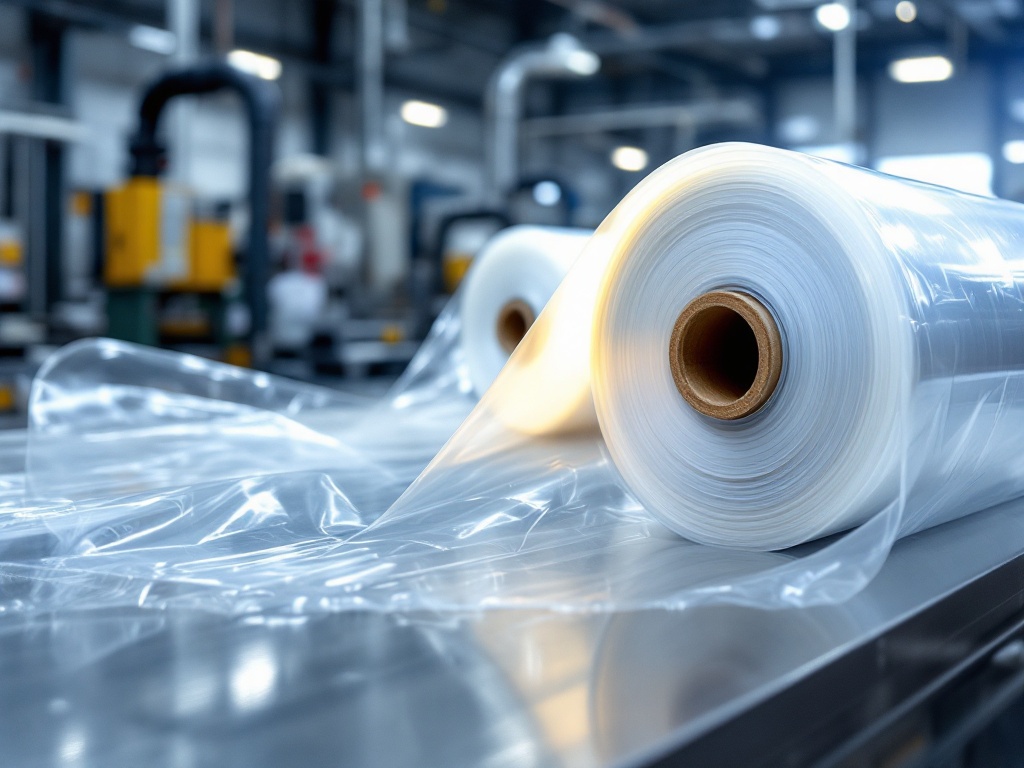
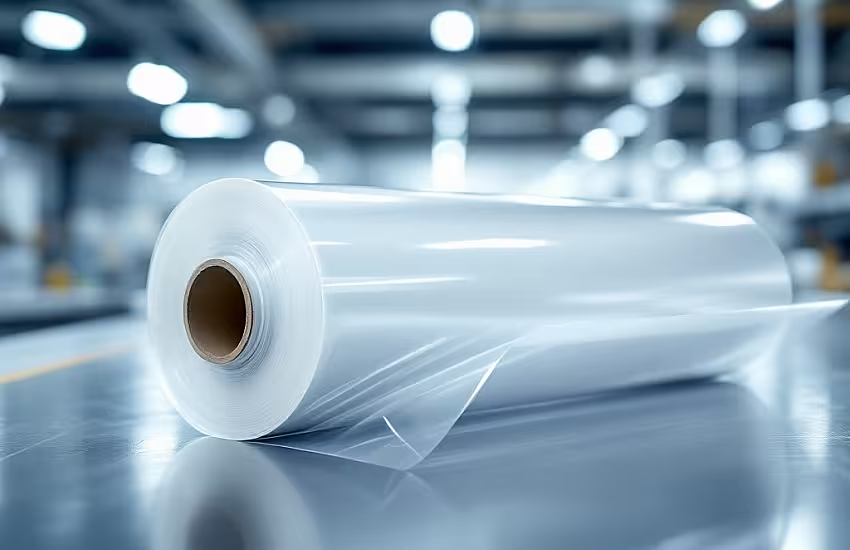
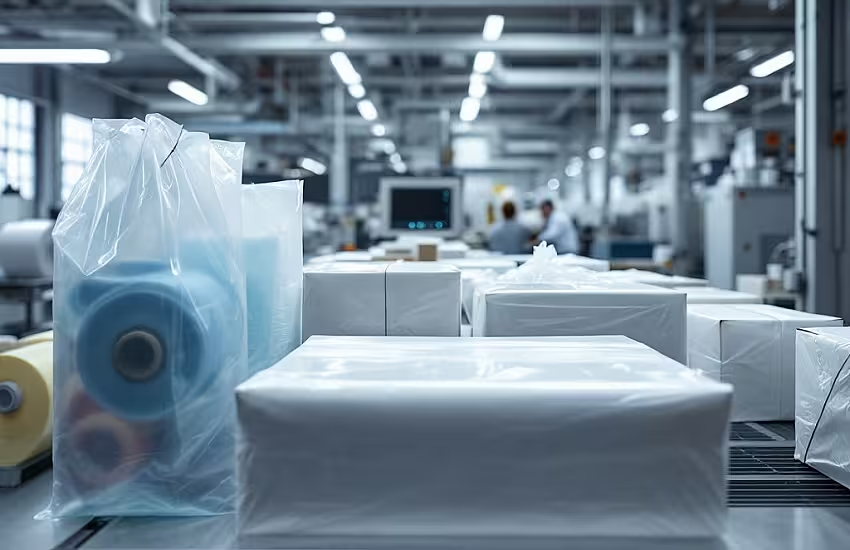
In e-commerce, protecting the product is not solely a matter of “packaging thickness”. That is a common shortcut. Thicker film alone does not solve the problem if the product moves inside the packaging, rubs against a weld, contacts a dirty surface, or is exposed to local stresses.
In a well-designed protective packaging, four mechanisms work simultaneously. The first is a barrier separating the product from external factors. The second is stabilization, i.e. reducing play and movement. The third is separation between products or layers of goods. The fourth is the material’s resistance to the conditions of the logistical process.
The protective barrier is not just for “wrapping” the product
Protective film is very often treated only as a dust cover. That is too narrow an approach. In practice the film layer should also protect against dampening, surface abrasion, secondary soiling and partially against mechanical intrusion. For products with smooth, sensitive surfaces mere contact with the collective carton can be the source of complaints. This concerns, for example, glossy elements, decorative finishes, lacquered parts, textiles, household accessories or seasonal products stored in variable conditions.
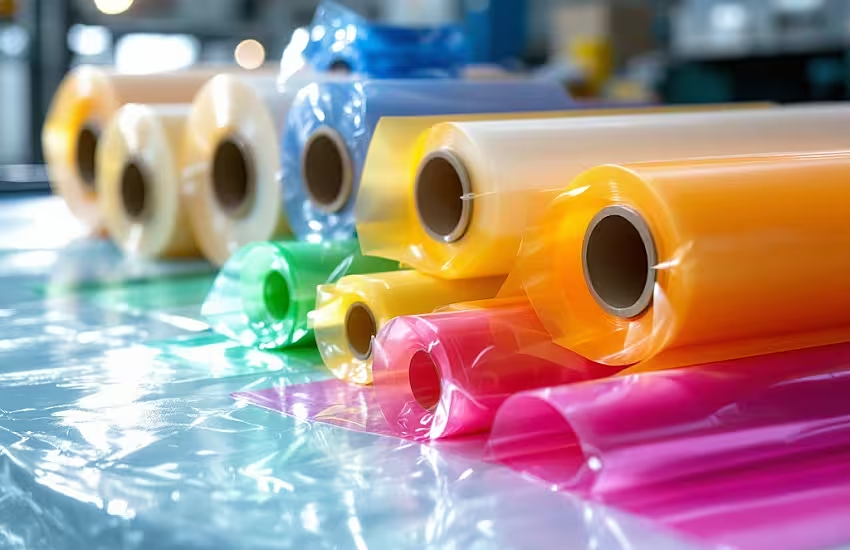
Solutions from PE film selected according to the specific packing method work well here. If flexibility and good shape conformity are needed, materials from the LDPE film products group are usually sought. When priority is lightness, stiffness and economical packing of simpler items, HDPE film products are also used. The difference is not limited to the name of the raw material. It translates into how the material behaves during packing, sealing, storage and contact with the product.
Layer separation can be more important than outer protection
When shipping multi-component orders or packing products in sets, the external parcel often does not damage the items — friction between the items themselves does. In such cases simple distancing and separation elements are used. Sometimes a thin film insert that eliminates direct surface contact is enough.
A good example is flat-packed components, textiles in sets, accessory kits or products stacked in layers in a collective carton. Then a 600x645 insert does not act as an “extra”, but stabilizes the whole packaging system and reduces micro-damages occurring during transport. These types of damages are often not visible immediately after closing the parcel. They appear only after the customer unwraps it.
Stabilization is critical for light and voluminous products
The e-commerce paradox is that lightweight products often pack worse than heavier ones. Not because they are more fragile, but because they “work” more easily inside the parcel. This applies to clothing, household textiles, soft home articles, light plastic parts or multi-piece sets. If the bag or pouch is clearly oversized, the product shifts, gathers into one corner, stresses the weld and deforms the outer packaging faster.
In such applications not only nominal dimensions matter but also the packaging’s construction. Gusseted bags allow a product with greater volume to be arranged more neatly while maintaining a relatively compact form. An example is the 300x400 gusseted bag, used where a simple flat bag would leave too little room at the base or cause stress when closing.
Select material for logistical hazards, not warehouse habits
One common problem in companies expanding online sales is “inheriting” packaging from previous processes. Material that worked for pallet deliveries to shops or wholesalers may not work in single-package distribution. B2B logistics is more forgiving. Goods move more predictably and undergo fewer unit transfers. In e-commerce each unit is a separate logistical entity.
This is why understanding PE film parameters is so important. It is not only about thickness stated in millimeters. Stretchability, tear resistance, surface characteristics, behavior during sealing, contact with moisture and stacking method also matter. PE film in various forms — bag, pouch, sleeve, half-sleeve, tape or insert — has broad applications. Each form solves a different operational problem.
LDPE and HDPE in warehouse practice
From a user perspective LDPE is usually chosen where more flexibility, better shape conformity and higher comfort for manual packing are needed. The material is softer, typically tolerates working with products of less predictable outlines better. HDPE, on the other hand, is often used for lighter goods and large volumes where efficient packing, low unit packaging mass and stable operation with simple formats are important.
There is no simple division into “better” and “worse”. There are only appropriate and inappropriate applications. If someone uses very thin film for a product with sharp corners, the problem is not the film itself but the wrong matching of its parameters to the load. If another operator packs a soft item in too stiff a form, they get harder closing, worse aesthetics and unnecessary stresses instead of protection.
Unit and collective packing are two different protection tasks
In many online stores these two levels of packing are treated the same. That is a mistake. Unit packaging must protect the specific item, keep it clean, reduce friction and facilitate picking. Collective packaging must maintain the set’s stability and transfer logistical loads. If a company tries to solve both problems with one material, it usually ends up with a compromise that does not work well at either level.
In practice the product can be properly secured individually and still be damaged inside the collective carton. This happens when several units start working against each other or against the package walls. Shipping sets, multi-item orders and goods with varied dimensions require layered thinking: separate surface protection, separate package stabilization, separate moisture and soiling protection.
For larger formats and sets gusseted bags are helpful as they take volume without excessive stress on seals. In warehouse practice solutions such as 1020x950 bag or 1020x1100 bag with gusset are used when securing larger packs, textile sets, irregular volume items or inserts for collective packaging is necessary.
Moisture, dust and temperature: quiet sources of damage that are regularly overlooked
Companies usually spot mechanical damages well. Breakage, tearing, crushing — these are obvious. Environmental damages are much harder to detect. In e-commerce they are very common because a shipment passes through different zones: warehouse, courier vehicle, sorting center, pickup point, stairwell, sometimes a parcel locker exposed to full sun or large temperature swings.
Moisture does not have to mean flooding. Condensation, elevated humidity or contact with a cool surface after a temperature change is enough. Textiles absorb foreign odors and moisture. Cardboard softens. Labels lose adhesion. Decorative surfaces dull or get fine scuffs that were not visible before. In such conditions a sealed protective PE film layer matters more than procurement or warehouse departments often assume.
The same applies to temporary exposure to radiation and temperature. If packages are stored or used in less stable conditions, one must consider material durability over time. In this context specialist information about polymer behavior, such as in the piece on the effect of UV, temperature and microbiological degradation on the durability of polyethylene film, is helpful. It is not lab knowledge detached from practice. It directly affects roll storage, packaging inventories and finished packages.
Standardizing packaging lowers costs only if it does not increase operational losses
Online retailers often try to simplify the warehouse by limiting the number of packaging formats. The idea itself is sensible. Fewer SKUs, simpler purchasing, easier staff training, faster picking. The problem arises when standardization is too aggressive. One or two bag sizes for the whole assortment usually result in either too much play or excessive packing.
Excess material is a cost, but not only material cost. An oversized bag worsens the package’s appearance, lengthens the operator’s work, increases shipment volume and makes repeatable placement of goods harder. On the other hand, overly tight packaging raises the risk of tearing, deforms the product and reduces protection effectiveness. Cost efficiency thus does not come from maximum simplification, but from a well-set range of formats.
In practice the best systems use a few basic dimensions to cover most of the volume, while problematic products get their own solutions. Small items can be safely grouped in smaller formats like 170x350 pouch, while larger items require wider and longer bags or gusseted constructions. Such segmentation reduces losses without breaking warehouse processes.
Protection at the warehouse and collective shipping level: the role of pads and auxiliary elements
Strategic protective packaging does not end with the retail parcel. Many damages start even before picking, at the storage and internal transport stage. If goods or ready-to-ship units are prepared collectively, there is the matter of pallet protection, separation from the floor and protection against soiling from below.
Foliated pads are often used here as a barrier between goods and the pallet or another work surface. For many logistic operations this is a small element, but from a quality perspective it is significant. Pallet pad 900x1300 helps limit contact with moisture, dust and technical contaminants. This is especially important when products sensitive to unit packaging cleanliness are packed or when goods wait a long time for shipment.
The same goes for auxiliary bags used to secure components, production waste or secondary elements in the packing area. Even seemingly mundane solutions influence process order. If the packing station is poorly organized, the risk of secondary soiling and picking mistakes increases.
How the practical process of selecting protective packaging for e-commerce looks
Selecting protective packaging should start with observing the process, not the catalogue. First determine what exactly threatens the product. Is the problem puncture? Friction? Dust? Water? Deformation under pressure? Too much package volume? Damage at the weld? Only then select format, film type, thickness and construction.
In practice dividing products into several risk groups works well. Separate soft goods prone to soiling, products with rigid edges, multi-piece sets, and large elements requiring stabilization. This division quickly shows that you do not need dozens of random packages, but a few logical solutions based on real logistic scenarios.
At the end ergonomics matter. Warehouse operators always verify theory. If a bag opens poorly, slips, positions the product badly or requires too many movements when closing, the process will be bypassed or simplified. Then even a well-chosen packaging stops working because it is not used consistently. Therefore effective protection must be not only technically correct but also feasible at the warehouse’s realistic pace.
Cost-efficiency does not end with the price of the packaging
When assessing the profitability of protective packaging, companies too often look only at the unit price of the bag or pouch. That is understandable but incomplete. Packaging affects packing time, number of claims, share of returns, warehouse losses, process cleanliness, space usage and repeatability of fulfillment. Cheaper film can raise total process cost if it generates more damages or slows work.
In a well-organized e-commerce, protective packaging is treated as a quality control and operational cost tool at the same time. Not as an expense separated from logistics. It is a small shift in thinking, but it is where sensible optimization begins. Especially when volume grows and every unnecessary second of packing and every percent of claims become painfully visible in operational results.
Practical case study: how ordering protective packaging in e-commerce reduced losses and shortened packing time
We carried out this project for a medium-sized online store selling home equipment and small utility accessories. The assortment seemed simple: textiles, light plastic parts, sets of several products packed together, seasonally also larger volumetric goods. The problem was not one product repeatedly failing. The issue was the lack of a coherent parcel protection system.
The company grew quickly. In quieter months it shipped a few hundred parcels weekly, and at peak season several times more. At first it worked by momentum. The warehouse packed orders according to the team’s habits, not clear standards. As volume increased, the costs of this improvised model emerged: quality claims, reshipments, excess variety of packaging formats and growing differences between warehouse shifts.
Short context of the situation
The client did not contact us because parcels were massively arriving destroyed. Such cases occurred, of course, but the more important problem was less spectacular: too many small damages and nonconformities that individually did not look dangerous but together began to burden operations. It was about surface scuffs, local soiling, packages of sets expanding, damaged unit packaging inside the carton and unnecessarily long preparation times.
The client had already attempted one “optimization”. They limited the number of bag and pouch formats to a minimum, hoping to simplify picking. On paper it seemed sensible. In practice some products were packed with excessive material and others too tightly. The warehouse team began circumventing procedures. Some added an extra film layer, others cut material manually, others packed the same product type in two or three different ways. It was not visible in the cost spreadsheet but was visible in quality and working time.
The client’s problem
The main symptoms were four.
First, parcels with multi-piece products often arrived without major external damage, but upon opening the customer found scratched or soiled items inside the set.
Second, light volumetric products shifted inside packaging, causing welds and corners to work excessively during transport.
Third, the warehouse had a repeatability problem. Two workers packed the same product differently.
Fourth, the client noticed that the cost of handling claims and re-picking was growing faster than sales.
It was not a crisis, but a typical moment when a company sees its current packing model can no longer keep up with the scale of operations.
Situation analysis
Instead of starting with material replacement, we began by observing the process. For several days we analyzed three things: how products are packed at the station, what happens to them between picking and carrier collection, and which complaints actually result from transport and which come from earlier stages.
The first review already revealed something common in such projects: protective packaging was treated as a purchased commodity, not an organizational element. Purchasing ordered formats that were readily available and “relatively universal”. The warehouse adapted to them manually. This led to workarounds, and workarounds quickly became an informal standard.
Another important finding from the complaint analysis emerged. Customer descriptions suggested transport issues, but photos taken after unpacking showed otherwise. A large share of damage occurred inside the shipment. Products were not separated from each other, and in multi-item orders lighter elements shifted and rubbed against other surfaces. The outer carton was often intact.
We divided the client’s assortment into four working groups, but not by commercial categories. What mattered was how the goods behaved while packed:
soft products that mainly required protection against soiling and volume arrangement,
light products prone to shifting,
mixed sets where contact between elements was the problem,
larger packs prepared periodically for collective shipment or warehouse storage.
Only at this stage did we start selecting solutions. Not from the general, but from specific scenarios.
Step-by-step actions
1. Reduce randomness at the packing station
We first simplified the workflow. This move was more important than the client initially thought. When an operator must think about which bag to use, they usually pick the one at hand. Therefore we did not introduce many new SKUs at once. We established a small but logical set of formats assigned to specific order groups.
For smaller unit products, smaller formats that reduced play and improved packing repeatability worked well. In some applications the client switched to 170x350 pouches because previous packagings were clearly oversized and forced extra folding of material. The size change alone shortened packing time for simple items and limited the “floating” product problem.
2. Separate unit protection from set protection
Previously the company tried to solve two problems with one packaging: protect the single product and keep the whole order stable. That did not work. We therefore introduced separate thinking for the unit level and the collective level.
For multi-element sets we used a light separating layer between product surfaces. The 600x645 insert worked particularly well where two elements contacted on a larger plane and complaints concerned scratches or rub marks. This was not a dramatic change. It simply eliminated one recurring damage mechanism.
3. Correct formats for voluminous products
For part of the assortment the problem was not the packaging strength but its geometry. Flat bags poorly accommodated products with larger volume. Goods had to be forced down, and closing caused unnecessary stresses.
In such cases we tested gusseted constructions. For medium-sized set products the client implemented 300x400 gusseted pouches. It was not only about packing comfort, although that improved too. More important was the more repeatable placement of contents and fewer welds working under tension.
For larger seasonal packs we introduced two formats depending on series volume: 1020x950 bag and 1020x1100 bag with gusset. Previously workers resorted to oversized material that was then folded and additionally strapped. That took time and did not provide a stable effect.
4. Organize the buffer and storage area
One less obvious problem was the buffer area between packing and shipping. Finished packages sometimes waited for several hours, and under heavy load even longer. They lay on various work surfaces and pallets, not always clean and dry.
Therefore we implemented a simple change in the storage and collective shipment preparation area: packed batches were placed on 900x1300 pallet pads. This reduced secondary soiling and contact with moisture from below. The client did not consider this important at the start. After a few weeks they admitted the number of minor warehouse contaminations had fallen more than expected.
5. Change the way packaging is tested
Previously the company evaluated packaging mainly by whether it “survived packing”. We looked differently. Each solution was tested in short series but considering the full cycle: packing, setting aside, movements within the warehouse, preparation for collection, trial transport and inspection after unpacking.
It was at this stage that errors invisible at the station emerged. One selected format looked good immediately after closure, but after a few hours of storage excess play appeared inside the pack. In another case operators rated a solution positively, but at higher working speed they omitted one separation step because the material was stored too far from the table. It was necessary to improve not the product but station organization.
Difficulties along the way
This project was not linear. Three typical obstacles appeared.
The first concerned team habits. The warehouse long thought the previous packing “basically worked”, blaming carriers for complaints. Only when we showed photos of the same products packed differently by various workers did we move from opinion to facts.
The second difficulty was excessive simplification of packaging assortment. The client initially wanted to keep a very small number of SKUs at all costs. In practice a compromise had to be found. Ultimately we did not return to the former chaos, but we also did not leave only two universal formats for everything.
The third problem was purely operational. During increased sales even a good solution may not be adopted if it lengthens work by a few extra movements. Therefore some materials that were technically fine were rejected. They simply did not fit the real packing pace.
Implemented solutions
After a series of tests the client implemented a model based not on “one best bag” but on several predictable scenarios:
small unit products packed in fitted formats without excess play,
medium-volume products packed in gusseted constructions when shape and stability mattered,
multi-element sets separated by inserts instead of adding successive outer layers,
larger seasonal packs handled by a separate standard, not an “emergency” solution,
buffer zone secured with simple auxiliary elements to avoid ruining the final effect after packing.
It was also important that the client stopped selecting materials solely by previous purchasing habits. Where greater flexibility and fitting were needed, they based choices on solutions from the LDPE film products group. In simpler and more technical applications they used HDPE film products. Not as an absolute rule but as a practical starting point for further implementations.
At the same time we tidied another issue e-commerce companies often postpone: storage conditions for packaging material stock. Some rolls and packs previously lay near the warehouse gate where conditions were unstable. After an internal review the client implemented simpler rotation and storage rules, and in discussions we referred to practical conclusions from the text about the influence of UV, temperature and storage conditions on polyethylene film durability. It was not theory, but avoiding a situation where material behaves differently than expected from the start.
Results
About three months after implementation the client had stable enough data to assess the effect without guessing.
The number of complaints related to minor surface damage and internal soiling decreased.
The average packing time for the most frequently shipped orders shortened because the team stopped improvising.
The number of cases where employees added an extra layer “just in case” decreased.
Better packing repeatability made training new staff easier.
The client reduced hidden losses that were previously not visible: additional repackings, end-of-shift corrections, re-picking after detecting damage prior to shipment.
It was not a spectacular jump of dozens of percentage points week to week — and that is good, because such stories usually sound implausible. The effect here was more realistic: several smaller improvements combined into a noticeably more stable process. The client felt it not only in the number of reports but also in a calmer warehouse operation.
Practical conclusions
The most important conclusion was simple: in e-commerce protective packaging rarely fails by itself. It fails when it was chosen detached from real warehouse work and from how the product behaves after the parcel is closed.
The second conclusion concerns standardization. Simplification is needed but only up to the point where it starts to generate workarounds. If employees regularly bypass a procedure, it is usually not because they refuse to follow it, but because it was poorly matched to the station’s realities.
The third conclusion emerges in many similar projects: most problems do not stem from large transport failures but from small, repetitive quality losses. These are the ones that most often eat team time and worsen operational economics.
From the implementer’s perspective such a project is not about finding one “strongest” material. It is about building a predictable system: the right format, sensible separation, a simple work standard, good station organization and control over what happens to packaging after packing. Only then does protective packaging truly support both product integrity and cost efficiency.
FAQ: strategic protective packaging in e-commerce
How to calculate whether the current protective packaging system is really profitable if complaints represent only a small percentage of orders?
This is one of the most often asked wrong questions in e-commerce. Companies look at the claim rate and if they see 1–2% they consider the topic relatively safe. The problem is that such an indicator poorly describes the real cost of protective packaging. It does not show hidden losses, which are usually larger than returns or official reports.
You must look wider. First: how much does a single quality incident cost from start to finish. Not only a new product or a refund, but also handling emails, photos, warehouse decisions, re-picking, an extra label, customer service work and the risk of losing the next order. Second: how much does a “silent error” cost — a situation where the customer does not file a claim but leaves a bad review or does not return. That is not visible in a simple warehouse report, and its impact on margin can be real.
The most practical model separates costs into four groups: material cost, packing time cost, quality error cost and logistic volume cost. Only such a picture shows whether an apparently cheaper solution is actually cheaper. Sometimes a difference of a few cents on packaging is irrelevant if a better-fitting solution shortens the operator’s packing by a few seconds across thousands of parcels monthly. Other times a technically correct material increases parcel dimensions and raises transport or storage costs.
A simple analysis on a sample of 200–500 orders works well. For each product group record: packing time, material consumption, number of corrections before shipping, number of post-delivery reports and frequency of repackings. After two to three weeks you see which solutions are truly effective. Without this it is easy to optimize the wrong process element.
Companies that do this properly stop treating PE film as a mere purchase cost. They start evaluating it as they should: as a tool affecting operation, quality and repeatability.
Can protective packaging reduce conversion and repeat purchases even if the product arrives undamaged?
Yes, and it happens more often than many sellers assume. In e-commerce the customer judges not only the product’s condition but also whether the parcel feels cared for, orderly and professionally prepared. The product can be technically intact yet leave a poor impression due to too loose packing, creased unit packaging, signs of secondary soiling or a chaotic internal layout after opening.
This is especially important in categories where the customer buys “with their eyes” or expects cleanliness: home decor, textiles, kitchen accessories, small home goods, seasonal products, interior organization items. If after opening elements are shifted, internal packaging looks random, and surfaces must be wiped before use, the customer does not need to file a claim to rate the purchase worse.
In practice the impact of packaging on repeat sales is best measured not by complaints but by three signals: product ratings, comments about delivery quality and the share of returning customers within assortment groups. If one category has similar price, comparable quality and similar complaint levels but performs worse in reviews, the problem often lies in the unboxing experience.
Therefore good protective packaging should do two things at once: protect the product and maintain presentation order. This does not mean overly elaborate packing. Sometimes a better-fitting format, cleaner use of material or a more predictable package form is enough. Practical experience gives the advantage: a person who knows the real warehouse process usually detects the difference between “technically sufficient” and “really well perceived by the customer” faster.
How to prepare protective packaging for omnichannel sales when the same product goes to marketplaces, own store and B2B shipments?
This is no longer a mere material problem but a process architecture issue. In a multi-channel model the same product passes through different logistic paths, different documentation requirements and often different quality receipt standards. If a company uses one packing scheme for everything, it usually overpays in one channel or generates losses in another.
The wisest approach is layered. The core product protection should remain common, but the outer layer and the picking method can change depending on the channel. Example: a product from your own store may be sent individually, on a marketplace it often goes in a multi-item parcel, and in B2B it goes as part of a larger carton or pallet. The surface protection can be identical, but set stabilization and collective protection differ.
For implementing such a model a decision matrix works well: sales channel, order type, number of units, type of contact with other products, time spent in the warehouse after packing. Based on that create several operational standards, not one universal one. This avoids the warehouse adding layers “just in case” because it is unsure which route the parcel will take.
In practice it is also useful to separate what is necessary for quality from what results from channel requirements. Product protection should not depend on whether the label will be marketplace or internal. If these elements mix in one procedure, the process starts to fall apart. More experienced companies usually sort this faster because they know omnichannel does not require greater numbers of random materials but better scenario assignment.
What to do when assortment changes quickly and you cannot create a separate packing standard each time?
In dynamic e-commerce this is normal. New collections, short runs, sales tests, promotional sets, seasonal packs. If a company writes an instruction for every novelty, it quickly bogs down. On the other hand, lack of rules ends in improvisation. A middle model is needed.
What works best is classification based not on product name but on its behavior in packing. Create a simple qualification card: does the item have sharp edges, does it scratch from friction, does it absorb moisture, does its shape change under pressure, does it require tightness, will it be shipped alone or with other elements. Such a card allows assigning a new product to an existing scenario without building a system from scratch.
Second, implement an escalation threshold. Not every new SKU needs warehouse tests. Determine which features trigger extra verification: irregular shape, high susceptibility to scratching, high unit value, nonstandard dimension or increased risk of seasonal storage. Only then initiate a short trial series. The rest can enter the process by analogy to similar product groups.
With high assortment turnover material form also matters. Instead of multiplying random packages, some companies structure the base by functional categories — for example LDPE film products for more flexible applications and HDPE film products for simpler, fast operations. This division does not solve everything but gives the warehouse a reasonable starting point for new rollouts.
The biggest mistake is evaluating new products only “by eye”. If a company grows, it pays off to have at least a simple qualification system. It saves time and reduces the number of decisions made under pressure.
How to reduce human error in packing when the problem is not material but unstable team performance?
If the same product is well secured on one shift and returns with problems on another, the issue is rarely the film itself. Usually it is the way material is provided, station organization, unclear standard or too much freedom of interpretation. In such cases buying “stronger” packaging changes little.
First determine where the deviation originates. Do operators choose different formats? Do they skip closure or separation steps? Is the material placed too far away? Does the instruction show only the end result but not the sequence of movements? These small things decide repeatability.
Effective packing standards should not resemble technical documentation. Short station instructions based on photos and simple decisions work best: if the product has this feature, use this solution; if the order has two pieces, add this layer; if the product exceeds a given dimension, switch to variant B. The warehouse does not need elaborate theory, only a clear action path.
Second is onboarding control. In many firms training consists of watching a more experienced person. That is quick but also reinforces bad habits. A short audit of the first several dozen packages and comparison with a template works much better. Deviations appear at once, not after weeks in complaints.
If the process is to be stable, the material must be comfortable to use. Too slippery, hard-to-open or non-intuitive formats will provoke shortcuts. Experienced packaging suppliers usually pay attention to this earlier because they know quality problems often start not in transport but in the operator’s hand movements.
Is it worth implementing seasonal changes in protective packaging, e.g. before Q4, the gift period or summer heat?
In many industries definitely yes. Seasonality in e-commerce is not just more orders. Work pace, basket structure, storage time, transport conditions and error profile change. A system that works in a calm month can fail at peak sales even if technically everything remains unchanged.
Before high-volume periods simplicity of process becomes more important. If packing requires many movements or high attention, deviations will be more frequent during spikes. Sometimes a slightly less technically “ideal” solution that is more tolerant to speed is better. This is a hard decision because practice, not theory, wins.
In summer temperature and longer exposure in vehicles, pickup points or outdoor lockers add risk. In winter condensation after temperature changes can be an issue. During gift season the share of multi-item orders increases and customers judge aesthetics after opening. So some product groups should be tested seasonally, not just once.
A good solution is a packaging review calendar: one for peak sales, one for high-temperature periods and one for promotional mixes with atypical item combinations. You do not need to rebuild the whole system. Often changing one packing scenario, increasing availability of a format or reorganizing material inventory is enough.
Companies that fail to do this usually react only after complaint increases. Those that plan seasonally have calmer operations and fewer costly surprises.
How to approach protective packaging in cross-border expansion when returns increase, transport is longer and it is harder to recreate the damage cause?
Cross-border sales change the packaging assessment logic. Shipping takes longer, parcels go through more transshipment points and customer contact after a problem is slower and more expensive. This means tolerance for minor packing errors should be lower than on the domestic market.
The biggest difference is designing for extended exposure time. A product stays in one arrangement longer, works under pressure from other parcels longer and more often encounters unstable intermediate conditions. Then problems acceptable locally reveal themselves: slight rubbing, slow loosening of the pack, minor migration of dirt or weakening of aesthetics of unit packaging.
For cross-border expansion also change data collection. Instead of the classic “damaged / undamaged” split, report damage type, external carton condition, internal packaging condition and likely moment of occurrence. Without this a company sees only the end result and cannot understand the mechanism. Without the mechanism it is hard to improve the system.
Do not blindly copy the domestic standard. If the product goes further, returns more often or is ordered in mixed sets more frequently, protection must be recalculated. It does not always mean thicker material. Better immobilization, cleaner separation or more predictable placement in the parcel can be more important.
For foreign markets implementation experience is valuable because errors show later and cost more. It is better to test scenarios beforehand than to learn from dispersed returns from several countries later.
Most common mistakes in strategic protective packaging for e-commerce
Most losses in e-commerce do not come from a single spectacular mistake, but from a series of decisions that individually seem harmless. In practice these are what break product integrity, lengthen packing and raise operating costs. Below are problems that most frequently recur in real implementations.
1. Designing packaging for the “average product” rather than the risk scenario
This is a very common shortcut. A company takes a group of SKUs, calculates the average dimension, picks one format and considers the matter closed. On paper it looks tidy. In the warehouse exceptions appear, stuffing, adding extra layers or packing “by feel” begins.
The reason is simple: an average product almost never exists in real operations. There are goods with sharp edges, slippery surfaces, delicate prints, irregular volumes or a tendency to move in the parcel. When everything is put into one packing model, the weakest SKUs start generating problems first.
Consequences usually do not look dramatic immediately. Minor scuffs appear first, then repacking increases, then the warehouse stops trusting the standard and starts circumventing it. That is when the system exists on paper but not operationally.
How to avoid this? Do not classify products only by size or commercial category, but by behavior in transport and packing. In practice 3–5 risk groups are enough: items prone to friction, items needing tightness, light voluminous goods, multi-element sets.
From experience: when a client insists on one “universal” standard, after a few weeks they usually find the most costly thing is not claims but constant warehouse improvisation. That is why it is better to have several simple scenarios than one seemingly elegant but dead record.
2. Confusing stronger material with better protection
This is one of the most expensive mistakes because it seems reasonable. When damages appear a company reacts intuitively: orders thicker material. The problem is many damages do not result from lack of “strength” but from lack of stabilization, separation or format fit.
Why is this common? Because thickness is easy to compare and buy. It is much harder to admit the source is packaging geometry, station movement order or contact between products.
The effect can be doubly unfavorable. First, material consumption increases. Second, the real damage mechanism remains. We had projects where after switching to “stronger” film complaints barely changed because products still rubbed against each other in the collective carton. Only unit cost of packaging changed.
How avoid this error? First name the load type. Does the product shift? Is the pressure point load? Is the problem weld, friction, moisture or secondary soiling? Only then select material and construction. Sometimes an insert gives a better effect than a thicker bag. For sensitive surfaces a simple 600x645 insert can eliminate the damage mechanism more effectively than another outer layer.
Practical takeaway: if after changing material the packing process and product placement remain the same and the company expects a visible improvement, disappointment is likely.
3. Ignoring internal friction because the outer carton looks fine
This error is very typical in stores that analyze complaints too superficially. If the carton is not crushed they assume the damage must be isolated or random. Yet many problems originate entirely inside the parcel: two elements move relative to each other, a unit packaging slides on a rough surface or a light multi-item product gathers dirt from other order components.
This problem is common because the parcel looks fine post-packing. Only after transport it turns out the internal arrangement was not stable. For the warehouse everything was “within norms”, for the customer it was not.
Consequences are deceptive. Complaints are about scratches, scuffs, creased unit packaging, soiling. Each looks minor alone but together they consume a lot of handling time monthly.
How prevent it? Separate product protection from parcel protection. If an order contains several items, evaluate not only outer package resistance but also contact between components inside. Often a separating layer or a change in packing order suffices.
In practice this is one of the quickest improvements to pay back. In several implementations internal separation reduced the number of reports faster than changing any outer carton or film.
4. Selecting formats for procurement rather than for the operator’s hand movement
This problem is not visible in the procurement order table. A format can be technically correct but inconvenient in daily use. It opens poorly, requires repositioning the product, slips on the station, forces extra pressure or creates excess play that must be manually “tamed”.
Why do companies fall into this? Because purchasing decisions are often made outside the warehouse. Someone sees that one size covers more uses and treats it as simplification. Operators see otherwise: more corrections, more movements, more deviations from the standard.
Consequences are predictable. First packing time grows, then shortcuts appear, and eventually repeatability drops. In practice the warehouse creates its informal system. That is an alarm signal, not creativity.
To avoid this, run tests on a real station at real working speed. It is not enough to check whether the product “fits” in the packaging. See how long it takes to open, insert, close and put aside a finished pack. Small products often work better in smaller, more predictable formats like 170x350 rather than in one oversized universal variant.
Experience shows: if an employee must “help” the packaging by hand to make it look right, the standard is poorly chosen. At higher volume no one will do it consistently.
5. Overdone standardization
Simplifying the packaging assortment is necessary. The problem begins when a company tries to reduce to an absolute minimum. Two or three formats for the whole shop sound great administratively but often mean too much play for some products and too tight packing for others.
This mistake occurs because standardization is confused with efficiency. Poorly set format range shifts cost from procurement to the warehouse and quality. Material consumption may go down, but the number of corrections, repackings and “I’ll add one more layer just in case” cases increases.
Consequences are not visible in the first month. They show later: divergent packing times, increased parcel dimensions, more exceptions, harder onboarding.
How prevent? Build the format grid around volume and quality problems, not around the ambition to reduce SKUs. Most assortment can be covered by a limited set of sizes, but problematic products should have bespoke solutions. For medium volumetric items a 300x400 gusseted pouch is often more sensible than a flat supposedly universal variant.
In practice the best systems are not maximally simplified. They are simple enough to work fast and precise enough to avoid workarounds.
6. No separation between standards for unit, multi-piece and seasonal packing
This organizational mistake usually emerges only as sales grow. A company uses one standard regardless of whether it packs a single item, a promotional set or a larger seasonal pack. These scenarios have different load logic but end up in one procedure.
Why does this happen? Because one document seems easier to maintain. But the warehouse still creates unofficial variants.
Consequences are costly. What works for one item does not maintain set stability. What is convenient for a simple order is insufficient for larger volume. As a result the company has not one standard but chaos under one name.
The solution is to separate scenarios. Separate standard for unit surface protection, separate for stabilizing multiple elements, separate for larger volume packs. For larger sets gusseted constructions like 1020x950 or 1020x1100 with gusset are useful, but only where they actually stabilize rather than substitute a poorly designed set layout.
From practice: companies that do not separate these levels usually keep “paying” with work time. It is not visible on the material invoice but shows in productivity and exceptions.
7. Evaluating packaging only at the moment of closing the parcel
This is a common testing error. Packaging looks good right after packing, so the design is approved. No one checks what happens after a few hours in the buffer zone, after being moved on a trolley, after contact with a cool surface or a night in a temperature-variable warehouse.
Why is this common? Because a quick test gives a quick sense of control. The problem is many defects appear only over time: material loses tension, product “settles”, play increases, moisture or secondary soiling ruin the final result.
The outcome is wrong conclusions. A company implements a solution that works only at the packing table, not in full logistics flow.
How prevent? Test a short but full cycle: packing, setting aside, moving, waiting time, trial transport and inspection after opening. Only such a test shows whether the packaging truly works.
In real projects the most non-obvious problems emerge here. Often the material is correct but storage method fails. During longer setting aside auxiliary elements like a 900x1300 pallet pad that limit soiling and moisture from below matter greatly. It is a detail but can save the earlier stages’ work.
8. Ignoring storage conditions of packaging materials
Many companies assume that if the material was bought correctly it will behave the same regardless of warehouse conditions. This assumption backfires regularly. Rolls and packs end up near gates, in sun-heated spots or places with unstable humidity. Later someone wonders why the material “behaves differently than usual”.
This is common because packaging stock is treated as a technical detail, not part of the quality system. Yet temperature changes, radiation and storage conditions can affect material behavior more than many users assume. Practical observations in the piece about the influence of UV, temperature and degradation on polyethylene film durability are a useful complement.
Consequences? Lower packing repeatability, more rigid or less predictable material behavior, more deviations at the station. Importantly, such symptoms are often wrongly blamed on employees though the source lies earlier.
How avoid? Set simple storage and rotation rules. Not a lab procedure. Just move stock away from places exposed to extremes and ensure materials do not sit for months without checks.
From experience: if the same format packs well one week and noticeably worse the next, first check storage conditions. Too many companies then blame people or carriers.
9. Copying one solution across channels and delivery models
Companies developing multichannel sales often assume that the same product requires identical protective packaging. It is administratively convenient but often operationally wrong. A single retail parcel behaves differently than a marketplace parcel or a B2B set that becomes part of a larger collective unit.
Why is this mistake common? Because procedural simplification looks rational. The problem appears when the same standard goes through different logistic paths and starts generating extra protection in one channel and shortages in another.
Consequences are doubly painful: in some orders the company repacks, in others it under-protects. Both are costly in different ways.
How avoid? Keep a common core for product protection but vary stabilization and outer layer depending on channel and order configuration. No need for ten procedures. Clearly assigned variants for a few common scenarios suffice.
Practically, companies that fail to organize this see a constant symptom: the warehouse keeps adding something “just in case” because it is unsure which route a given order will take. That is always a sign that process architecture is incomplete.
10. Measuring only the cost of product damage and not the operational error cost
This is one of the most misleading assessment methods. A company counts only the value of the damaged product or the refund. It does not include time handling the report, re-picking, additional label, warehouse labor, stock corrections, customer comment and loss of the next purchase.
Why is this frequent? Because material cost and damage cost are easy numbers to put in a sheet. Operational error cost is spread across departments and harder to capture.
The effect can be paradoxical. A company maintains a poor packing system because “claims are few” even though each costs real money beyond the quality report. As a result it appears to save on material while actually overpaying in operations.
How prevent? Account for an incident from start to finish: material, packing time, claim handling and secondary consequences. Only then can you see whether a solution is truly efficient.
From implementation experience: when a client first properly calculates the full cost of a single quality incident, they usually stop asking only about the unit price of packaging. And rightly so, because that almost never is the most important metric.
11. Choosing material by habit, not by real application
This is very human. If the warehouse has worked with one type of plastic for years, it naturally tries to adapt it to new uses. The problem is habit is not a technical criterion. Material that worked well in one area can be a poor choice in another.
This problem returns particularly in fast rollouts of new SKUs. Instead of checking how a product behaves during packing, the company uses what is already on the shelf. That speeds decisions but often worsens outcomes.
Consequences are practical: poorer ergonomics, excess play, less predictable closure, unnecessary stresses. Then a wrong conclusion follows that “the film does not work”, while the issue was mismatching the solution to the application.
How avoid? Treat material as a tool for a specific scenario, not a purchasing habit. In some implementations LDPE film products perform better, in others HDPE film products are a more sensible starting point. Not because one variant is always better but because they work differently.
In e-commerce projects the “we’ve always done it this way” approach almost never pays off. When assortment and volume grow, old habits begin to cost more than they seem.
12. Reacting only after complaints rise instead of before changes in working conditions
This mistake is typical for reactive companies. Packaging is considered good until indicators worsen noticeably. The problem is e-commerce conditions change faster than monthly reports: peak season, promotion, new product mix, high temperature, more multi-item orders — all change the process load.
Why do companies delay? Because when something “basically works” it is hard to find time for preventive tests. Then the sales peak comes and there is no room for calm fixes.
Consequences are predictable: more human errors, more shortcuts, more damages and frantic adding of additional protective layers without order. This is one of the most expensive forms of improvisation.
How prevent? Introduce a review calendar before periods of increased load. No need to rebuild everything. Sometimes testing one format, reorganizing material supply, or changing a scenario for specific order groups is enough.
From experience: the best moment to correct a standard is not a week after complaint growth but two to three weeks before expected operational changes. Then fixes are decisions, not firefighting.
The most costly errors in protective packaging rarely stem from lacking material. They usually come from faulty decision logic: too much simplification, poor testing, ignoring warehouse work and judging effectiveness solely by unit price. Those are the places to fix first, because they often hide losses of time, quality and repeatability.
Myths and misconceptions about protective packaging in e-commerce that most often spoil operational results
When a company has completed initial implementations, lack of material or available solutions usually does not hurt. What hurts are simplifications that sound reasonable but lead to bad decisions in practice. Below are beliefs that most often recur in conversations with sales, warehouse, purchasing teams and store owners.
Myth 1: “Good protective packaging should be universal for the whole store”
This belief usually arises from the need for order. The fewer variants, the easier purchasing, inventory counting and training. The problem is when universality becomes an end in itself. In e-commerce the assortment may look similar commercially but behave completely differently logistically.
This assumption is wrong because a “universal” package is usually just a compromise. For some products it will be too loose, for others too tight, and for others inconvenient. Such a standard gives a sense of control briefly, then produces exceptions. First quiet, then daily.
Industry reality is less elegant but more effective: a working system is based on a limited number of scenarios, not one format. Small items need different handling than volumetric products and mixed sets need another. Sometimes a few well-chosen sizes are better than an extensive catalog. That is why smaller formats like the 170x350 pouch can organize work better than one larger “everything” bag.
From practice: when someone asks for maximum simplicity, usually the warehouse has already created its own workarounds. That is the surest signal the formal standard is too general.
Myth 2: “The customer only judges whether the product arrived intact”
The source of this myth is simple: many companies measure damage in a binary way. Either the item arrived destroyed or not. But customers do not perceive shipments that way. They also judge cleanliness, aesthetics, surface condition, order inside the parcel and whether the product looks new and properly secured.
This belief is incomplete because it ignores “soft” damages: scuffs, dusting, moisture traces, creased unit packaging, shifted set elements. Formally the product may be usable but perceived as lower quality. In e-commerce this is often a flashpoint, especially for home goods, decorative items, textiles and gifts.
Industry practice shows these small shortcomings harm satisfaction more than many firms expect. For items prone to contact marks a well-chosen separating layer often matters more than a “stronger bag”. A simple 600x645 insert can do more for recipient perception than an extra, but poorly used outer layer.
Myth 3: “Protective packaging is a warehouse topic, not company strategy”
This is a frequent organizational stereotype. Management sees sales and claims, purchasing sees SKUs and rates, the warehouse sees daily work. No one views packaging as part of operational architecture. Decisions are made locally and consequences spread across the company.
Why is this wrong? Because protective packaging affects several areas simultaneously: picking efficiency, delivery quality, returns, claims, customer service load, onboarding speed and process repeatability. It is not a warehouse detail. It is part of the order fulfillment model.
Reality is that companies handle packaging best when they treat it as an operational standard not a technical add-on. That means a shared language between purchasing, warehouse and quality managers. Without that each optimizes their fragment and the whole unravels.
In practice this is where the difference between a company that “buys bags” and one that manages product protection appears. The first continually puts out fires. The second gradually reduces their sources.
Myth 4: “If the carrier is good, the packaging does not need to be so well thought out”
This belief grows from the need to find one culprit. When damages occur it is easiest to point to transport. Of course the carrier matters, but relying on a delicate, predictable logistics chain as the basis for delivery quality is naive.
The myth is false because good logistics does not eliminate standard loads: sorting, compression, shifts, brief moisture, parcel repositioning, contact with other shipments. These are normal system conditions.
Industry reality is that protective packaging should assume a normal level of transport imperfection. You do not design it for ideal transit but for the real flow. That is why appropriately chosen PE film is not merely a material cover but an element of tolerance to logistic friction.
From experience: companies that blame carriers too long usually discover late that some problems originate before carrier pickup. This diagnostic delay is very costly.
Myth 5: “More ecological always means lighter and less material”
This belief stems from a simplified view of reduction. The direction is right but practice is more demanding. Too frugal packing can reduce material per item while increasing damages, returns and reshipments. Then environmental and operational balance becomes unfavorable.
The error is treating material minimization as the sole criterion. In e-commerce protection counts not the smallest amount of film but the smallest loss across the delivery cycle. If under-protection causes extra transport, a new box, a new label and new handling, apparent savings vanish quickly.
Industry reality is sober: responsible packing reduces excess without lowering protection effectiveness. Sometimes that means a smaller format, sometimes a construction change, sometimes better material matching from HDPE or LDPE groups rather than mechanical “slimming” of everything.
Practically, the most environmentally sensible systems are not those that consume the least material at the packing table but those that avoid sending the same product through the logistics chain again.
Myth 6: “A premium customer should not receive a product packed in film”
This belief stems from aesthetics. Film is unfairly associated with cheap, technical or temporary solutions. Yet in many applications it performs a protective function that cardboard alone cannot: it secures against secondary soiling, moisture, friction and surface contact.
The myth is wrong because it confuses image with function. A premium customer does not expect the absence of a protective layer. They expect the product to arrive clean, intact and logically packed. What looks bad is not the film itself but sloppy use: excess play, random format, poor internal layout.
In premium segments protection often used invisibly from a brand communication point of view is very important quality-wise. An internal pouch, sleeve, half-sleeve or insert must do its job quietly. It does not have to “sell the image”, only protect the product from what the customer should not see.
From practice: for aesthetically sensitive items the most damage is not caused by the presence of film but by poorly thought contact with the carton, warehouse dust or other order elements. That is when a customer senses a mismatch between brand promise and delivery condition.
Myth 7: “If the product is light, protection can be symbolic”
This is a persistent misunderstanding. It comes from the intuition that weight equals risk and lightness means ease of packing. In reality light products can cause more trouble than heavier ones. Not because they are weaker but because they move more easily inside the parcel, tuck, wedge, deform the layout and “live their own life”.
This belief ignores transport dynamics. A light volumetric product can work against a weld, corner or a single wall throughout the journey. The damage thus does not stem from a large force but from repeated movement and friction.
Warehouse reality shows light sets, textiles and irregular volume goods require proper arrangement. For such uses constructions that accept volume better, like a 300x400 gusseted pouch, are more effective than a randomly chosen flat bag.
Practical observation: light does not mean easy. Very often it means the problem appears later and less spectacularly.
Myth 8: “The tighter the packing, the better”
This belief equates tightness with safety. For some products it makes sense; as a general rule it leads to mistakes. Excessive compression, too tight a format or over-compression can worsen protection rather than improve it.
The myth is dangerous because it ignores product behavior. Some items require shielding and stabilization but should not be squeezed. Others lose aesthetics under tight fit. Others start to stress weld zones because the whole system works under tension from closure.
Industry practice values the right balance between fit and freedom of placement. A good pack has no excess play but is not “on the edge” in a way that forces material movement. This is particularly visible for larger seasonal packs where gusseted constructions like 1020x950 or 1020x1100 with gusset are better than tightly “stuffing” contents into a flat solution.
From experience: if an employee must use force to “close the matter,” the format choice is usually wrong. It hides a format selection error.
Myth 9: “Protective packaging can be bought like any other consumable”
This belief is convenient because it simplifies purchasing. A bag is a bag, film is film, as long as size and availability match. This approach works only until sales scale and exceptions grow faster than the warehouse’s improvisation capacity.
It is wrong because protective packaging is not an ordinary consumable. It has a way of working in the process: it must open, receive the product, cooperate with the operator’s movement, tolerate setting aside, storage and transport. Commercial parameters are insufficient if you do not know how the material behaves after several days in real flow.
Mature companies buy not just a product but process predictability. They look not only at price and delivery but also at batch consistency, parameter stability, fit to stations and the ability to maintain a repeatable packing standard.
In practice most problems begin when a “theoretically identical” substitute on paper works differently in hand packing. The operator notices immediately; the procurement report later.
Myth 10: “Storage conditions of packaging do not matter much because it is only film”
This myth returns regularly where packaging stock is stored anywhere it fits. It assumes film is passive and indifferent. In practice this assumption can backfire quickly.
It is wrong because material stored in unstable temperature, exposed to light or in uncontrolled conditions can behave differently than expected. Changes may not be spectacular but enough to worsen packing repeatability, work comfort or behavior after sealing and setting aside.
Industry reality: if a company wants a stable process it must also treat the material stably. This applies to rolls and ready packs. Practical conclusions from the piece on the influence of UV, temperature and microbiological degradation on polyethylene film durability are relevant — this is not theory removed from the warehouse.
From experience: if the team says “the same film sometimes works well and sometimes strangely,” the issue often lies in stock storage rather than specification.
Myth 11: “Small auxiliary elements do not affect final quality”
This belief stems from focusing on the main packaging. You see the bag, carton, pouch but not what happens under the finished batch, on the pallet, the drop table or buffer zone. And that is where the earlier work often fails.
The myth is false because many soiling and secondary damages appear not during packing but afterwards: while waiting for collection, moving batches, contact with the floor or a contaminated surface. The package can be correctly chosen yet lose quality before dispatch.
In real warehouse practice auxiliary elements stabilize and protect. This is visible in collective shipping and storage where a 900x1300 pallet pad limits contact with moisture and soiling from below. It is not a “spare” add-on but protection for a place where often unseen damage originates.
Practical note: the better a company controls such small process points, the less it must rescue results by adding excessive material in the main packaging.
Myth 12: “If complaints are few, the packing system works well”
This is one of the more misleading conclusions because complaints are a lagging and incomplete indicator. Not every customer reports problems. Not every damaged product returns. Not every repacking is recorded. Some losses spread across operations without a clear label.
This belief is wrong because it looks only at the final effect, not process cost. A system may generate few formal complaints yet absorb a lot of time through corrections, extra layers “just in case”, deviations from procedure, manual cutting or slow packing.
Industry reality is tougher: a well-functioning system is known not only by a low number of reports but by repeatable, quick packing that does not require constant improvised decisions at the station.
From practice: if on a shift the same order type is packed slightly differently by each person, the company has a problem even if monthly complaint reports are not yet alarming. Complaints usually mark the story’s end. Trouble begins much earlier.
Myth 13: “Just copy a solution from a large market player”
This belief is understandable. Large stores send thousands of parcels so their standard seems safe to copy. But copying an observed effect does not mean copying the conditions where that effect works. Different assortment, stations, pace and order structure can change a solution’s meaning.
The myth is dangerous because it encourages imitation instead of diagnosis. What works for a large operator with automation, SKU standardization and high repeatability may fail in a warehouse dominated by hand packing and variable order configurations.
Industry reality: the best solution is often less flashy than the copied pattern but better matched to your process. It is not about “being like the leader” but avoiding your own loss sources.
From experience: the worst implementations start with “we saw others doing it this way”. The best start with “what exactly fails for us and at which stage?”.
The most persistent myths about protective packaging do not come from lack of technical knowledge but from seemingly logical shortcuts. These usually cost a company most: not in a single parcel but in daily repeatability failures. In e-commerce the advantage goes not to the most spectacular packaging but to a system that works stably under real load.
Comparison of solutions: how to choose a protection model for e-commerce realities, not operational habits
In practice an online shop seldom chooses between “good” and “bad” packaging. It usually chooses among several sensible protection models, each distributing risk, work pace and repeatability differently. Differences become visible when comparing them in concrete scenarios: single unit, multi-item order, light volumetric product or short storage before carrier pickup.
Below we present solutions and approaches that most often compete in e-commerce. Not to point to one universal variant but to show when a given solution orders the process and when it only shifts the problem elsewhere.
Flat bag vs gusseted pouch
Flat bag works well where the product has a predictable, relatively flat shape and does not build volume at the base. This solution is simple to store, clear for the warehouse and typically faster when packing simple SKUs. This group includes classic pouches for smaller items like the 170x350 pouch or larger flat variants when the product does not need extra base space.
Gusseted pouch wins when the product is not heavy but “expands” the packaging volume. This is common for textile sets, light home accessories, seasonal kits and goods that create side or closing stresses in a flat form. A gusseted construction like the 300x400 gusseted pouch provides an advantage.
Who should use flat bags? Companies with many simple, homogeneous products that want fast, repeatable packing without extra manipulations.
Who should use gussets? Operations where the packed product must keep a stable shape rather than being “stuffed” into a too-tight geometry.
Flat bag limitations: for volumetric products material tension or unsightly play appears quickly. The warehouse usually compensates this manually, slowing work.
Gusset limitations: not always needed. For small flat items it can introduce unnecessary placement variability and no real quality benefit.
Practical difference: flat formats simplify packing, gussets improve packaging geometry. These are not interchangeable goals.
Market observation: many warehouses use flat bags too long for products that should have moved to gussets. Reason: flat variants seem more universal. In practice that universality ends in extra manual movements at the station.
LDPE vs HDPE in shipping protection
This comparison makes sense only when viewing material behavior, not the abbreviation alone. LDPE film products usually fit where more flexibility, better shape conformity and softer handling in manual packing are needed. HDPE is chosen for simpler, lighter solutions where stiffness and efficient handling of high volumes matter.
LDPE suits irregularly shaped products, surface-sensitive items or situations where the operator needs greater control over content placement. It offers tolerance in manual packing where assortment is not perfectly repeatable.
HDPE is practical where items are lighter, the packing form is simple and the goal is high repeatability at large operation numbers. In auxiliary and technical uses its behavior can be simply more convenient process-wise.
Who benefits more from LDPE? Shops with mixed assortments, sets, soft goods and items with less predictable outlines.
Who chooses HDPE more often? Operations with higher standardization, simpler formats and where the pack should work efficiently rather than “fit” a tricky product.
LDPE limitations: when used in highly standardized, simple processes its advantage is underutilized.
HDPE limitations: offers less comfort for demanding shapes or when better conformity is needed.
Practical difference: LDPE solves fit problems; HDPE supports order and technical simplicity.
Industry experience: errors rarely stem from choosing an “absolutely wrong” material. Problems usually come from transferring logic from one packing type to another. Material that worked well in simple auxiliary bags may not perform the same in customer-facing protection.
One outer layer vs internal separation
This is one of the most important comparisons in multi-item orders. Some firms try to improve parcel quality by adding another outer layer. Others separate products inside. These approaches solve different problems.
Extra outer layer helps when the main risk is contact with dust, soiling, moisture or the environment. Its value decreases if damages form inside the set.
Internal separation, e.g. using a 600x645 insert, works better where scratches, rub marks, imprinting or contact between layered elements are the problem.
When choose additional outer protection? When the unit product is already properly protected but needs an extra barrier against operational conditions.
When choose separation? When the damage originates between components inside the set.
Outer layer limitation: it does not stabilize relations between products. A well-shielded parcel may still contain scratched items.
Insert limitation: it does not replace protection against moisture or environmental soiling.
Practical difference: outer layer protects against the environment; insert protects against the set itself.
Implementation insight: when complaints concern surface appearance after unpacking while the outer box shows no severe damage, separation often helps more than adding another outer layer.
Small format grid vs wide format grid
From procurement’s viewpoint fewer SKUs look attractive. From the warehouse and quality viewpoint not always. So the question is not “simplify or not” but “how far to simplify without causing workarounds”.
Small format grid works where the assortment is relatively uniform and most SKUs fit a similar packing logic. It simplifies training, reduces mistakes and speeds replenishment.
Wider format grid suits shops with large dimension spread, different surface types and many mixed orders. It allows better product-specific matching and reduces improvisation.
Who benefits from limited formats? Stable operations with clear product profiles and few outliers.
Who needs a larger grid? Shops with several distinctly different packing scenarios where one standard does not keep quality.
Small grid limitation: if too tight it leads the warehouse to create exceptions — a first signal simplification went too far.
Large grid limitation: if poorly described it increases decisions at the station and slows new hires.
Practical difference: small grid improves order; wide grid improves fit. The best result usually comes from a middle ground: several basic formats and dedicated solutions for problem groups.
Observation: companies most often regret not having two extra formats rather than having two too many; trying to handle diverse assortments with too few packages costs them time.
Unit packaging each element vs packing the whole set together
Both approaches make sense in different risk layouts. Unit packaging gives better control over cleanliness, surface and identification of individual elements. It is useful where products differ in finish or are assembled differently.
Packing the whole set together is faster and simpler for ready-made sets that always ship in the same configuration. It reduces operations and auxiliary materials.
Who benefits from unit packaging? Stores with frequent SKU recombinations, delicate surfaces and high aesthetic importance upon opening.
Who benefits from complete set packing? Operations where the set is fixed and speed and consistency are priorities.
Unit packaging limitation: more operations and a risk of too much material without clear protection logic.
Packing set limitation: without internal separation damages are harder to catch before shipping.
Practical difference: unit packing offers more quality control; collective packing usually offers better pace. The choice depends on whether a quality error or additional time is costlier.
Practice insight: for promotional sets many firms needlessly pack each element separately though reasonable separation in one pack would suffice. Conversely, for decorative products simplifying is costly because customers see scratches immediately.
Large “safety” bag vs format matched to the product
This comparison seems obvious but persists in real operations. A large safety bag gives the operator a sense of security: everything fits and there is no need to think about exact size. The problem is that the excess must later be controlled manually.
Matched format better stabilizes the product, improves presentation and increases closure repeatability. That is clear for small-item formats and for large seasonal solutions like 1020x950 or 1020x1100 with gusset where volume justifies them.
When big safety bag makes sense? For assortments with high volume variability if the goal is to reduce exceptions, but only up to a limit.
When fitting wins? When the company wants a uniform working standard, minimize product movement and avoid secondary folding of film.
Large bag limitation: more play means more product movement and more operator work.
Fitted format limitation: requires a well-thought SKU format grid and honest process testing.
Practical difference: big safety gives apparent flexibility; matched format gives real predictability.
Operational observation: if at the station the reflex is “I’ll tuck this in” or “I’ll tape it”, it usually means the format was chosen for procurement convenience rather than packing quality.
Protecting the retail parcel vs extending protection to storage and collective shipping
Some companies focus only on what happens during single parcel packing. Others look wider and protect the stage of setting aside, buffering and batch shipment preparation. The latter approach more often yields stable quality results.
Retail-only approach may suffice if goods leave the warehouse almost immediately and the operation’s post-packing area is very controlled.
Extended model has an advantage where finished packs wait, are moved or palletized. Then auxiliary solutions like the 900x1300 pallet pad make sense because they protect the earlier packing result from soiling and moisture from below.
Who needs the narrow approach? Small operations with fast flow and few post-packing touch points.
Who needs the broader approach? Warehouses with buffers, seasonal batches, wave picking and many manipulations after closure.
Narrow approach limitation: it is easy to miss damages that occur after packing.
Broad approach limitation: requires better operational discipline and treating packaging as a process element, not just material.
Practical difference: the first protects the product until parcel closure; the second protects it until it actually leaves the operation.
Industry observation: as volume grows the setting aside stage most often begins to “spoil” results even if no material change occurred.
Ready-made film goods vs solutions built from PE film in the process
Not every operation needs only ready pouches and bags. Some firms are more efficient with standard ready formats; others benefit from flexibility offered by PE film in various functional forms.
Ready-made goods are better where quick rollout, simple training and fewer station decisions matter. They suit high repeatability orders.
Process-built solutions win where assortment is less predictable and more flexibility is needed to create covers, inserts, layers or to secure larger packs.
Who benefits from ready formats? Companies wanting to reduce complexity and working from a clear SKU structure.
Who benefits from flexibility? Operations with nonstandard sets, a high share of seasonal packing and frequent need to modify protection layout.
Ready format limitation: when assortment deviates from typical sizes fit worsens.
Flexible approach limitation: without process discipline it easily returns to improvisation.
Practical difference: ready items organize work; flexible form gives more control over atypical uses.
Conclusion: as sales grow companies often adopt a mixed model. The largest volume is handled with predictable ready formats while difficult product groups get more tailored solutions.
Reactive approach vs protective review ahead of changing conditions
This is not about materials but management. Reactive approach changes protection only after damages or complaints rise. Proactive approach reviews protection before volume, season or order mix changes.
Reactive model is simpler administratively and acceptable at small scale where changes are rare.
Proactive model gives better control when volumes spike, seasonality appears or order profiles change. Even a correct standard can stop working as well. This concerns materials and their storage, as practical lessons on UV and temperature effects show.
Who can use reactive? Small, stable operations without big peaks or frequent assortment changes.
Who needs proactive? Shops scaling up, running seasonal campaigns and variable order configurations.
Reactive limitation: problems are visible only after they burden operations.
Proactive limitation: requires mature process management and regular station observations.
Practical difference: reactive extinguishes effects; proactive reduces their number.
Industry observation: shops with best quality repeatability rarely have the most complex packaging set. They often have a system checked and corrected more frequently.
What this implies for purchasing and operations
The most useful comparison is between logic types, not single products. If the main problem is movement of light goods, compare a matched format with an oversized one, not thickness alone. If damage occurs between set elements compare separation with adding another outer layer. If the warehouse loses time after packing compare unit protection with protecting the whole stretch to shipment.
In e-commerce the most flashy solution rarely wins. The winner is the one best suited to a specific layout: product type, packing speed, touch points and conditions the parcel still faces. A sensible system is usually mixed: part based on simple standards, part on tailored exceptions, and the whole tied with real process testing, not only a material table.
What is usually not said about strategic protective packaging in e-commerce until real operational problems start
The hardest part of shipment protection is not choosing the film, bag or insert. The hard part is that many issues remain invisible for a long time. On reports everything may look fine: few claims, material consumption as planned, shipments on time. Yet the system already works worse than it should. The cost does not yet show up directly in damages but in time, workarounds and quiet loss of repeatability.
Below are precisely the less obvious phenomena. Not those discussed at the start of implementations but those that show up only after weeks or months of work.
1. Most losses occur where “there is no problem” on paper
In practice many companies look for problems only after claim numbers rise. That is understandable but misleading. In e-commerce you can operate for a long time on an average packing system that is not yet weak enough to trigger an alarm. No one speaks loudly about it because it is hard to show in a single number.
How it looks in practice? An operator packs a parcel a few seconds longer because they must correct excess material. Another person sets aside a finished pack more carefully because the product inside moves. Someone else adds an extra protective layer “just in case” even though it is not in the standard. None of these moves alone look dangerous. Together they create a cost not attributed to packaging though it comes from it.
Why few talk about it? Because it is easier to sell a simple narrative: there is damage or there is not. Much harder to honestly show a system that does not yet create customer damage but already burdens operations.
From experience: this stage is the best moment to correct things. Later the company acts under pressure and changes material nervously instead of fixing packing logic.
2. Operators quickly reveal whether a packing standard is real or only written
In theory a procedure may be coherent. In practice quality depends on whether it can be maintained at normal working speed. This difference clients often discover too late. Most suppliers show material parameters but rarely discuss how quickly the warehouse will start bypassing the standard if the packaging is inconvenient.
It is not even about overt rule-breaking. It is micro-adaptations. An employee chooses a different format because it opens faster. They do not use an insert for most volume, only for “difficult” orders. They shorten a movement, skip alignment. After weeks the company formally has one system but in practice several parallel variants exist.
This is uncomfortable because it exposes a simple truth: even a correctly chosen solution can stop working if it does not fit the station rhythm. Therefore a less “catalog-ideal” packaging that is easier to apply consistently often works better than a technically perfect variant requiring too much attention each order.
Especially noticeable with small formats. A small, predictable 170x350 pouch often organizes work better because it stops forcing constant content arrangement fixes.
3. Some packagings fail not in transport but in the waiting zone
This is a frequent issue rarely discussed at the start. Many tests are done right after packing. The parcel looks good, the product is covered, the weld holds. The problem is the shipment does not go to the customer immediately. It is set aside, moved, buffered, stacked and may wait for hours or longer.
Then issues invisible at the packing table emerge. Material behaves differently under load. The product settles in the bag. Additional play appears. A delicate surface starts to pick up marks from contact with another element. The outer carton still looks fine, so the problem is incorrectly blamed on transport.
Why few companies mention this? Because it requires viewing packaging not as a purchase but as part of the warehouse flow. That is organizationally harder than comparing material parameters.
In practice at higher volumes protecting the set-aside area helps a lot. Sometimes not another “stronger” material but a simple barrier from the substrate — like a 900x1300 pallet pad — limits soiling and moisture from below. It seems a small detail externally but operationally it can be more important than another unit bag change.
4. Too wide dimensional tolerance ruins process discipline even if it reduces stockouts
Clients often assume it is safer to have more slack. In terms of material availability that can be true. In terms of process quality not necessarily. The more tolerance a format gives, the more freedom interpretation gets in the warehouse. Where freedom grows, repeatability drops.
This is not immediately obvious. Initially a larger format seems convenient: fewer exceptions, less boundary cases, lower risk the product won’t fit. Over time, however, a different picture emerges. Each operator places the product slightly differently. Each leaves slightly different play. Each closes the overload differently. Formally all parcels are correct but differ enough to challenge consistent quality and pace.
Most companies do not talk about it because limiting formats looks good in purchasing. On the floor the simplification shifts complexity to people.
From practice: if after introducing a “more universal” format manual corrections, tuck-ins and taping increase, it is usually not a training issue. It is a signal that the packaging gives too much decision space.
5. Protective packaging often loses due to process aesthetics, not parameters
This aspect is often downplayed because it sounds soft for the topic of product protection. Yet in e-commerce packaging aesthetics has operational significance, not just branding. If a pack looks sloppy after closure the warehouse instinctively tries to “save” it: adds movements, tightens tension, rearranges, reaches for auxiliary material.
Few speak openly about this because it is easy to confuse with visual care. But it is more mundane: an unappealing pack is often also less predictable. If the product arranges poorly it usually stabilizes poorly. If film gathers in one place there is more chance of a point stress or friction there.
This is visible in light volumetric products. Moving from a flat solution to a construction with extra working space often organizes not only appearance but the entire packing flow. A 300x400 gusseted pouch is chosen not because it “looks nicer” but because it reduces forced stresses and the need for manual content adjustments.
6. Material can be good but the batch may not be the same every day
This is an awkward topic because it lacks simple answers. Companies often expect that once a solution is chosen its effect is identical year-round. In reality it is not. Not because the material suddenly becomes bad but because its behavior in the process changes with storage, shelf time, exposure to temperature or station conditions.
Specialists rarely develop this topic as it forces an uncomfortable conversation about warehouse discipline. Simpler to discuss the product than where and how it sat before use.
In practice symptoms are characteristic. The same format packs smoothly one week and works stiffer another. The team often calls it a “bad batch” though the cause is storage conditions. This concerns ready stocks and rolls. For polyethylenes environmental influence is not theory. The material on UV, temperature and degradation shows it clearly.
Practical consequence: if a company does not check packaging storage conditions it may introduce variation into the process and then wrongly blame people or carriers.
7. The hardest complaints are not damages but “disappointments after opening”
This topic emerges only after longer work with D2C brands. Not all issues are obvious damage. Some are cases where the product is technically usable but looks worse than the customer expected after opening: slight surface scratches, friction marks, secondary dirt on unit packaging, dents, displaced set elements.
Why is it omitted? Because it is harder to measure. Such cases do not always end in a full complaint. Sometimes they end with a lower rating, loss of trust or simply no repeat purchase. A dispersed cost and therefore undervalued.
In practice here small, externally inconspicuous solutions matter most. In multi-item orders sensible separation often helps more than adding another outer layer. A simple 600x645 insert can reduce damages that would never be qualified as spectacular transport breaks but regularly spoil the brand perception.
8. “Economic” solutions are often more expensive because they increase decision count, not material use
When discussing cost-efficiency most attention goes to packaging price and material consumption. In practice expensive are solutions forcing people into constant decision-making. Is this format enough? Add a layer or not? Pack set together or separate? The costs are invisible on the material invoice and appear in team fatigue, variance between shifts, longer onboarding and more exceptions.
Few stress this because these losses are not visible on the material bill. They appear in practice as stable systems that are better described decision-wise. High volume uses one repeatable standard and problem groups have separate solutions. That is why a mixed model often becomes a preferred approach.
This usually does not sound impressive but limiting unnecessary decisions gives one of the largest quality improvements in daily work.
9. As a company grows, average complaint metrics become less useful
At small scale the average damage indicator still tells something. At higher volumes it blurs the picture. Why? Because some packaging errors concern very specific configurations: one product mix, one shift, one buffer zone, one picking series, one type of seasonal set. The average dilutes them.
This topic is unpopular because it needs much deeper process analysis than standard reporting. Easier to say “claims are under control” than to check whether the issue hides in 7% of orders sharing a common risk pattern.
In practice that is how it often looks. The system works for the majority of simple shipments but fails on a seemingly small group of scenarios that generate disproportionate work and customer dissatisfaction. Mature companies therefore analyze not only overall damage level but the order configuration where it occurred and what links those cases.
That is one reason to treat protective packaging as part of operational architecture not only as consumable. With scale errors do not just become more frequent; they become more hidden.
10. The true packaging test begins when no one watches it
At implementation start everyone packs carefully. A manager watches. The supplier is present. The team sticks to the rules. That moment poorly shows how the solution works after a few weeks when the process becomes ordinary.
Few speak about this as it spoils the image of a “successful test”. Yet the first trial is often only a deployment concentration test, not a durability trial of the standard.
Only later does it emerge whether the material is still used as intended, whether the format provokes workarounds, whether a new person understands packing logic without long explanations and whether improvised behavior returns at higher tempo. If it returns, the system was only correct under supervision.
From experience the most valuable observations come not at launch but after the solution has normalized. Then you see if packaging truly supports the process or only survived controlled conditions.
That is why companies that best protect product and control costs long-term do not necessarily have the most complex material sets. They more often have a system refined to real warehouse behavior, not just project assumptions.
One sober observation sums it up: in e-commerce a well-chosen protective package does not “rescue” the process; it makes the process stop needing constant rescue. When the packing system is well designed the warehouse works calmer, less depends on an individual’s feel and delivery quality becomes predictable even with growing volume and order variability.
That is why the most mature operations no longer view PE film as a simple consumable. They treat it as a risk and repeatability control element. Sometimes a geometric change in packing matters more than another layer. In other cases a small organizational detail makes the difference: better surface separation via a 600x645 insert, a more stable format for small SKUs like the 170x350 pouch, or securing the buffer area with solutions such as the 900x1300 pallet pad. From the outside these look like nuances. Operationally they often separate a stable process from one that only “somehow works”.
The market will move toward greater precision, not more randomness. Rising customer expectations, pressure on warehouse efficiency and more mixed baskets make winners those companies that simplify operations without simplifying the problem. Not by one universal format for everything but by a few well-chosen standards matching what happens to the product from the shelf to the moment of opening the parcel.
Practical experience shows another fact: the best packaging decisions rarely originate at a desk. They arise where station observation, complaint data, material behavior knowledge and understanding of real logistic loads combine. Only such a view allows sensible assessment when a flexible LDPE film solution is better, when HDPE-based solutions make more sense, or when the material is not the main problem because packaging logic needs correcting.
If there is one thought to retain from this topic it is: effective product protection does not start with “what bag to buy” but with “where the risk truly arises and how to remove it from the process as early as possible”. Companies that reach this stage stop reacting to damages after the fact. They begin managing them before they grow into costly problems. That is usually when packaging ceases to be a technical add-on and becomes one of the silent pillars of well-run e-commerce.
From practice it is also known: the best decisions in packaging rarely arise at the desk. They come where observation of the station, complaint data, material behavior knowledge and familiarity with real logistic loads meet. Only such a perspective allows sensible evaluation when an LDPE-type flexible solution will perform best, when HDPE solutions are more appropriate, or when the material is no longer the core issue and packing logic must be corrected.
If one idea should be taken from this topic: protective packaging effectiveness starts not from “which bag to buy” but from “where the risk truly arises and how to remove it from the process as early as possible”. Companies that reach that point usually stop reacting to damages after they occur and start managing them before they grow into costly problems. Then packaging ceases to be a technical add-on and becomes a quiet pillar of well-run e-commerce.
Checklist for strategic selection of protective packaging in e-commerce
The list below does not repeat basic film selection rules or typical mistakes. It focuses on process control before implementation, during operation and after the first weeks of use. It is at this stage that it is most often decided whether packaging truly protects the product and orders costs or only looks correct in assumptions.
1. Check that for every problematic SKU there is a “worst case”, not just a standard packing method
It is not enough to know how a product is usually packed. You must check what happens in the least favorable arrangement: when it enters a multi-item order, when packed by a new person, at the end of a rushed shift or when combined with another assortment with hard edges. This matters because many systems work correctly only in a “clean” scenario and fail in a real order mix.
If you skip this stage complaints will seem random. They are not random but linked to specific order configurations. From experience the best practice is a short list of 10–20 SKUs or sets that most often cause exceptions. They should be tested first, not the easiest products.
2. Verify the packaging does not require overly precise “hand arranging”
If a product needs correcting, pressing or very accurate positioning to make the pack look and work properly the standard is too sensitive to execution quality. In ordinary warehouse work no one keeps the same precision for every order. Packaging should tolerate small differences rather than punish them with quality deterioration.
Skipping this leads to large variation between shifts and employees. One person packs well, another does not, though both use the same material. Practical tip: observe an average-speed operator, not the best. If they cannot achieve repeatable results without adjustments, the solution needs format or construction changes.
3. Check the material can be grabbed and opened quickly without “fight” at the station
This detail often decides real efficiency. Parameters can be correct in theory but if bags or pouches separate poorly, slide in the stack or require extra moves to open the process chokes. Then the warehouse seeks shortcuts or uses another format than planned.
Result: packing time grows and the standard exists but is not followed. Practically test a few formats side by side. Small items often perform more stably in smaller solutions like the 170x350 pouch than in a supposedly more universal larger variant.
4. Measure how much empty volume remains after packing the finished product
It is not about bag dimensions only but the real play after closure. Play affects product movement, package aesthetics and ease of later placement in collective packaging. Two solutions can look similar on paper and behave very differently after packing.
If you do not check this, excess space will be compensated manually: folding, taping, adding layers. Practically, place finished packs next to each other and compare repeatability after 30 minutes, not only immediately after closure. For voluminous products a gusseted construction like the 300x400 pouch often performs better than flat solutions.
5. Determine which damages are “unmeasured” in complaint reports but harm parcel reception
Not every slip ends in a formal claim. Some issues are slightly dusty unit packaging, minor friction marks, wrinkled protection or a too-loose pack that looks unprofessional after opening. These signals rarely reach quality statistics but affect store rating and repeat purchase willingness.
If the company looks only at visible damages it will not see the packaging harming customer experience. Practical method: once a week open a few random own packages as a customer, ideally a day after packing. Often only then you see internal separation needs — e.g., through a 600x645 insert.
6. Inspect whether the packing station generates secondary soiling after securing the product
Even well-designed packaging will fail if the finished pack is placed on a dirty surface, a wet pallet or in a dusty buffer area. This is especially common where packing is controlled but buffer and setting aside are not.
Skipping this leads to misleading symptoms. Product seems correctly protected yet the customer receives a soiled parcel. From practice: if the problem appears “despite correct packing,” first check the place of setting aside. In collective storage a simple pallet pad 900x1300 often fixes the issue faster than changing the unit packaging.
7. Check stock rotation and batch age control for packaging materials
Many companies treat packaging as neutral stock. That is a mistake. If packaging sits long in variable conditions its behavior in packing may change. You do not need material damage to lose repeatability; one format may work soft one day and stiffer another.
Lack of rotation usually leads to disputes about whether the issue is material, people or carrier. Practical rule: label deliveries with entry dates and periodically review storage locations. If stock is exposed to light or temperature variations refer to observations on UV, temperature and degradation effects on film durability.
8. Verify whether auxiliary material mixes with waste and spoils station order
In packing areas clutter quickly translates into protection quality. If film strips, inserts, waste and finished elements lie together without clear separation the risk of soiling, mistakes and unnecessary product contact with dirty surfaces grows. This is not about warehouse appearance but process stability.
Neglecting this results in seemingly small losses: more repackings, more quick fixes, more hard-to-reproduce incidents. From experience a dedicated waste bag at each station helps. Even a simple element like a 1200x1550 waste bag can organize work more than expected.
9. Check whether new products have a quick packaging test path before full rollout
Most problems arise not with the stable assortment but with novelties, seasonal editions and promotional sets. If a new product goes straight into the existing standard without a short packing test, the company transfers risk to first customers. This is an expensive learning method.
Lack of such a path ends in warehouse improvisation. Someone “quickly” adapts packaging from available stock and that solution sticks despite never being consciously approved. In practice a simple test form is enough: packing time, stability after an hour, behavior in a carton and evaluation after opening. If the company uses various material variants start with groups like LDPE, HDPE or broadly PE film products.
10. Set one operational KPI showing whether packaging truly works after rollout
After a material or format change companies often look at too many data and cannot see what improved. Better pick one control KPI for the problem: number of repackings, packing time for a given SKU group, number of exceptions reported by the warehouse or share of orders needing an extra layer.
Without this a new solution may seem effective only because no one measures its real impact. From experience the best indicators are those felt daily by the warehouse, not only monthly quality reports. When after rollout manual corrections and station queries drop, that is a more reliable signal than a temporary lack of claims.
Well-designed protective packaging should not require heroics from the warehouse. It must work repeatably, also on a bad day, at higher volume and with more difficult orders. If the checklist covers not only the material but the entire process around it, then product protection truly begins to support cost efficiency.
Market trends and direction of strategic protective packaging development in e-commerce
Protective packaging for e-commerce is clearly moving away from the model based on the simple assumption: “just protect the product before shipping”. The market matures and increasingly evaluates packaging not as an auxiliary cost but as an element of quality control, warehouse efficiency and fulfillment predictability. This is an important shift because it affects not only material selection but also how packing processes are designed.
Market observation shows companies no longer only ask which bag or film “will be good”. More often they ask how to reduce exceptions at the station, keep repeatability with a growing SKU count and lower the cost of errors without adding unnecessary protective layers. This is the direction the segment will move.
1. Growing pressure to design packaging for operational data, not intuition
The first trend is moving from decisions based on individual experience to decisions based on process data. The change source is simple: e-commerce scale grows and so does the cost of each error that previously could be covered by a manual fix. At a few thousand parcels monthly improvisation may stay invisible. At higher volume it becomes expensive.
In practice this means more emphasis on indicators like number of repackings, packing time for specific order groups, damage share in particular product configurations or frequency of nonstandard workarounds. Protective packaging becomes part of operational analytics.
For users and business the consequence is clear: there will be less room for “universal” procurement decisions and more for tests for specific scenarios. Companies that previously used one standard for a wide product range will increasingly split it into variants tied to real risks. Not to complicate but because the cost of one poorly matched standard grows faster than maintaining a sensible format set.
Practically winners are organizations that combine purchasing simplicity with operational precision. They do not build exceptions for every SKU but do not pack everything into two sizes by force either.
2. Greater role of micro-segmentation of packaging instead of extreme standardization
For years many companies simplified packing to the minimum. That looked good in procurement but less so in practice with diverse assortments. Now a trend toward micro-segmentation appears: building several well-justified packaging groups rather than a single supposedly universal solution.
The reason is market-driven. Assortment becomes more mixed: light, slippery, multi-piece, seasonal or surface-sensitive items may be in one basket. One packaging construction does not behave the same in all cases.
This will increase demand for formats tailored to specific uses: small items, higher-volume products, collective packs and layer separation. Therefore inserts, pallet pads and gusseted pouches remain important. In practice inserts like 600x645 or 300x400 gusseted pouches are increasingly treated as process stabilization tools, not just auxiliary materials.
Consequence: companies will limit format numbers where safe but keep specialized solutions for problem groups. That middle ground works best: the warehouse does not drown in SKUs yet does not constantly rescue a poorly chosen standard.
3. Changing customer expectations: less tolerance for “minor” traces and imperfections after opening
This change comes from buyers not logistics. Online customers less often judge only whether the product is intact. Expectations grow for the post-opening state: cleanliness, no abrasions, no moisture, orderly interior and stable set packaging.
Reasons: habituation to high delivery standards from large sellers, tendency to rate the whole shopping experience, and increasing popularity of categories where minor contact marks are immediately visible.
For businesses this means better surface protection and interior separation. There will be less tolerance for packing that “technically delivers” but visually disappoints. This matters especially for decorative items, textiles and multi-piece sets.
Practically solutions enhancing separation and cleanliness will gain importance faster than another “stronger” outer layer.
4. Greater role for automation and semi-automation in packing
Not full robotization for every warehouse — that remains impractical in many cases. The real trend is more semi-automatic stations and processes requiring more predictable packaging materials. The more pressure on picking speed and fewer permanent staff, the more repeatable film and ready formats matter.
Why? Labour market and seasonality. Warehouses increasingly work with variable teams and short onboarding. Packaging must help keep pace rather than destabilize it.
Result: growing importance of formats easy to open, predictable when inserting product and stable on closure. Solutions that work well with simple dispensing and sealing tools will win. In automation the material that produces the fewest daily deviations, not the strongest, tends to win.
5. Increasing importance of material durability across the chain, not only at packing
Years ago companies judged packaging mainly for behavior during packing and transport. Now attention grows to what happens earlier and later: how material tolerates storage, temperature swings, light exposure, moisture contact and longer storage of finished packs.
Source: supply chains are less predictable. Goods wait longer in buffers, pass through varied environmental zones and are often temporarily stored under non-ideal conditions. In such realities fresh material correctness is not sufficient.
This drives interest in how polymers behave over time. Knowledge about environmental effects on film durability becomes operational, not just technical, affecting storage planning and rotation.
Consequence: firms will separate material selection from storage conditions and diagnose “bad batches” by environment as often as by supplier.
6. Shift toward packaging that both protects and reduces volume costs
There is a clear tension between effective protection and limiting parcel volume. This is not new but gains importance as carriers reward predictable dimensions more than low weight. Firms look for protective packaging that does not create unnecessary empty space.
Cause: transport costs and sorting automation. A parcel with too much play is worse because it increases item movement and takes more space, is harder to stabilize and more likely to fall outside dimension thresholds.
As a result, constructions that accept item volume without excessive tension will be preferred — gussets or solutions that stabilize larger irregular packs like 1020x950 or 1020x1100 with gusset where appropriate.
Market experience shows firms increasingly count the cost of “air” in a parcel. This leads to better format matching and moving away from oversizing as a default protection method.
7. Growing awareness of LDPE vs HDPE differences in operational uses
Recently many firms chose film types by habit. Now selection becomes more conscious as ergonomics, packaging mass, film behavior during packing and total process cost matter more.
This is practical. With faster operations and more diverse assortments differences between materials move from abstract to directly affecting performance and quality.
Hence expect more thoughtful selection between LDPE and HDPE not as “premium vs economy” but as matching to specific process conditions.
8. Protection of the warehouse and picking zone will become more important
Market maturity shifts attention from the retail package to earlier flow stages. More analyses show that some quality damage starts in the warehouse: during setting aside, buffering, stacking and moving ready units.
Why? Better root-cause analysis of complaints. More precise breakdowns show many soiling and secondary damages originate from contact with the substrate or poor buffer organization.
This increases the importance of simple internal protective solutions like the 900x1300 pallet pad. These elements do not build spectacular sales narratives but improve process cleanliness and quality stability. They often limit complaints previously unlinked to storage stages.
Industry signal: protective packaging will increasingly be seen as a system including warehouse, picking and shipping, not only the closure moment.
9. Less space for broad ecological declarations, more for real material efficiency
The packaging market faces environmental pressure, but mature companies move beyond slogans to actual efficiency. In e-commerce poorly understood material reduction quickly leads to more returns, repackings and product loss — operationally far less efficient than well-chosen packaging.
Thus the realistic direction is not “minimize at all costs” but precise material use: less oversizing, better format fitting, fewer redundant layers and fewer errors from unpredictable processes. This already shows cost justification.
For users this means more orderly parcels and less randomness. For business it raises pressure to test where material can be cut without losing protection and where apparent savings only shift costs to returns or handling.
From the industry viewpoint this is healthy: efficiency is not about the least amount of film used but about using exactly as much as the scenario’s risk requires.
10. Near-term direction: packaging as an element of managing repeatability
Looking at all changes together one direction stands out. The future of strategic protective packaging in e-commerce will not be about spectacular material revolutions but about better adapting packaging to process realities. Less randomness, fewer ad-hoc decisions and more solutions supporting repeatability.
This means development in concrete areas: better risk mapping for product groups, more full-cycle testing, more conscious use of film types, greater role for separation elements and more precise format matching to product volume and behavior.
Practically winners will treat protective packaging as a control tool for repeatability, not a procurement item. Where packaging reduces operator decisions, stabilizes quality between shifts and tolerates variable conditions, improvements show not only in fewer damages but in working time and predictability.
From the market side this is the most likely and practical scenario. No detached-from-reality revolution awaits. The maturity of protective packaging as an operational discipline continues: success depends not on one material parameter but on how the whole system behaves under real e-commerce load.
At the end this topic boils down to one rather sober observation: in e-commerce a well-chosen protective packaging does not “rescue” the process but makes the process stop needing constant rescue. That is a fundamental difference. When the packing system is rightly designed the warehouse works calmer, less depends on a single person’s feel and delivery quality becomes predictable even with rising volume and greater order variability.
That is why the most mature operations no longer view PE film as a simple consumable. They treat it as a risk and repeatability control tool. Sometimes a geometric change in packing helps more than another layer. Other times a small organizational detail decides the outcome: better surface separation by a 600x645 insert, a more stable format for small SKUs like the 170x350 pouch, or securing the buffer area with solutions such as the 900x1300 pallet pad. Externally these appear as nuances. Operationally they often separate stable processes from ones that only temporarily “work somehow”.
The market will move toward greater precision, not greater randomness. Rising customer expectations, pressure on warehouse efficiency and more mixed shopping baskets mean winners will be those able to simplify operations without simplifying the problem. Not through one universal format for everything but by several sensibly chosen standards that truly match what happens to the product from warehouse shelf to parcel opening.
Practice also shows one more thing: the best packaging decisions rarely come from the desk. They are born where station observation, complaint data, material behavior knowledge and understanding of real logistic loads meet. Only such an outlook allows sensible evaluation when an LDPE-type flexible solution will perform best, when HDPE-based solutions are more appropriate, or when the material is no longer the main issue because the packing logic must be corrected.
If there is one thought to keep: effective product protection does not start with “which bag to buy” but with “where the risk truly arises and how to remove it from the process as early as possible”. Companies that reach this point usually stop reacting to damages after the fact and start managing them before they grow into costly problems. That is when packaging stops being a technical add-on and becomes a quiet pillar of well-run e-commerce.
From practice it is also known: the best decisions in packaging rarely originate at the desk. They come where observation of the station, complaint data, material behavior knowledge and familiarity with real logistic loads combine. Only such a perspective allows sensible evaluation when an LDPE-type flexible solution is better, when HDPE solutions are more suitable, or when the material is not the main problem but packing logic requires correction.
If one idea is worth keeping it is this: effective protection starts not with “which bag to buy” but with identifying where risk really arises and removing it from the process as early as possible. Companies that reach this stage stop reacting and start managing problems before they grow costly. Then packaging ceases to be a technical add-on and becomes a silent pillar of well-run e-commerce.