Table of Contents
- Cardboard slip sheets or plastic ones? The problem doesn't start with the unit price
- How to calculate CAPEX and OPEX for pallet slip sheets
- Where cardboard loses out, and where it can still be a rational choice
- Where plastic provides an operational advantage
- Most common sources of errors in cost analysis
- What a rational decision looks like in operational practice
- Cardboard pads or plastic ones? CAPEX and OPEX cost analysis in the practice of a single logistics project
- FAQ – cardboard or plastic interlayers in CAPEX and OPEX analysis
- The most common mistakes when comparing cardboard and plastic interlayers in CAPEX and OPEX analysis
- Comparison of solutions: when cardboard, when plastic, and when a mixed model
- Checklist before choosing: cardboard or plastic slipsheets in CAPEX and OPEX analysis
Cardboard or plastic inserts? The problem doesn't start with the price per unit. In warehousing and transport practice, the choice between a cardboard insert and a plastic one should rarely be reduced to pro...
Cardboard slip sheets or plastic ones? The problem doesn't start with the unit price
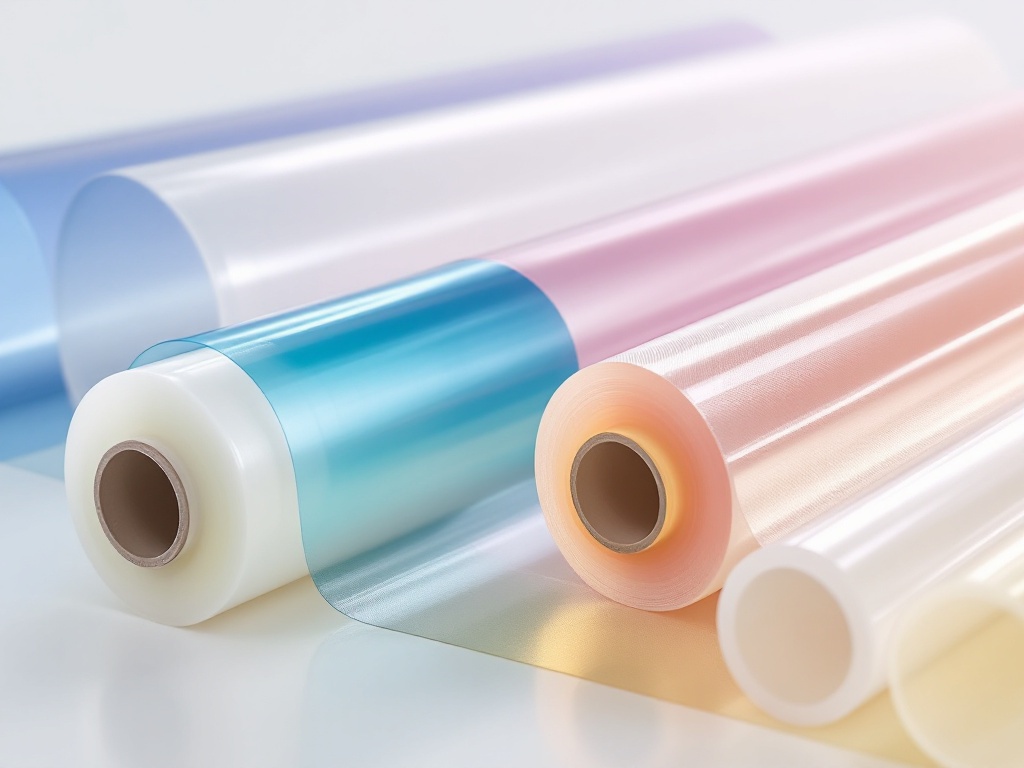
In warehousing and transport practice, the choice between a cardboard slip sheet and a plastic one should rarely be reduced to the simple question: „what is cheaper to purchase?”.
That starting point leads to wrong decisions, because the unit cost of the material is only a fraction of the whole equation.
What matters much more is what happens afterwards:
how a slip sheet behaves under load, how it reacts to moisture, how much operational work it generates, whether it is suitable for reuse and how it affects product damage.
In logistics the difference between CAPEX and OPEX is very concrete here.
CAPEX includes the investment expenditure on a solution that is intended to work over time, usually in a reusable model.
OPEX concerns operational costs, meaning the ongoing consumption of material, replenishment purchases, losses, handling, cleaning, storage and disposal.
The problem is that many companies compare cardboard and plastic only at the purchase level, omitting the costs of handling the packaging in the real process.
This is particularly visible where loads have high value, unstable contact surfaces or pass through several transshipment points.
In such conditions a slip sheet is not an accessory.
It is an element of the unit load security system.
If it performs poorly, the effects appear quickly:
layer shifts, deformation of secondary packaging, complaints, shipment corrections and increased warehouse workload.
How to calculate CAPEX and OPEX for pallet slip sheets
CAPEX: when the slip sheet is a process asset, not a consumable
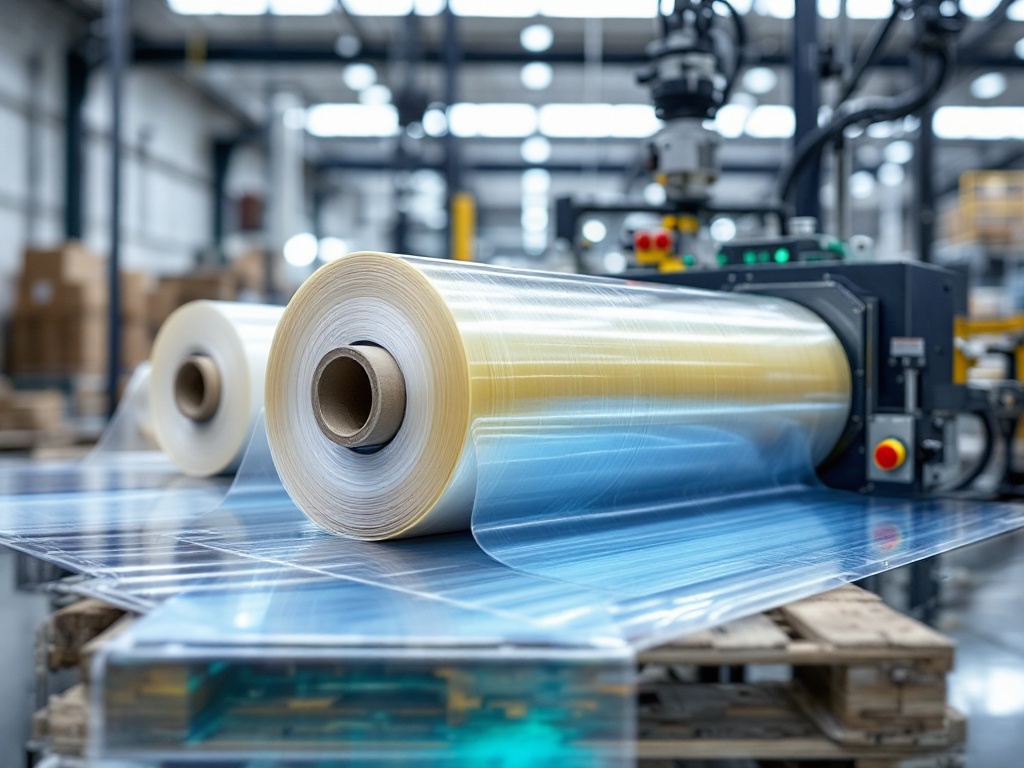
Plastic slip sheets are most often considered in an investment model. They are bought more expensively but with the assumption of multiple uses. This model makes sense when a company controls the circulation of carriers and auxiliary packaging: in its own warehouses, within a closed distribution network, between production plants or in repeatable relationships with a customer. Then the higher initial expenditure can be spread over a large number of cycles.
In practice it is not the material durability declared by the manufacturer that counts, but operational durability. Those are two different things. A slip sheet can be mechanically resistant and still quickly fall out of circulation due to losses, contamination, damage during picking or lack of return discipline. Therefore CAPEX for plastic must be assessed together with the real turnover rate and recovery level.
If a company ships goods in an open model to many recipients, without reliable material returns, investing in reusable slip sheets often stops being an investment and becomes a cost of losses. In a spreadsheet this only becomes apparent after several months, when missing units have to be constantly repurchased.
OPEX: the ongoing cost is not just buying the next batch
Cardboard usually falls into OPEX. It is purchased regularly, consumed continuously, easy to implement and simple to circulate. This solution is intuitive for many warehouses, especially for one-off shipments and a dispersed supply chain. However, the real operational cost of cardboard does not end with the purchase invoice.
You have to add variability in batch quality, susceptibility to dampness, greater storage volume, dust generation, deformations and impact on pallet stability. If a cardboard slip sheet loses stiffness in a cold store, at high humidity or during longer storage, the cost shows up elsewhere: in product losses, the time needed for fixes and in a growing number of transport damages.
For plastic slip sheets OPEX looks different. Tasks related to washing, sorting, storing empty slip sheets and organizing the return flow are added. On the other hand, the number of replenishment purchases usually falls, parameter repeatability improves and the risk of material weakening due to moisture decreases. For such products the selection of the appropriate polymer and thickness of PE film also matters, as with solutions from the group of HDPE film products, where durability and dimensional stability directly affect usability.
Where cardboard loses out, and where it can still be a rational choice
The working environment decides faster than the specification on paper
Most mistakes in selecting slip sheets come from ignoring operating conditions. Cardboard in a dry high-bay warehouse, with a short dwell time of goods and stable unit packaging, can work correctly. If the pallet goes directly to the customer without returning auxiliary materials, the single-use model is often logical.
The situation changes when the load goes into a cold store, a cross-dock, a high-humidity zone or passes through several transshipments. Cardboard absorbs moisture, softens, waves and loses repeatability. That does not always mean spectacular pallet destruction. More often the problem is more insidious: friction between layers subtly decreases, an uneven surface appears under the next layer of packaging, and the whole stack of cargo begins to shift during transport.
With beverages, household chemicals, bottled products, cans, bags of raw material or cartons with a smooth bottom, even a small loss of stability makes a difference. In the warehouse you may not yet see it. The problem appears only after braking, a temperature change or a standstill at the dock.
When cardboard still holds up
Cardboard makes sense where ease of implementation and no need for recovery are important. It works well for one-off shipments, simple goods streams, low risk of moisture and where the slip sheet primarily serves as a separator rather than a load-bearing or stabilizing element. If the goods are not prone to shifting and the logistics route is short and predictable, cardboard can remain a sufficient solution.
However, one must distinguish “sufficient” from “optimal”. The fact that the pallet arrives does not yet mean the process is efficient. Cardboard is often accepted because the company has become accustomed to a certain level of losses and operational corrections. Only after calculating damages, complaints and additional work does it turn out that the seemingly cheap material raises the total cost of handling the unit load.
Where plastic provides an operational advantage
Parameter repeatability and resistance to warehouse conditions
Plastic slip sheets win where the process needs predictability. It's not only about mechanical durability, but about maintaining the same properties over successive cycles. A well-chosen plastic slip sheet does not absorb moisture, does not generate dust, does not delaminate and does not change geometry as easily as cardboard. For the warehouse operator this means fewer exceptions in the process.
This advantage is especially visible on automated or semi-automatic palletizing lines. A machine does not like materials that are sometimes stiff and sometimes soft. It also does not like dimensional deviations and curled edges. Even small differences can cause feed errors, jams or uneven layer placement. In such an environment plastic more often stabilizes the process than the load itself.
Thin film solutions used as a separating or protective layer also perform well in daily work, for example film slip sheets used between layers of products. They do not replace every type of rigid slip sheet, but in many applications they reduce friction, protect package surfaces and improve layer separation without increasing the total pallet mass.
Hygiene, process cleanliness and operational compliance
In industries where cleanliness matters practically, cardboard often loses not because of strength but because of dust, fibers and susceptibility to contamination. This applies among others to the food, pharmaceutical, cosmetic sectors and some technical production. There a slip sheet cannot be a source of secondary contamination of the packing area or a problem during an internal audit.
Plastics are easier to keep under controlled hygienic conditions. It is also easier to implement a consistent cleaning standard and a visual condition assessment. That does not automatically mean every plastic slip sheet is suitable for every environment. You must consider the type of raw material, indirect contact with the product, the washing method and resistance to agents used in the plant. Material alone is not enough. The whole usage regime matters.
If the process includes goods sensitive to contamination and moisture, choosing appropriate protective materials usually goes beyond the slip sheet itself. Solutions from the PE film group often work in parallel to supplement interlayer, protective and transport protection.
Most common sources of errors in cost analysis
Counting the purchase price without the circulation cost
The most typical mistake is comparing the price of one piece of cardboard with the price of one piece of plastic. That comparison is seemingly logical but practically tells little. Single-use and reusable slip sheets operate under different cost models. If plastic is to perform dozens or hundreds of cycles, you must calculate cost per use, not purchase cost. If cardboard is to be consumed continuously, you must assess not only the delivery price but also storage costs, waste and the impact on damage.
Ignoring hidden losses in the warehouse and transport
Many companies see only visible losses, i.e. physically damaged goods. Meanwhile slip sheets also affect hidden losses: slowing picking, additional pallet adjustments, re-wrapping with stretch film, manual layer leveling and material sorting upon delivery. These are not spectacular cost items, but they can systematically burden the operation.
If the warehouse team regularly "rescues" pallets before dispatch, it means the problem exists earlier — usually at the stage of selecting auxiliary material or parameterizing the unit load. The slip sheet is one of the most frequently underestimated elements of that setup.
Lack of division into logistics streams
One company may simultaneously need both cardboard and plastic. This is very common. Transport to a regional company warehouse has different conditions, export shipment different conditions, and distribution to small customers different ones again. An analysis of CAPEX and OPEX without dividing into logistics streams leads to simplifications that later retaliate operationally.
In practice it is worth at least separating: closed and open circulation, dry warehouse and humid environment, high- and low-damage-risk loads and manual and automated processes. Only then can you see whether a plastic slip sheet really works as an investment or is just a more expensive substitute for a single-use material.
What a rational decision looks like in operational practice
A good decision does not come from habit or the purchase price alone. It comes from matching the material to the specific circulation. If the slip sheet is to return, there must be a real return system. If it is to protect a load in a humid environment, it must maintain parameters despite temperature and condensation. If it is to work on an automatic line, it must be dimensionally repeatable. If it is simply to separate layers in a one-off shipment, investing in a reusable solution is not always necessary.
This is why the cardboard vs. plastic analysis is not a dispute about materials, but a dispute about logistical models. One material more often wins by simplicity and a low barrier to entry. The other — by process control, durability, and a lower unit cost over a longer period of use. Which is appropriate is decided not by theory but by how the pallet actually performs from the moment of packing until receipt by the customer.
Cardboard pads or plastic ones? CAPEX and OPEX cost analysis in the practice of a single logistics project
This topic most often resurfaces when the number of transport complaints in a company increases or someone in procurement notices a clear price difference between a single-use and a reusable solution. In theory the decision seems simple. In practice it is almost never so.
In one of the projects we worked with a client from the food industry who shipped palletized goods to its regional warehouses and then further to a network of retail recipients. It was not a case where the problem boiled down to the pad’s mere strength. The trouble concerned the entire logistics flow: carrier rotation, storage conditions, returns, palletization quality, and loss accounting.
Starting point
The client used classic cardboard pads between layers of bulk packaging. On paper everything checked out: low purchase cost, quick availability, no need to recover material from end customers. The problem was that the actual distribution model was more complex.
Some pallets circulated in a closed loop between the plant and regional warehouses. Some were repacked. Some stayed longer in cooler, more humid zones. In addition, the client used several pallet height configurations, and during peak seasons there were accelerated shipments and greater pressure on the warehouse.
At first the request sounded fairly typical: “we want to check whether plastic won't turn out cheaper than cardboard.” After the first conversation it was already clear that comparing purchase prices alone would not resolve anything.
The client's problem
The company observed three phenomena simultaneously:
an increase in the number of layer shifts on pallets after transport between warehouses,
greater labor intensity when correcting load units before further shipment,
a lack of consistent data on whether the current model is actually cheaper than the reusable alternative.
Importantly, the damages were not spectacular failures of entire pallets. It was more a “silent cost”: slightly crushed corners of packages, skewed layers, the need for additional stretch wrapping, manual repairs and single complaints that did not look threatening on their own but, scaled over a quarter, became noticeable.
The client had already made one trial earlier. In one warehouse some cardboard pads were replaced with a stiffer paper variant. The effect was weaker than expected. The load-bearing capacity of a single layer improved, but the problem of material waviness and loss of repeatability after a few days of storage did not disappear. That was the first important signal that it was not only about grammage.
Situation analysis
We did not start from the product catalog. First we broke down the process into segments, because in such cases cost appears in different places and is usually not assigned to a single department.
Together with the client’s team we analyzed:
how many times a given pallet unit is handled within the internal chain,
which routes are closed and which are open,
where manual corrections occur,
how long pallets sit in the warehouse before further distribution,
what the real humidity and temperature conditions are in storage zones,
what percentage of auxiliary materials can be recovered without creating additional bureaucracy.
That was a rather awkward part of the project, because it quickly turned out that the client did not have a single consistent model for calculating the cost of a pad. Procurement saw the unit price. The warehouse saw labor time. Logistics saw complaints and delays. Finance treated cardboard as a simple operating cost and the idea of switching to plastic as a capital expenditure that needed to be justified by metrics.
In such projects the word CAPEX can be misleading. In this case it was not about a large technological investment, but about changing the way of looking at an auxiliary material. The client had to answer whether, for part of the logistics stream, the pad should be a consumable or an asset working in circulation.
What the process inspection revealed
After an audit at two locations we saw several things that were not visible in the reports.
First, cardboard pads were stored in a place where humidity fluctuations occurred after doors were opened and during intense traffic. This did not mean the material was soaked. However, it was enough for part of batches to lose flatness and have slightly curled edges after a few days.
Second, operators, during faster picking, did not always place pads perfectly even. With cardboard the deviation was tolerated as long as the layer “somehow arranged itself.” The problem started higher up when subsequent packages rested on an uneven surface.
Third, the client had a closed loop stable enough that some routes were indeed suitable for implementing a reusable solution. Previously no one had calculated this separately. All shipments had been lumped together, which made plastic seem prohibitively expensive from the outset.
Fourth, regional warehouses were already making manual pallet corrections before further shipment, but did not report this as a cost caused by the pad. It was “normal warehouse work.” Only when we collected the time of these activities over several weeks did this become a concrete OPEX item.
Project assumption
We did not recommend a full replacement of all cardboard pads with plastic ones. Such a move would be too simple and, in this case, wrong. Instead, we split the process into two streams:
a closed loop between the production plant and regional warehouses,
open distribution to end customers.
For the first stream we prepared a model with a reusable pad. For the second we kept the single-use solution, but changed the way it was applied and adjusted several parameters of the entire pallet unit.
This is an important distinction. Sometimes the problem is attributed to the material itself, and then it turns out that the source of losses is a combination of several small mismatches: a pallet that is too tall, uneven film tension, incorrect layer order, and a pad that does not forgive mistakes.
Actions step by step
1. Route segmentation and cost separation
First we listed which pallets return on a predictable cycle and which disappear from circulation. Without this you cannot fairly compare CAPEX and OPEX. In the closed loop we calculated not only the purchase of reusable pads, but also the level of real recovery, the number of cycles, losses, washing and the need for buffer stock.
In the open loop we left the single-use material model, because recovery would be artificial and organizationally difficult.
2. Operational test in two warehouses
Instead of running a laboratory trial, we launched a test in normal work rhythm. This is important because many solutions look good in a short demonstration but perform worse in everyday operation.
In the closed section we used plastic pads with repeatable dimensions and resistance to moisture. In the single-use section we standardized the rules for placing pads and the geometry of layers. In several configurations we also used thin interlayer solutions, similar to a film pad, where the client cared more about separation and surface protection than layer stiffness.
3. Palletization correction
This was an element the client had not planned initially. After the first observations it turned out that part of the damage stemmed from excessive load unit height for a specific type of bulk packaging. Changing the pad material alone would not have completely removed the problem.
So we reduced the number of layers for one SKU by one level and changed the pad’s position in the packing sequence. For the sales department this was an unpopular decision because it meant fewer units on a single pallet. From a logistics perspective, however, the balance improved because corrections and damage in transit decreased.
4. Organizing the return flow
In a reusable model the biggest risk is usually not the durability of the material itself, but losing control over the circulation. Therefore the client received a simple procedure: batch marking, placing used pads in a designated spot, condition checks upon receipt and a minimal safety stock.
We did not implement an elaborate IT system because the scale did not require it. Operational discipline and assigning responsibility on both sides of the loop were sufficient.
5. Securing the top and bottom layers
For some pallets the problem was not only the pads between layers, but also the contact of the load with the pallet itself and exposure of the top layer to contamination during internal transport. In these configurations the client added protective solutions from the HDPE film product group, including underlays and covers used selectively for more sensitive SKUs. This reduced secondary contamination and improved quality during repacking.
Difficulties that arose along the way
The project did not go perfectly and that was the most typical thing about it.
The first problem appeared after two weeks of the test. In one warehouse some reusable pads started disappearing from circulation faster than we had assumed. Not because they were being destroyed. They were simply being put aside together with other auxiliary materials after unloading. The loss did not result from the solution’s quality but from operational habits.
The second problem concerned cleaning. The client assumed that since plastic pads are moisture-resistant, there was no need to set rules for their inspection after return. We corrected that assumption quickly. In the part of the loop where pallets returned from dustier warehouse back areas, it was necessary to introduce a simple visual assessment step and set aside units for reuse or cleaning.
The third difficulty was more organizational than technical. Procurement wanted a single standard for the whole company. The operation showed that a mixed model would be better. Agreeing on that took more time than the warehouse trial itself. This is a common point of contention: a simpler specification does not always yield a lower total cost.
How we calculated the result
We did not rely solely on purchase price or the number of complaints. We collected several indicators from the period before implementation and after the test:
the number of manual interventions when correcting pallets,
labor time for repacking and corrections,
the number of quality reports related to unit stability,
material losses in the closed loop,
use of additional stretch film per pallet,
rotation of stock for single-use and reusable pads.
Only on this basis did we separate what is CAPEX and what is OPEX. The purchase of reusable pads went to the investment part, but washing, handling returns, sorting and losses were counted as operating costs. For cardboard, OPEX included not only the purchase of subsequent batches but also additional warehouse labor and some quality losses that had not previously been associated with it.
Results after a few months
After a full quarter the client did not abandon cardboard entirely, but changed the logic of its use. That was the most sensible outcome of this project.
In a closed loop:
the number of manual pallet fixes before further shipment decreased,
consumption of additional stabilizing film was reduced,
loads retained better geometry after transport between warehouses,
the unit cost of using an interlayer, when broken down per cycle, proved lower than the client's earlier assumptions.
In an open loop:
the single-use model was maintained,
but some losses were limited by better layer arrangement and the use of auxiliary materials,
the number of situations in which operators had to "rescue" a pallet just before loading was reduced.
However, the most important thing was different. The client stopped treating the interlayer as a cheap add-on to the pallet. It began to be counted as a process element that affects labor intensity, quality and predictability of shipments.
In numbers the effect was not spectacular in a marketing sense. We are not talking about a sudden drop of losses to zero. We are talking about a steady reduction of hidden costs that were previously dispersed among the warehouse, transport and claims. For the operations team, that was what mattered.
Lessons from practice
From this project we retained several observations that are regularly confirmed in other implementations.
First: the question "cardboard or plastic?" is sometimes the wrong question. A more accurate one is: "for which logistical streams does a single-use solution make sense, and for which does a controlled reusable loop pay off?" When the client separates these two worlds, the decision becomes much simpler.
Second: the biggest mistakes do not come from choosing the wrong material, but from adopting a single standard for processes that operate differently. Central warehouse, regional warehouse and distribution to the end customer are often three different working environments.
Third: if a company wants to calculate CAPEX fairly, it must also count circulation losses. A reusable interlayer won’t justify itself on its own. It needs a simple system for returns, inspection and storage. Without that the investment cost starts to leak away in operations.
Fourth: in some applications the interlayer alone does not solve the problem. Sometimes only the combination of an appropriate pallet base, a protective layer and an adjustment to palletization produces the result the warehouse expects. In such situations it is worth looking more broadly at protective and separating materials, including PE films, if the process requires additional protection against moisture, contamination or abrasion between layers.
Practical conclusion
In this particular case the best decision was neither a full switch from cardboard to plastic nor sticking to the previous model. A mixed variant, based on the actual pallet flow in the supply chain, proved effective.
If the loop is closed, repeatable and under control, a reusable interlayer can function as a sensible element of CAPEX. If shipments are dispersed and recovery is not realistic, cardboard or another single-use solution can still be justified, but its operational consequences must be honestly accounted for.
This is the element that most often changes the result of the calculation: not the price per unit, but the cost of maintaining a stable, predictable pallet from the packing line to the point of receipt.
FAQ – cardboard or plastic interlayers in CAPEX and OPEX analysis
Do plastic interlayers need to be amortized, or can they be treated as an operating expense?
It depends on the implementation method, the scale of the loop and the company’s accounting policy, not on the material itself. In operational practice this topic regularly causes misunderstandings between logistics, purchasing and finance. The warehouse sees a tool to stabilize the pallet. Accounting sees a fixed asset or an auxiliary material. If these two perspectives are not agreed at the start, later it is difficult to compare the cardboard and plastic options objectively.
Most often reusable interlayers are treated as an investment when the company buys a larger batch with the assumption of multiple use in a controlled loop. In such a model the expected service life, number of cycles, level of losses and method of recording matter. Problems arise when a purchase is formally treated as CAPEX, but the operation uses interlayers like a single-use material: without return controls, without batch identification, without accounting for shortages. On paper everything looks correct, but in practice the investment cost dissipates into losses.
The opposite situation also occurs. A company records the purchase as an operating expense because it is administratively more convenient, but operationally the interlayers work for a long time and genuinely reduce the unit cost of pallet protection. Such a model can still be sensible if internal accounting policy allows it. For logistics more important than the accounting label is whether the comparison of options was done fairly and whether the cost of using a single interlayer was calculated together with losses, cleaning, sorting and buffer stock.
For larger rollouts it works best to agree on four things jointly before start: who is responsible for record-keeping, how losses are calculated, what level of safety stock the company maintains and after how many cycles the material is considered withdrawn from use. Without this, comparing CAPEX and OPEX quickly turns into a definitional dispute instead of a process decision.
How to calculate the break-even point if some interlayers are lost or returned damaged?
This is one of the most practical questions, because optimistic calculations break here. Many companies assume an ideal model: every interlayer returns, every unit is reusable, each performs the declared number of cycles. In a real warehouse it does not work like that. There are losses, unloading mistakes, mechanical damage, contamination, misplacement into wrong zones and plain lack of discipline.
The break-even point should be calculated not from the purchase price divided by the declared number of uses, but from the number of actual uses achievable in the specific loop. That is a fundamental difference. If the manufacturer declares high durability, but in your process 12% of units disappear in the first quarter and another 8% drop out of circulation due to damage or contamination, the calculation must reflect that level of loss, not laboratory parameters.
In practice it is worth building a simple model:
cost of purchasing the starter batch,
average number of cycles achieved per unit in the specific process,
monthly or quarterly loss rate,
cost of handling returns and inspecting condition,
cost of cleaning or sorting, if applicable,
cost of buying replenishment batches.
Only then can you calculate the cost per use and compare it with the single-use option. Importantly, the break-even point should not be calculated globally for the whole company. The same type of interlayer can be very cost-effective on the route between the plant and the central warehouse, and completely uneconomical for deliveries to external customers where returns are poorly controlled.
Most mistakes come from assuming one average for all locations. Better results come from calculating the threshold for each route group separately, and then aggregating that into a network-wide model. Such a calculation is less flashy in a presentation, but much closer to what actually happens on the floor.
Does the interlayer material have formal importance in quality audits and retail network requirements?
Yes, and often more than purchasing assumes. In many companies the interlayer is seen as a technical detail until a client audit, an internal quality control or a complaint related to packaging contamination appears. Then it turns out that the auxiliary material is subject to the same expectations as the rest of the packing process: it must be repeatable, clean, properly stored and compliant with the industry’s requirements.
In the food, cosmetics or pharmaceutical sectors questions go beyond strength. Dusting, susceptibility to moisture absorption, cleanability, risk of secondary contamination and batch parameter stability matter. Cardboard may be acceptable in some applications, but in others it generates problems during an audit, especially if stored in uncontrolled conditions or if its surface indirectly contacts the unit packaging.
With plastic interlayers a different set of questions more often appears: is the material identifiable, is it easy to assess its hygienic condition, is the washing procedure documented and do staff actually follow it. Simply switching cardboard to plastic does not automatically solve formal issues. If the company lacks a procedure for sorting, selection and wear assessment, the plastic may look fine initially but start to raise concerns after a few months.
In practice the rule works well: the more demanding the quality environment, the less room there is for ad hoc materials. Therefore before implementation it is worth checking not only performance parameters, but also material documentation and compliance with the client’s internal requirements. This also applies to supplementary protections, such as HDPE products or more widely used PE film, if they are part of the overall cargo protection system.
What burdens the warehouse more: storing cardboard stock or handling returns of plastic interlayers?
There is no single answer, because it depends on the operation profile, but from the warehouse organization perspective these are two completely different types of burden. Cardboard takes up space as incoming stock. Plastic burdens the process as a circulating item. Both cost, just differently.
With cardboard the main problem is warehouse volume, sensitivity to storage conditions and the need to maintain higher availability of single-use batches. If consumption is high, the material flows quickly in and out but requires regular deliveries, staging space and attention to prevent deterioration before use. This is particularly important in warehouses with high seasonality, where safety stock grows because the company wants to avoid shortages during peak shipments.
With plastic the problem shifts from storage space to flow organization. You need to provide areas for clean interlayers, returned ones, those requiring inspection and those temporarily excluded from circulation. There is also empty carrier transport, inventory counting and shortage control. If the process is well set up the burden does not have to be large. If it is not, the warehouse begins to live its own life: some units lie where they shouldn't, others return without identification, and operators don't know what is fit for further use.
From a warehouse manager's perspective it is fairest to count not only square meters but also the number of touch operations. Cardboard more often generates simple input-and-consume logistics. Plastic adds return operations, but can reduce the number of interventions on the pallet itself. Therefore the assessment should cover the entire course of the warehouse day, not just the space occupied on a shelf or at the packing station.
How to prepare a comparative test of cardboard and plastic so the result is credible to management?
The worst possible test is a short demo with one perfectly assembled pallet. Such an experiment almost always gives a falsely positive picture. If the result is to be useful for management, the test must reflect normal working conditions, including operator errors, batch variability, time pressure and real transport.
A good test starts with selecting SKUs that actually generate risk or the largest volume. It’s not worth taking the product that’s easiest to palletize just to show success faster. It’s better to choose three groups: a stable load, a moderately problematic load, and a sensitive load. That way the result has decision-making value.
Next you need to establish metrics that are not limited to claims. Claims alone are too delayed an indicator. Process data works much better:
pallet preparation time,
number of corrections before shipment,
need for additional securing,
condition of the pallet upon receipt at the next location,
percentage of material withdrawn from use,
number of nonconformities detected by the warehouse or quality.
It’s also important that the test lasts long enough. For reusable solutions a week or two usually shows nothing. You need a period in which returns, initial losses, soiling and the impact on daily work organization become visible. For many companies a reasonable minimum is a full operational cycle including not only shipment but also the return of the material.
The management accepts the result more quickly if the test has an owner on both operations and finance sides simultaneously. Logistics alone usually describes practical benefits well, but without translating them into cost and risk the decision is often postponed. Conversely, finance alone can fail to notice that a small change in pallet stability translates into a very real gain in process predictability.
Do automatic palletizing and depalletizing lines more often require plastic than cardboard?
Very often yes, but not because the machine “likes plastic” as a material. The reason is simpler: automation does not tolerate high variability. If an interlayer has dimensional differences, tucked corners, waviness or variable stiffness between batches, the system begins to work less stably. In a manual process an operator will correct the deviation instinctively. a machine will not.
On fast lines the problem does not always manifest as a complete process stop. It often starts subtly: uneven picking, worse placing on the layer, occasional stack shifting or the need for more frequent service interventions. Those “small” deviations later increase the operating cost, even though formally it’s hard to attribute them to the interlayer itself.
Plastic more often gives an advantage because it’s easier to maintain dimensional repeatability and flatness. In some applications lightweight interlayer solutions, such as film interlayers, also work well when their task is mainly separation or surface protection rather than bearing the load of the layer. That’s an important distinction. Not every line needs the same stiffness. Sometimes the problem is not load capacity but lack of repeatable guidance of the material.
Before changing the standard it’s worth checking three things: the equipment’s tolerance to dimensional deviations, the method of picking the interlayer, and the line speed with different batches of material. In practice a few hours of observation with maintenance participation gives more than a long specification description. Automation quickly shows whether the material supports the process or only theoretically meets the requirements.
How do interlayers affect waste footprint and ESG reporting in logistics?
This topic is increasingly raised not by environmental departments but by logistics and procurement themselves. Companies are starting to look more broadly: not only at how much it costs to secure a pallet, but what waste stream it generates and how it affects internal environmental indicators. When comparing cardboard and plastic it’s easy to fall into simplification. Single-use paper material is intuitively perceived as “more ecological”, and plastic as problematic. In practice such shorthand can be misleading.
If cardboard is consumed in large quantities, replaced regularly, susceptible to damage and requires frequent replenishment deliveries, its total operational footprint can be clearly higher than what the material type alone would suggest. Conversely, plastic in a circular, reusable system can reduce waste per shipment unit, but only if it actually stays in circulation long enough. An interlayer lost after two uses is neither cost-effective nor environmentally justified.
For ESG reporting it’s good to collect data not only on tonnes of waste, but also on number of uses per unit of material, recovery rate, level of rejects and reasons for withdrawal. Only then can you see whether the reusable model works. It’s also worth remembering packaging that supports protection of the lower and upper pallet layers. For example a properly selected pallet pad can reduce soiling and product losses, and that also matters environmentally, because damaged goods usually impact the balance more than the auxiliary material itself.
Companies that approach this thoroughly no longer ask only: “Is the material recyclable?”. They rather ask: “How much waste and loss does the whole usage model generate?”. That’s a much more mature way of assessment.
When does a mixed model complicate the process instead of improving it?
A mixed model sounds reasonable and often is, but not always. There are companies where dividing cardboard and plastic interlayers across different streams works very well. There are also those where it ends with mistakes, mixed inventory states and difficulty training the team. The idea alone is not enough. What matters is the organization’s ability to maintain two standards in parallel.
Problems most often arise in three situations. First, when the criteria for use are too complicated. If an operator must judge which material to use based on many exceptions, errors will occur. Second, when both variants are physically stored next to each other and are not clearly labeled. Third, when the ERP system or packing instructions do not keep up with the change and the warehouse works “from memory”.
The mixed model makes sense if it can be translated into simple rules: a specific SKU, a specific route, a specific location, an unambiguous material type. If the rules are fluid, it’s sometimes better to simplify the standard even at the cost of giving up part of the potential savings. From an operations perspective a simpler process can be cheaper than a theoretically better model that no one applies consistently.
That’s why before implementation it’s worth doing a short organizational readiness assessment. It’s not about a detailed audit, but practical questions: are labels and storage locations prepared, can packing instructions be updated, can team leaders quickly spot nonconformities. Experience shows that it’s at this stage that it is decided whether the mixed variant will be an improvement or a source of chaos.
Can an interlayer affect workplace safety, not just the condition of the goods?
Yes, and more often than occupational health and safety reports indicate. It’s usually analyzed through the prism of load protection, while interlayer material also affects ergonomics and the risk of warehouse incidents. Cardboard interlayers with uneven edges, damp or deformed, can be harder to pick, place and position quickly. With intense picking this means more corrective movements, more bending and a greater susceptibility to rushed mistakes.
With plastics the problem looks different. If interlayers are poorly stored, slippery or dirty, they can hinder safe handling of the stack. If there are no rules for putting them away after use, the material begins to accumulate at stations and simply obstructs movement. That’s not a flaw of the plastic itself, but a bad organizational standard, yet the effects are very real.
It’s also worth paying attention to less obvious situations. An unstable pallet layer is not only a risk of claims. It’s also more likely that an operator will manually correct the load after wrapping, on the ramp or just before pickup by a forklift. Such actions increase the risk of injuries and working in awkward positions. If a well-selected interlayer reduces the need for such interventions, it indirectly also improves the team’s safety.
Companies that analyze auxiliary material together with occupational health and safety (OHS) usually spot problems that are invisible in standard cost accounting faster. That’s a good approach, because workplace safety and operational efficiency in the warehouse very often go hand in hand.
The most common mistakes when comparing cardboard and plastic interlayers in CAPEX and OPEX analysis
At the purchasing decision stage many companies assume the problem can be resolved with a sheet that has two columns: cardboard and plastic. In practice that’s when the most expensive mistakes begin. Not because someone misread the price. Usually because two different material usage models were compared as if they were the same cost. Below are the mistakes we most often see in real implementations and which later return as claims, gaps in circulation, wasted warehouse time or false conclusions for management.
1. Reducing the decision to the purchase price of a single unit
This is the most common and at the same time the most misleading mistake. The purchasing department compares the price of a cardboard interlayer with the price of a plastic one and tries to assess profitability on that basis. This shortcut is popular because it gives quick numbers and seemingly simplifies the decision. The problem is that it compares acquisition cost, not usage cost.
The effect is predictable. Cardboard often wins on paper, but later dispersed expenses appear across the operation: more frequent deliveries, larger stock, more waste, batch instability, pallet corrections, additional wrapping and transport losses. With plastic it’s sometimes the opposite. At the outset it looks more expensive, and after a few months it turns out that the cost per use is lower, but only where the circulation really works.
How to avoid this? Don’t count the unit price, but the cost of one successful use in a specific logistics stream. To that you need to add losses, returns, storage, sorting, cleaning and the impact on operations. Without that CAPEX and OPEX are just labels, not an analysis.
From experience: if someone shows “savings” solely based on the purchase price of the material, then almost always after implementation a second sheet appears — with costs that no one previously assigned to the interlayer.
2. Accepting the declared number of cycles instead of the number realistically achieved
For reusable interlayers companies very often base the calculation on parameters declared by the supplier or on the result of a test in orderly conditions. That’s understandable because such data are available immediately. The thing is the warehouse doesn’t work in laboratory conditions.
In practice the number of cycles ends sooner not only because of material wear. Interlayers get lost, return dirty, are put in the wrong zone, leave circulation together with other materials or fail quality control. As a result the model that was supposed to balance out after dozens of uses stops being viable much earlier.
The consequence is serious: the company books the investment, but operationally handles an expensive disposable material. Purchasing replenishment batches begins to eat into the expected effect, and management receives the message that “plastic didn’t work”, although the problem was not the material but an incorrectly calculated durability of the process.
How to avoid such a trap? Count real cycles, not declared ones. Preferably based on a pilot covering the full circulation, not just the shipment. It’s also worth immediately assuming a level of loss that will be used in the financial model, rather than assuming an ideal variant.
Practical observation from implementations: where the client pre-enters a certain percentage of losses and rejects into the calculation, the result may be less impressive in the presentation, but much less often needs to be explained later.
3. Mixing closed-loop and open-loop in the same calculation
This is a mistake that regularly ruins the entire analysis. The company lumps all shipments together: to its own warehouses, to carriers, to end customers, to export. Then it tries to derive a single average from that and, based on it, choose cardboard or plastic for the whole organization.
Why is this so common? Because one average simplifies reporting and is easier to show to decision-makers. The problem is that logistically it’s fiction. The same material can be very profitable between a plant and a regional warehouse, and completely unprofitable in dispersed distribution without return control.
There are two consequences. Either the company abandons a sensible reusable model because “it doesn’t add up globally,” or it implements plastic too broadly and starts financing losses where recovery is impossible. In both cases the problem is not the choice of material but incorrect aggregation of data.
The solution is simple, though less convenient: calculate separately for routes and loops with similar logic. At a minimum, separate closed-loop from open-loop. At larger scale, add locations, customer types and storage conditions.
In practice this is often where it becomes clear that the best decision is not “cardboard or plastic,” but “plastic where it returns under control, and a disposable solution where the material disappears after the first use.”
4. Ignoring warehouse labor cost because "the team does it anyway"
This is one of the most underestimated areas. The client sees the cost of purchasing the material, but does not account for operator time spent fixing pallets, putting back returns, sorting interlayers, removing damaged pieces, rewrapping or looking for shortages in the loop.
Why is this mistake so widespread? Because these tasks rarely have their own cost code. They fall under “normal warehouse work,” so they don’t raise alarms. Only when they are aggregated weekly or quarterly does it become visible that the auxiliary material generates a regular operational burden.
The consequences are concrete: incorrect TCO, false comparison of options and underestimation of real OPEX. In extreme cases the company chooses a theoretically cheaper solution that in practice consumes hours of work on every shift.
How to avoid it? Measure not only claims and material consumption, but also the number of interventions per pallet, returns handling time, sorting time and the number of additional touches of the material. These are the data that most often change the calculation result.
From experience: if the warehouse regularly “rescues” pallets before dispatch, it means the cost of a wrong decision already exists — it just hasn’t been named yet.
5. Assuming the material alone will solve a poorly set palletization problem
Many companies look for the answer in the interlayer itself, although the source of the problem lies elsewhere: a pallet that is too high, an improper layer layout, wrong packing sequence, insufficient film tension or an unstable outer package. Changing cardboard to plastic is often treated as a quick process correction.
This is a common reflex because it’s easier to change the material than to alter the palletization standard. The problem is that expectations then become disproportionate to the possibilities. Even a very good interlayer will not compensate for a poorly built load unit.
Result? The client pays more, and the improvement is partial or nonexistent. After implementation there is disappointment that “better material changed nothing.” In reality it changed too little because it was supposed to fix several errors at once.
How to avoid this trap? Before changing the material, check the pallet geometry, height, layer order, film tension and the points where a layer begins to work. Sometimes a small process correction gives a greater effect than the interlayer replacement itself.
In practical projects, often only the combination of an appropriate interlayer with bottom-layer protection and correction of pallet setup delivers the result the operation expects. In some applications protective solutions from the group of film materials operating in variable environmental conditions can also be helpful, especially where moisture or contamination occurs.
6. No owner of the loop for reusable interlayers
This is an organizational problem, but it has very tangible financial consequences. The company buys plastic interlayers, rolls them out for use, but does not assign anyone responsibility for inventory, storage, condition checks and reconciliation of losses. Formally the material is “in circulation.” Operationally — nobody’s.
This mistake often appears because the project starts from purchasing, not from the process. Once the goods are in motion, everyone assumes the warehouse will handle it. After a few weeks it turns out that some units go missing, some lie in wrong zones, some return without control, and no one knows how much material is actually in use.
The consequence is simple: CAPEX leaks into operational losses. Emergency repurchases begin, turnover drops, and the calculation stops being reliable. Worse, for the next project the organization becomes distrustful of the reusable model as such.
How to avoid it? From the start, establish very practical things: who counts the stock, who assesses damage, where the material is stored, when an interlayer falls out of circulation and who is responsible for replenishments. Without this, even a good product will perform poorly.
The simplest rules work best. Not a complex system, but unambiguous storage locations, batch labeling and clear responsibility on both sides of the loop.
7. Underestimating the impact of storage conditions on the economic outcome
Cost analyses often assume the interlayer behaves the same regardless of location. Later one batch works fine in a dry warehouse, while another starts generating problems after a few days in a zone with higher humidity or frequent door openings.
Why do companies omit this? Because storage conditions are treated as background, not a cost variable. Meanwhile for interlayer materials this can be decisive. Cardboard doesn’t need to be soaked to start losing flatness. Plastic doesn’t need to break to become cumbersome to handle under poor storage.
The consequences usually don’t look dramatic at the level of a single pallet. It’s a series of small deviations: waviness, curled edges, worse layer placement, more corrections. Only the sum of these little issues produces a real cost.
How to prevent it? The analysis should account for the actual storage environment and the time the material spends in the warehouse. “Dry / wet” is not enough. You need to see what happens to the material after a few days in a specific operational zone.
In practice many wrong decisions come from testing the material in the best location and then deploying it also in the toughest one.
8. Treating waste and disposal as a marginal add-on to the calculation
With disposable solutions, waste is sometimes entered symbolically or omitted completely. With reusable solutions, the cost of sorting, washing and withdrawing damaged units is often underestimated. This mistake doesn’t always hurt immediately, but over time it starts to distort the comparison.
It’s common because waste and withdrawals are usually accounted for in a different place than purchasing. As a result the material looks cheaper than it actually is. At large volumes this difference stops being cosmetic.
Consequences? A falsely favorable OPEX for cardboard or an overly optimistic model of plastic usage. On top of that come organizational problems: too little space for waste, no procedure for setting aside withdrawn units, chaos during sorting.
How to avoid it? Close the cost loop for each variant until the end of its life in the process. For disposables this also means the waste stream. For reusables — rules for cleaning, sorting and withdrawal. If the company also uses covers or protective bags, evaluate them together with the interlayer, because only then is the full material balance visible. In some operations auxiliary solutions, such as gusseted bags for protection and separation of the load, also work well — but only when their function is counted as part of the process, not as a random addition.
9. Choosing one standard for the entire company "for the sake of order"
This is a strategic mistake that usually stems from good intentions. The organization wants to simplify purchasing, indexes and training, so it tries to impose one type of interlayer on all locations and all product groups. Administratively this looks sensible. On the shop floor, very often it does not.
The reason this happens is simple: standardization promises order. But overly broad standardization can ignore real differences between processes. A central warehouse operates differently than a cross-dock, differently than a loop to own branches, and differently still than distribution to external recipients.
The consequence can be that some streams work correctly while others start generating exceptions, workarounds and local “improvements.” Then the company has an apparent single standard but in practice several informal process versions. This usually ends with mistakes, losses and conflict between headquarters and operations.
How to avoid this scenario? Standardize decision rules, not necessarily the material itself. It’s better to have two clear application models than one standard that doesn’t fit half the network.
From practice: more operationally mature organizations more often accept controlled differences between streams, because they know that a simpler purchasing sheet does not always mean a simpler warehouse.
10. Postponing quality control of auxiliary material
In many companies an interlayer enters the process without batch-level inspection because it is treated as low-risk auxiliary material. This thinking backfires especially when variability between deliveries appears, deformations, dimensional differences or deterioration after storage.
Why is this common? Because quality control usually focuses on the product, unit packaging and the main carrier. Intermediate materials pass by until they start ruining pallet stability or a customer complaint appears.
The effect is twofold. First, the process becomes less predictable. Second, when a problem arises, it’s hard to determine whether the batch of material, storage conditions or the method of use was at fault. Without basic incoming inspection the company is left with assumptions instead of data.
How to prevent it? A simple receiving standard is enough: dimensional compliance, edge condition, flatness, cleanliness, batch repeatability. It’s not about creating a lab, but about catching a batch that will start generating cost in daily operations.
In real projects this simple filter often separates a stable implementation from one that the warehouse questions after a month.
11. Counting savings without the cost of wrong decisions during the transition period
When changing a standard, companies like to calculate the target state, but less often include the cost of getting there. And it is precisely the transition period that generates many losses: duplicate inventory levels, operator errors, mixing of materials, additional training, corrections to instructions and local stoppages.
This mistake is typical because in an implementation project everyone focuses on what it will look like after the change. Meanwhile, for several weeks or months the organization operates hybridly. That costs money and must be anticipated.
If this is not done, the first results look worse than planned, and the new standard quickly gets the reputation of being “more expensive than promised.” The blame falls again on the material, although the problem was the lack of a realistic transition plan.
How to limit the risk? Implement in stages, on selected routes or SKUs, with a clear measurement point and an evaluation deadline. It is better to do a shorter, controlled rollout than a wide deployment that nobody later knows how to evaluate honestly.
From our experience, it is precisely the transition phase that most often determines whether the organization will consider the change a success or an expensive experiment.
12. Lack of a common language between logistics, procurement and finance
This is not a technical mistake, but very often it is the source of all the others. Logistics talks about pallet stability and labor time. Procurement about price and availability. Finance about investment, operating cost and depreciation. Each side looks correctly from its perspective, but without a common model the decision starts to drift apart.
Why is this so common? Because an interlayer seems too small an element of the process to justify a proper cross-departmental analysis. Only when the problem grows into complaints or rising operating costs does it turn out that everyone calculated something different.
The consequence is disputes about whether the project was profitable, instead of a factual assessment of whether it improved the process. In one spreadsheet plastic looks expensive. In another it reduces losses. In a third nobody counted shortages. And a discussion begins without a common basis.
How to avoid this? Before a decision you must agree on one comparative model: which costs go to CAPEX, which to OPEX, how loss is calculated, what the operational labor cost is and what the evaluation horizon is. Without that, even a good implementation may be judged poorly.
In practice the best projects are not those with the most impressive presentation, but those in which warehouse, procurement and finance measure the same problem from the start using the same metrics.
Comparison of solutions: when cardboard, when plastic, and when a mixed model
Most wrong decisions come not from choosing the “worse material” but from trying to find one standard for all shipments. In practice, comparing cardboard and plastic only makes sense when they are set against a specific type of circulation, turnover rate, hygiene requirements and the warehouse’s way of working. Below are the differences that actually affect CAPEX and OPEX.
Cardboard interlayers versus plastic interlayers in closed-loop circulation
If pallets circulate between your plant, a regional warehouse and return on a predictable cycle, a plastic interlayer usually has an operational advantage over cardboard. Not because it is “stronger” in a general sense, but because it withstands repeated use better, does not react as much to moisture and provides a more stable operational parameter across cycles. This is important where every difference in layer height or a folded edge starts to affect the geometry of the entire pallet.
Cardboard can still work in such a model, especially with light loads and short storage times, but it often loses not through spectacular damage but through gradual deterioration of repeatability. That in turn raises OPEX in areas no one previously attributed to the interlayer: more corrections, more additional wrapping, more manual interventions with shifted layers.
Who benefits most from plastic: companies with a real return flow, their own warehouse network, regular turnover and a need to maintain consistent unit load quality.
Limitations: without a simple system for setting aside, inspecting and returning, even a good reusable interlayer begins to disappear from circulation faster than calculations would predict.
Market observation: where returns are actually under control, the purchase price debate quickly becomes secondary. What matters is the cost of one effective use and the impact on process stability, not the purchase itself.
Cardboard interlayers versus plastic interlayers in open distribution
In shipments to dispersed recipients, without predictable return of the material, cardboard usually remains the more organizationally rational solution. Plastic can be technically acceptable in such a model, but economically it often moves from the investment category to the loss category. Not because it is bad, but because there is no way to “recoup” the higher upfront cost.
This is precisely where cardboard retains the advantage of simplicity. There is no need to create a return loop, count shortages or organize sorting. For many companies that is a sufficient argument, especially for one-off or export shipments. However, the practical consequences must be honestly considered: greater batch variability, susceptibility to moisture and the risk that on tougher routes the cheap material will raise costs elsewhere.
Who benefits most from cardboard: open distribution, one-off shipments, routes without material recovery and processes where the interlayer mainly serves a separating function.
Limitations: if goods sit for a long time, pass through several transshipment points or travel in conditions of elevated humidity, cardboard starts to generate greater risk of quality deviations.
Market observation: many companies keep cardboard not because it is best but because it is easiest to implement across a complex recipient network. That is justified as long as organizational simplicity is not confused with the lowest total cost.
Single-use model versus reusable model
This comparison can be more practical than comparing materials alone. Cardboard most often functions as a single-use solution, plastic as reusable, but the crux of the decision lies in the usage model. Single-use gives simplicity, predictable purchasing and no return obligations. Reusability offers the chance of a lower cost per use, but only if the organization can keep the material circulating.
In a single-use model it is easier to plan operations with variable volumes and irregular shipping directions. In a reusable model it is easier to stabilize the process with repetitive routes and a large number of cycles. The practical difference is that with single-use you continuously pay for new material, while with reusable you pay for the discipline of circulation. Both can be correct, but the cost appears in a different place.
Best application for the reusable model: owned networks, inter-plant transfers, regular relationships with a recipient, controlled warehouse processes.
Best application for the single-use model: dispersed, irregular, seasonal shipments or those where material recovery would be artificially forced.
Practical observation: companies that try to forcibly recover material from the open market usually quickly return to a single-use model. The cost of organizing returns can be higher than the potential savings on the material itself.
Rigid load-bearing interlayer versus thin film interlayer
Not every application requires a classic rigid interlayer. In many processes the problem is not layer load-bearing, but separation, friction reduction, surface protection or improved layer separation. In such cases thin film solutions can be a more sensible alternative than adding a heavier and more expensive load-bearing interlayer.
An example are applications where the packaging itself has sufficient stiffness, but its surface easily scratches, abrades or sticks when layer meets layer. Then light film interlayers perform better than classic solutions designed for loads that in that setup actually do not exist.
Who benefits from this solution: processes where separation and surface protection matter more than transferring large loads between layers.
Limitations: a thin film will not replace a load-bearing interlayer where the main problem is layer collapse or instability of a high pallet.
Practical difference: a well-chosen thin interlayer reduces mass and volume of auxiliary material, but it will not fix palletization errors if the source of the problem is pressure and lack of rigidity in the entire assembly.
Interlayer alone versus a set: interlayer + bottom pad + top cover
In some processes choosing between cardboard and plastic is not enough, because the problem does not concern only intermediate layers. If the bottom layer of goods contacts an uneven pallet and the top is exposed to dirt or moisture, simply changing the interlayer yields only a partial effect.
In such situations it is better to compare two approaches: a single material versus a full protective system. For some loads it makes sense to complement the process with pallet pads that separate goods from the pallet surface, and with protective layers from the HDPE film product group if the issue is dirt, moisture or friction.
When such a set makes sense: for goods sensitive to contamination, for repackaging, in environments with elevated humidity and where complaints more often concern packaging quality than the product itself.
Limitations: a greater number of auxiliary elements requires better standardization of warehouse work. If operators apply solutions selectively and without clear instructions, the effect can be weaker than expected.
Practical conclusion: where complaints arise from several small sources at once, a layered protection system usually yields better results than replacing a single element with a “stronger” one.
Uniform company-wide standard versus stream-differentiated standard
From a procurement perspective, one type of interlayer for the whole organization looks attractive. Fewer SKUs, simpler ordering, easier reporting. Operationally such a model often loses to a differentiated approach where material is matched to the conditions of a specific logistics stream.
A uniform standard works well only when the network is truly similar: the same storage conditions, similar routes, comparable susceptibility of goods to damage. If a company simultaneously handles a central warehouse, regional transshipments and open distribution, one standard usually means compromise. And compromise in logistics often means that nothing is optimal.
Who benefits from differentiated standardization: organizations with several types of circulation, different product groups and varying storage conditions.
Limitations: requires better SKU discipline and clear rules for when each solution is used.
Industry observation: operationally mature companies less often ask “what to implement everywhere?” and more often “where does each solution actually work best?”. That usually leads to a more stable cost result than imposing one material across the entire network.
Cheaper to buy versus less costly to operate
This comparison particularly highlights the difference between the procurement perspective and the logistics perspective. A material cheaper to buy does not have to be cheaper to use. Cardboard more often wins on the input invoice, but with more demanding loads plastic more often reduces handling costs: fewer corrections, fewer additional protections, fewer unplanned interventions.
On the other hand, plastic does not always reduce total costs. If a company has to sort it, wash it, monitor returns and constantly replenish shortages, some operational savings disappear. In practice, plastic's advantage is greatest where the process is repeatable, and cardboard's advantage where the organization wants to avoid expanding operations around an auxiliary material.
Practical difference: cheaper purchase improves short-term results, and cheaper handling improves systemic results. This does not always lead to the same choice.
Lesson from experience: with low margins and high pressure on warehouse efficiency, companies increasingly move away from comparing “price per piece” toward comparing “cost of keeping a pallet correctly in circulation”. And that is usually a fairer reference point.
Mixed variant as a real alternative to extreme decisions
Between fully switching to plastic and staying with cardboard there is a third way: a mixed model. In practice this is very often the best solution, although during procurement it seems less convenient. It consists of using reusable slipsheets for closed loops, and leaving a single-use solution or light separating slipsheets for open distribution.
This variant makes sense where a company has both its own internal logistics and shipments to external customers. It allows leveraging the advantages of plastic where it can truly function as a process asset, and not transferring its organizational costs to areas where the return is illusory.
Who the mixed model is for: manufacturers, distribution networks and operators who serve several types of logistics relationships at once.
Limitations: requires more deliberate standard management and operational training. It's not difficult, but it doesn't work well “from memory”.
Practical observation: companies that implement the mixed model less often overpay for overly widely deployed plastic and less often accept the hidden costs of overly cheap cardboard where the process expects greater repeatability.
What typically wins in specific scenarios
If the load travels once, without material return, through a simple supply chain — cardboard or a light separating layer most often remain the sensible choice.
If the pallet returns between your own locations and must retain the same quality after many cycles — a plastic slipsheet performs better.
If the main problem concerns soiling, protection of the bottom layer or contact with moisture — it's worth comparing not a single material but the entire protective set, based on pads and PE film covers.
If an organization has several different shipping types — the safest decision is not one universal standard, but dividing into streams and separately calculating usage cost.
In practice this last variant most often yields the fairest result. Not because it's the most impressive, but because it best matches how pallets actually operate in warehousing and transport.
Checklist before choosing: cardboard or plastic slipsheets in CAPEX and OPEX analysis
The list below is not for “ticking off formalities”. It's a set of points that actually determine whether the chosen slipsheets will reduce the process cost, or merely transfer the problem from procurement to the warehouse, transport or claims.
1. Check whether you calculate cost per pallet or only the material cost
Before making a decision, calculate the cost of securing one correctly delivered pallet, not just the price of one slipsheet. In practice, two seemingly similar offers begin to differ markedly only when additional protective layers, warehouse adjustments, transport losses and waste are added to the calculation.
This matters because a slipsheet never works alone. If cardboard requires more frequent wrapping with stretch film or adding extra bottom layer protection, its low purchase cost ceases to be the full picture. Likewise, plastic may look expensive up front, but if it eliminates some operational issues, the cost of one successfully handled pallet can fall.
If this step is skipped, a company usually chooses the “cheaper on the invoice” solution and then pays more elsewhere. From experience: most wrong decisions occur where procurement sees the unit price and the warehouse later deals with the consequences of poor load stability.
2. Verify how many pallets really require a load-bearing function and how many only separation
Not every application needs a rigid slipsheet. In some processes, the material between layers only needs to separate packages, reduce friction or protect surfaces from abrasion. In such cases it is worth checking whether a lighter film slipsheet is sufficient, rather than immediately comparing cardboard with a heavier version of plastic.
This is important because many companies overpay for a parameter their pallet doesn't use at all. If the packages are rigid and stable and the main issue is layer separation, lighter solutions such as film slipsheets may be more sensible.
Skipping this verification leads to overspecifying the material or, conversely, applying too light a solution where the layer actually transmits load. In practice a simple distinction works well: separately identify pallets that require support and those that only require layer separation. This tidies the calculation faster than a long discussion about the material itself.
3. Assess whether the problem starts between the layers or already at the interface of the goods with the pallet
Before comparing cardboard and plastic, check the bottom layer of the load unit. If the goods rest on an uneven, wet or dirty pallet surface, merely changing the interlayer may not produce the expected effect.
In many warehouses claims are attributed to the slipsheet, although the source of the problem lies below: point pressure from pallet boards, soiling of bottom cartons, moisture from the floor. In such cases it's better to calculate the variant with additional bottom protection, for example using pallet pads.
If this step is omitted, you can replace the interlayer material and still have the same damage at the bottom of the pallet. From implementation experience: when damage concentrates in the lowest layer, the decision must start from contact with the pallet, not from the middle of the stack.
4. Check whether the slipsheet should also function as an element of hygienic protection
In the food, cosmetics, pharmaceutical industries and parts of technical production you must assess not only load capacity but also process cleanliness. Verify that the material does not dust, does not shed fibers, does not absorb dirt and can be maintained to a repeatable sanitary standard.
This is important because some problems do not end with package damage. Audit remarks arise, extra cleaning of the packing area, material rejections or production reluctance to work with a given solution. In areas with higher hygiene requirements, materials from the HDPE film product group often perform better because they are easier to keep clean.
If a company does not account for this, the choice may be logistically correct but quality-problematic. Practical tip: if the quality department is already raising concerns about dust, fibers or contamination from auxiliary materials, this signal must be included in the calculation, not treated as a separate topic.
5. Verify how much space the material stock occupies and how it affects internal logistics
When analyzing CAPEX and OPEX check not only price and durability but also how much space the working stock and safety buffer occupy. This is especially true for operations with a large number of SKUs and limited space at production or picking areas.
This is important because auxiliary material may be cheap but cumbersome to handle. If large volumes of single-use slipsheets must be stored, the number of internal deliveries, location occupancy and risk of shortages during shifts increase. On the other hand, a reusable solution also requires space: for empty material, sorting and setting aside withdrawn units.
Omitting this point gives a distorted picture of costs. In practice the warehouse quickly “fills in” the missing costs with its own labor. A good method is to calculate not only the purchase cost but also the number of pallet locations or linear meters needed to maintain the standard stock and return flow.
6. Determine whether slipsheets will be identified by size and usage stream
If the company operates more than one pallet format or several shipping scenarios, check whether the material will be unambiguously assigned to an application. This concerns size, thickness, usage zone and method of setting aside after use.
This has big operational significance. Without simple labeling the warehouse begins to use “what happens to be at hand”. As a result, stronger material goes to simple shipments and weaker material to tougher routes. The CAPEX and OPEX analysis then ceases to make sense because the actual process does not reflect the assumptions.
If this element is omitted, format mixing, higher wear and incorrect conclusions about the solution's effectiveness occur. From practice: very simple standards work best — a separate SKU and a clear name for a specific application, without “universal” descriptions the operator interprets as they please.
7. Check whether the end recipient accepts the given type of material in their operation
Before broader implementation it's worth confirming what happens to the slipsheet on the recipient's side. Is the material neutral for them in unloading, does it not hinder waste segregation, does it not cause quality or organizational remarks.
This is particularly important where pallets go to retail chains, distribution centers and large production plants with their own procedures. Material that is convenient for the sender may be poorly received by the customer if it complicates unpacking, generates problematic waste or requires additional handling.
If this point is omitted, problems return not as an internal process failure but as complaints or pressure to change the standard. From experience: it's worth at least for the largest recipients to check not only technical parameters but also unloading practice and waste management on their side.
8. Calculate the end-of-life cost of the material, not just the start of use
Every solution must be closed to the end of its cycle. For cardboard this means waste collection, baling, sorting and tidiness in packing areas. For plastic — sorting, setting aside damaged pieces, possible washing and the decision when the material is no longer fit for use.
This matters because "end-of-life" costs are often dispersed and invisible in the first calculation. With large volumes they are not negligible. If covers or protective bags appear in the process, the material balance must be calculated together, not separately. In some applications, items like gusseted bags complement the process well, but only if their role is clearly defined.
Omitting this step leads to seemingly favorable calculations that do not hold up after a few months of operation. Practical tip: if you cannot indicate exactly what happens to the material after use, it means the final cost has not yet been calculated fairly.
9. Verify the material's resistance to warehouse exposure before use
Check not only the working conditions on the pallet but also what happens to the material earlier: during storage, internal transport and waiting at the gates. This concerns both cardboard and plastics. Some problems begin even before the slipsheet reaches use.
This is important, because poorly stored material loses repeatability. Cardboard can deform from moisture, and certain films and plastics can change properties under the influence of temperature or radiation. If material is stored in harsher conditions, it's worth considering the effect of exposure already at the selection stage. A useful supplement is knowledge of how temperature and the environment affect plastics, which is described, among other things, in the article on the durability of polyethylene film.
Omitting this aspect yields misleading tests. Material behaves well on the day of delivery, and worse after a week of storage. From experience: if interlayers lie near gates, in unheated zones, or are seasonally subject to large temperature swings, this must be treated as a real cost variable.
10. Define how you will measure the success of the implementation after 30, 60 and 90 days
Before changing the standard, define specific evaluation metrics. Not a general "it should be better", but measurable data: number of pallet repairs, transport complaints, consumption of additional film, operator intervention time, percentage of damaged or withdrawn material.
This is necessary, because without a shared measurement each department will evaluate the implementation differently. Purchasing will see the purchase price, the warehouse will feel convenience or chaos, and finance will not get a single picture. Only measurement after implementation shows whether the material improved the process or only changed the cost structure.
If this step is skipped, the company after a few months relies on opinions instead of data. From experience: the best implementations are those in which 3–5 simple KPIs and one review date are established before the start. Then it's easier to defend the decision or quickly correct the model before the cost of the error grows.
In practice, the most successful companies are not those that choose the "cheaper" material, but those that can correctly name their own process. Only then can you see whether the problem is the purchase price, lack of control over the flow, an unstable pallet, warehouse conditions, or too many manual interventions. An interlayer is not a minor addition to a shipment. It's an element of the load unit that can either calm the entire process or generate losses spread across several departments at the same time for a long time.
From an operational perspective, the most sensible decisions are made where the cost of effective use matters, not just the purchase price. That's why in some organizations cardboard remains a fully justified solution, while in others reusable plastic wins out. Increasingly, however, the emphasis shifts elsewhere: from a discussion about the material to a discussion about process predictability. If a load has to pass through automation, wet zones, a quality audit, or intensive transshipment, tolerance for deviations quickly runs out. In such conditions repeatability of dimensions, cleanliness, stability and reduction of corrections matter, not just the line on the purchase invoice.
The market also clearly shows that logisticially more mature companies move away from a single rigid answer for the entire organization. Instead of imposing one standard on all routes, they build simple rules for specific streams: separately for closed flows, separately for open distribution, and separately for sensitive goods. Where the interlayer alone does not solve the problem of moisture, contamination or contact with the pallet, a complete approach to cargo protection yields a better effect — from bottom protection, such as a pallet base, to separating layers and a top cover. In many processes such a set proves more predictable than continuously correcting the consequences of a single poorly chosen element.
Regulatory and quality environments are also becoming increasingly important. The food, cosmetics and pharmaceutical industries today view protective material not only through the prism of cost, but also dusting, cleanliness, traceability and compliance with procedures. Meanwhile, environmental reporting forces a move away from simple assumptions that one material is "by definition" better than another. A reliable assessment begins only when the entire usage model has been calculated: durability, waste, return transport, losses and real lifespan in warehouse conditions. Even a material's resistance to storage matters here, as observations on the impact of environmental conditions on films and plastics — described in more detail in the article on the durability of polyethylene film — show well.
Most mistakes occur not at the purchase itself, but during implementation. If there is no process owner, clear return rules, incoming quality control and simple indicators after 30, 60 and 90 days, even a well-chosen solution begins to operate below its potential. Experience from warehouse projects shows that the stage of organizing the flow determines the outcome more than the material change itself. Therefore companies that approach the topic methodically usually reduce damage faster, make better use of space, stabilize team performance and more easily defend their decisions before finance, quality and purchasing.
Ultimately the question is not: cardboard or plastic. A more accurate one is: which standard will best protect a specific product in a specific flow, without adding unnecessary operations and without shifting costs from one department to another. Where the decision is based on data from real flow and not on assumptions from a table, the effects are usually durable. And this is what distinguishes seemingly economical solutions from those that actually tidy up logistics.