Table of Contents
- Packing food is an element of safety, not just logistics
- Selecting packaging material starts from the product and the work stage
- Product freshness depends on control of moisture, temperature and air contact
- Packing efficiency starts with process repeatability
- Hygiene and back-of-house organisation are strongly linked to the type of packaging
- Case study: how organizing packing in catering reduced losses and complaints
- FAQ: food packaging in gastronomy and catering
- Most common mistakes in food packaging in gastronomy and catering
- Myths about food packaging in gastronomy and catering that actually spoil quality and work organization
- Comparison of food packaging solutions in gastronomy and catering
- What is usually not said about food packaging in gastronomy and catering
- Checklist: what to check to make food packaging in gastronomy and catering really work
- Market trends and direction of food packaging development in gastronomy and catering
In gastronomy and catering, packaging is not an add‑on to the product. It is part of the technological process that directly affects freshness, safety, presentation aesthetics and the organization of work. Good...
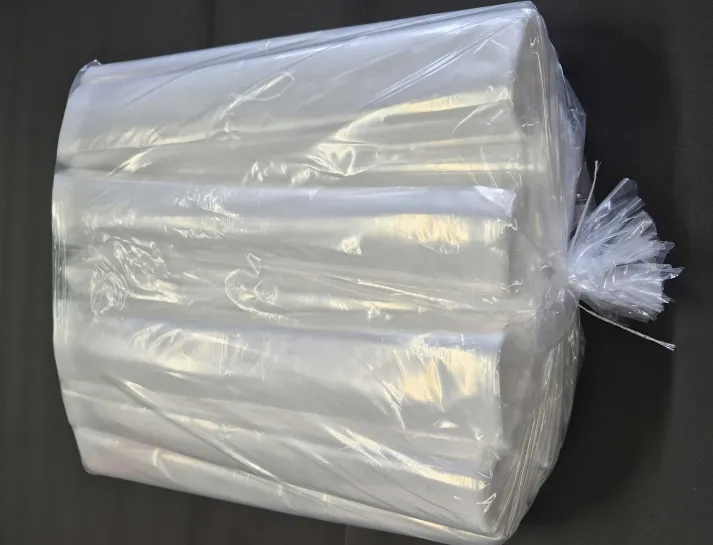
In gastronomy and catering, packaging is not an addition to the product. It is part of the technological process that directly affects freshness, safety, presentation aesthetics and work organization. A well-prepared dish can be ruined in minutes by poorly chosen packaging or cling film used “for everything”. Most often the problem does not result from a lack of effort, but from a mismatch of the material to a specific stage: a takeaway salad portion requires different protection, a semi-finished product in the fridge another, and collective transport between the production kitchen and the serving point yet another.
In practice food packaging must solve several problems at once. It must limit moisture loss, protect against contamination, stabilize the product during transport, facilitate portioning and not slow down the team’s work. If any of these elements fails, losses appear. Sometimes they are visible immediately: spilled sauce, steamed-up lid, deformed packaging. Sometimes only after a few hours: dried-out cold cuts, wilted vegetables, a dessert absorbing the smell of the fridge or a hot dish that after delivery looks like a product that has been stored for too long.
Packing food is an element of safety, not just logistics
In a restaurant and in catering the packaging works together with hygiene procedures. It should separate the product from the environment, limit contact with staff hands, protect against secondary contamination and make storage organised and easier. This is especially important where raw materials, semi-finished products and finished dishes operate in the same space.
Most problems arise when packaging material is treated universally. Film that is suitable for short-term covering of a container in the fridge may not be appropriate for airtight sealing of portions intended for transport. Conversely, packaging that is convenient for staff is not always sufficiently stable during delivery. As a result, the kitchen compensates with additional layers of film, improvised wrapping or repacking the product just before departure. This increases material use, lengthens the time and raises the risk of mistakes.
From a food safety perspective three things matter: the material’s compliance with food contact, airtightness matched to the product and the predictability of the packaging’s behaviour in real working conditions. Not in catalogue conditions, but in the kitchen, where there is steam, grease, haste, a fridge, transport and repeated moving of containers.
Where packaging most often fails
A typical scenario is simple. The product is properly prepared, cooled or kept at the right temperature, but it is put into packaging with poor rigidity or secured with film that does not hold tension. In the fridge everything looks fine. The problem appears after loading. Containers slide, lids work, water vapour condenses under the closure, and light products lose their appearance. The customer receives food without the signs of freshness, although technologically it may have been prepared correctly.
The second common situation is storing semi-finished products. Sliced vegetables, cheeses, cold cuts, cakes, ready components for the service counter — each of these products reacts differently to contact with air and moisture. Too loose a protection means drying out or absorbing odours. Too airtight, but poorly executed, leads to condensation of vapour and a deterioration of sensory quality. Therefore packaging must be considered together with temperature, storage time and the nature of the product.
Selecting packaging material starts from the product and the work stage
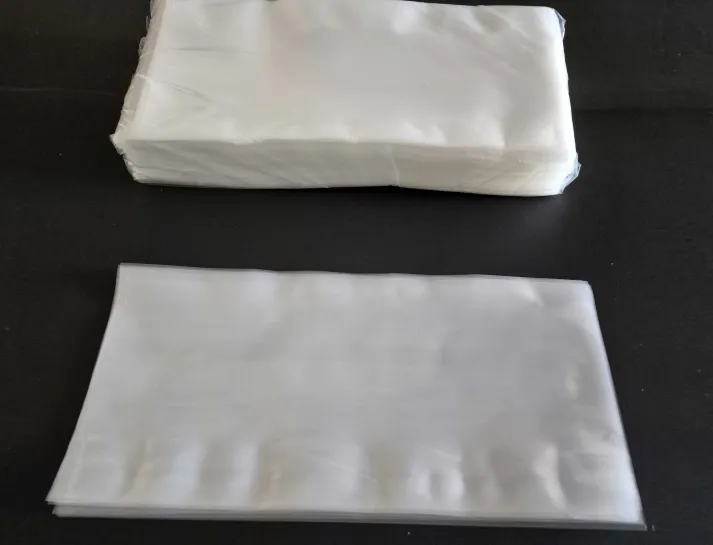
In practice you do not choose the “best film”, but the material appropriate for a specific application. Different requirements apply to packing sandwiches for quick distribution, securing GN containers in the back of house, and stabilizing cartons and shrink-wrapped pallets during collective transport. If these uses are mixed, the system becomes expensive and inefficient.
In gastronomy several groups of solutions are usually used in parallel: food films for direct protection of food or containers, heat-seal films for closing packages in a more repeatable and airtight way, foodservice packaging for portioning and serving, and stretch film for stabilizing loads and transport packs. Each of these groups solves a different operational problem.
If the team uses polyethylene-based materials, it is good to understand the basic differences between variants. LDPE film products are usually more flexible and work well where material pliability, conforming to shape and ease of use matter. Solutions made of HDPE are more often used where greater stiffness, lower material mass or a certain usable strength are required. This difference is clear in the offers of categories such as LDPE film products and HDPE film products, where the material immediately suggests a possible direction of use.
Cling film is not for everything
Cling film is convenient, quick and in many kitchens absolutely basic. It works well for short-term covering of containers, mise en place, finished portions stored before serving or protecting products against drying out. But its effectiveness depends on the quality of the stretch, adhesion and tear resistance. Poor material will roll, stick to itself, tear on container edges and force the use of several layers instead of one.
In a professional environment this is not a detail. Every additional wrap means extra seconds in hundreds of repetitive actions. Over a day this becomes a real burden on the station. Added to that is the hygiene issue: film that tears poorly and requires constant adjustment increases the number of hand contacts with the packaging and the product itself.
When you need sealing, not just wrapping
If the product is to go into transport, retail sale or longer operational storage, simply covering the container with film is often insufficient. Sealing gives greater repeatability of closure, better portion control and lower risk of spillage. This matters for sauces, lunch meals, semi-liquid sides, salads and desserts that do not tolerate tilting and vibrations during delivery.
In a well-organised kitchen sealing is not a luxury but a tool to reduce losses and quality complaints. An airtight closure stabilises the product, improves presentation and makes it easier to stack packages in layers. This is particularly useful where finished portions are assembled in batches, wait for a courier or are transported to several pickup points on one route.
Product freshness depends on control of moisture, temperature and air contact
Owners of establishments often associate freshness mainly with the preparation date. That is not enough. For the final quality it is equally important what happens to the product after it is packed. Lettuce leaves react badly to excess moisture. Bread loses structure when water vapour has nowhere to escape. Sliced cheeses and cold cuts dry out at the edges with insufficient protection. Hot dishes steam up the packaging if closed without considering temperature effects.
Therefore packaging should be synchronized with the kitchen process. Choosing a good material is not enough. You also need to know when to use it. A product that is too hot and closed too tightly will start to release moisture. A product cooled without protection will dry out and absorb odours. A product transported in unstable packaging will lose mechanical structure, although formally it will still be fit for consumption.
The practical difference between storage and transport
This distinction matters. Packaging good for the fridge will not always be good for a delivery van. In storage the main concerns are protection against drying out, odours and contamination. In transport mechanical forces are added: shocks, pressure, stacking, sliding, and sometimes temperature changes during loading and unloading.
In catering a box with a meal usually goes through several contact points: the packing station, the assembly table, the bulk container, the vehicle, the pickup point, the customer’s hands. Each stage tests the closure and rigidity of the packaging. That is why some companies have very good food yet still struggle with post-delivery quality. The problem lies not in the recipe, but in underestimating how aggressive real transport is as an environment for packaging.
Packing efficiency starts with process repeatability
The most costly operations are not so much the materials themselves as the chaos and lack of standards. When every worker packs a little differently, it is hard to maintain speed, presentation and a uniform level of protection. One uses twice as much film, another does not press the lid hard enough, a third repacks the product at the end of the shift because the right format was not available earlier. As a result material consumption rises, serving time lengthens and predictability falls.
A well-structured packing process is based on a simple premise: for a specific product type the team has an assigned specific solution. The same package size, the same method of closure, the same way of arranging for transport. No improvisation. This makes staff training easier and reduces the number of decisions made under time pressure.
In practice auxiliary materials used in the back of house and internal logistics also prove effective. Simple bags, sacks, separators or protective films organise the process, protect components and prevent secondary contamination. In many applications the base is universal solutions based on PE film, because they combine user flexibility with simple handling in the daily work of the kitchen, warehouse and transport.
Packing and the pace of work at the service counter
At the service counter the winner is not the theoretically best system, but one that works repeatably under heavy load. If the material is hard to unroll, cuts poorly or requires wrestling with the roll, staff begin to look for shortcuts. That is a natural reaction. Then inaccurate closures, uneven portions and makeshift “quick” protections appear.
Professional packaging should support the work rhythm, not hinder it. The material should be predictable. It should behave the same in the morning, during the midday rush and at the end of the shift. In the gastronomy environment this predictability is what separates truly usable solutions from products that only look good on paper.
Hygiene and back-of-house organisation are strongly linked to the type of packaging
A clean workstation does not maintain itself. In gastronomy order results from whether products can be quickly separated, labelled, arranged and safely moved. Well-chosen packaging reduces the exposure of open products to the surroundings and makes it easier to keep separation between raw materials and finished goods. This matters both for internal control and for the team’s everyday work.
In practice it is worth looking at packaging as a hygiene tool. Not just “something you put food into”, but an element that limits spillage, leaks, dripping and surface contamination. When containers are poorly chosen, staff begin securing them additionally with paper towels, loose film or auxiliary bags. This is usually a sign that the basic packaging system has not been well thought out.
What proper separation of uses gives
When direct food packaging, storage of semi-finished products and securing collective transport are treated separately, it is easier to maintain standards. Food-contact film works where it is actually needed. Unit packages are responsible for portioning and presentation. Stretch stabilises the load but does not replace an airtight product closure. Bags and separators support order in the back of house and protection of goods in internal handling.
Such a division gives one more benefit: it makes the source of a problem visible faster. If a product is drying out, you analyse the direct protection. If it is spilling during delivery, you check the portion closure and the transport method. If collective packaging is being damaged, the problem usually lies in stabilization or storage. Without separating these functions everything looks like one general “packaging problem”, and then it is hard to implement a sensible improvement.
Case study: how organizing packing in catering reduced losses and complaints
This case involved a catering company handling office lunch deliveries, small corporate events and daily sales of diet sets within one city and its surroundings. The scale was not huge, but the operation was already large enough that improvised packing stopped working. The kitchen produced several hundred portions from the morning, plus there were semi-finished products set aside for later shifts, desserts, sauces and cold sides. Formally everything was under control. In practice the problems returned every week.
Brief context
The client did not report a single problem, but a series of small faults that together began to burden the workflow. Some dishes arrived in worse visual condition than when they left the kitchen. Some salad portions became damp on the bottom. Lids of containers with soups and sauces sometimes came loose during collective transport. The warehouse team complained that finished sets were difficult to stack stably before departure. On top of that, consumption of auxiliary materials increased because staff “just in case” added extra layers of protection.
This was not a case of a poorly run company. The problem was rather that the kitchen grew faster than the packing standards. Solutions that worked under lower load ceased to be sufficient when the number of portions and touchpoints in logistics increased.
Client problem
The three most noticeable areas were:
uneven quality of portions after delivery despite correct preparation in the kitchen,
too many manual fixes during packing and assembly,
lack of predictability about which products require what protection.
The client did not need a general list of packaging. They needed the process to be organized so staff would not make the decision from scratch every time. This was more operational work than “choosing a single product”.
Situation analysis
We started by observing the entire flow, not just the packing station. That usually yields more than a desk conversation. For several hours we tracked the product path: from portioning, through waiting time for release, to route assembly and loading. Only then did it become clear where the system was leaking.
The first thing was quite typical: different groups of products were protected in a similar way, even though they worked in completely different conditions. Cold dishes, hot sides, sauces and components for later release were put into packaging chosen mainly based on shelf availability. If a particular format was missing, staff replaced it with another and reinforced it with film. The idea saved the day temporarily, but did not solve the root cause.
The second problem was less obvious. Some semi-finished products stored in the fridge came into contact with condensation moisture not because the material was bad, but because the product was placed into protection too early after preparation. The film did its job, but the process was timed poorly. As a result, sliced vegetables and sandwich toppings lost their structure faster than the team expected.
The third area concerned collective logistics. Finished containers were correctly closed individually, but then they were arranged in mixed transports: tall with short, light with heavy, without a fixed layer scheme. Simple dividers and organizing protections were missing. In such situations even good single packaging receives unnecessary extra stress.
What went wrong earlier
The client tried to solve the problem on their own. Thicker material was introduced for some uses, and double wrapping was added for more problematic items. For a few days it seemed better. Then the same complaints returned, just in different places in the process.
This is a fairly common mistake: improving material strength instead of checking whether it is used at the right moment and in the right role. Thicker film will not fix incorrect work order or unstable transport stacking. It only increases consumption and slows down the workstation.
Step-by-step actions
We did not start by replacing everything. First we mapped actual uses into four working groups. That was the most important moment of the whole implementation, because only then was it possible to move away from the “one material for everything” rule.
Protecting semi-finished products in the fridge – separately for dry components, separately for wet and sliced ones.
Packing finished portions – divided into hot dishes, cold dishes and liquid elements.
Organizing assembly – so the packing station would not waste time looking for substitutes.
Stabilizing collective transport – without shifting this function to the single package.
For the fridge we implemented a simple standard: do not mechanically protect everything immediately after preparation, but separate products according to heat and moisture release time. Where flexibility and easy fit to auxiliary containers were needed, we relied on solutions from the LDPE film product group. In this company they worked well in daily operations because the material tolerated quick handling at the station and did not require wrestling with every protection.
In part of the back area we also organized the use of simple bags and sacks to separate components that were previously left loose in bulk containers. In several places ordinary flat bags and technical pouches used as internal liners for selected ingredients worked well. It was not about “more packaging,” but about better division of functions. For similar uses formats close to 170x350 bags or larger auxiliary sizes such as 470x600 bags can be practical if the product needs to be separated inside the process rather than presented for serving.
For route assembly we simplified the staging area. Instead of many partially opened material packs we introduced two clear pick-up points and one table assigning format to portion type. This change seems small, but in practice it reduces mistakes more than long instructions. Staff stopped packing by habit and started packing according to a concrete scheme.
We devoted most attention to collective transport. There the problem did not stem from a single package but from the behavior of the entire load during transit. We introduced inserts separating layers and organizing the layout. For similar uses elements such as 600x645 separators work well because they stabilize stacking without adding unnecessary mass. In some transport containers the client also used simple PE film solutions as auxiliary protection for sets assembled in batches.
For larger internal transports, especially between the kitchen and the event pickup point, we also organized a protective layer at the bottom and between packages. In some implementations a similar function is performed by technical pads similar to 900x1300 pallet pads, although here they were used not in the classic warehouse way but as an element of cleanliness protection and separation in internal logistics.
Difficulties encountered during implementation
Not everything worked immediately. The first week after changes was quite chaotic. Some of the team reverted to previous habits, especially during peak hours. If one format was missing at hand, employees automatically reached for the nearest substitute. This showed that material selection alone is not enough if the station is not physically prepared for the new work rhythm.
There was also an issue with over-securing “just in case.” Staff accustomed to manually reinforcing packages initially still added extra layers where they were no longer necessary. Only after two joint shift reviews were we able to identify which actions truly increased safety and which were just remnants of the old system.
One correction proved particularly important. Earlier we assumed that the main problem was containers with liquid elements. After observing routes it turned out that lightweight sets with bread sides and salad deformed just as often because they were placed on top of unstable layers. The product itself was delicate, but the source of damage lay in the organization of transport crates. That required a change in assembly order, not in material.
Solutions applied
After the correction stage the system boiled down to a few simple rules:
each product type had an assigned protection method and staging place,
high-moisture products were not closed automatically right after preparation,
collective transport received its own separation and stacking standards,
auxiliary materials stopped replacing basic solutions.
In practice this meant less improvisation. It was also important to the client that the entire kitchen did not have to be rebuilt. Changes mainly concerned station organization, format assignment and better use of simple packaging materials from the HDPE and LDPE film categories where they actually made functional sense.
Results
After a few weeks the effects could be assessed without guessing. The number of reports about crushed or damp products after delivery dropped significantly. Not to zero, because in catering that practically never happens, but to a level that stopped disrupting daily work of the service desk and the kitchen.
Equally important was that packing became faster not by speeding up people but by reducing unnecessary movements. There were fewer situations where an employee had to fix a closure, look for a substitute or repack a set just before departure. The shift manager noted one more effect: it was easier to onboard new employees because the station finally had a clear scheme instead of a set of oral habits.
On the quality side the biggest improvement was visible in cold sets and components prepared in advance. Products retained their proper appearance longer after being taken out of the fridge, and the team stopped compensating previous mistakes with excess material. This also translated into better order in the back area.
Practical takeaways
This case clearly shows that in gastronomy and catering packing problems rarely stem from a single bad purchasing decision. They are more often the result of several small mismatches: wrong timing of protection, lack of separation of packaging functions, disorganized assembly and shifting responsibility for transport onto the single package.
From a practical perspective the most valuable changes were not “stronger” materials but clear boundaries of application. Separately what protects the product in the fridge. Separately what works at the point of serving. Separately what stabilizes the load. Only then can you sensibly evaluate whether a given film, bag, insert or liner actually fulfills its role.
In similar implementations the same conclusion always returns: if a team regularly uses a surprisingly large amount of extra plastic film, bags and makeshift protections, it is usually not a matter of staff caution. It is a signal that the packaging system needs to be organized. And when the process is broken down into real stages of work, improvements in quality and hygiene come faster than most business owners expect.
FAQ: food packaging in gastronomy and catering
How to reduce steam condensation in packaging with hot food without degrading the quality of the dish?
This is one of the more difficult operational problems because it does not result solely from the packaging itself. Condensation occurs when the steam from the product has nowhere to disperse and at the same time contacts a cooler surface of the lid or film. Every venue knows the effect: the breading softens, bread becomes damp, vegetables lose their crispness, and the sauce starts to "work" along the walls of the container.
The most common mistake is packing all dishes in the same rhythm. Meanwhile, roasted potatoes, pasta in sauce, grilled chicken and stir-fry vegetables release moisture in completely different ways. Three practices work well. First: separate components that tolerate steam poorly from those that do not generate it so intensively. Second: shorten the time between closing and dispatch if the dish is to reach the customer immediately. Third: choose the closure according to the character of the dish, not for storage convenience.
In some kitchens, introducing a simple "technological window" also works — a short stage of stabilizing the product before sealing. It's not about cooling the food, but about giving it a few dozen seconds or a few minutes to release the most aggressive steam. It's a small change, but it can significantly improve the appearance of dishes after delivery.
If steam regularly destroys the quality of a specific group of dishes, the problem usually lies in the design of the entire issuing system. Then it's worth analyzing not only the packaging, but also the packing order, the resting place and the waiting time for the courier. In practice, such adjustments often yield better results than adding more layers of protection.
Is every film or bag suitable for direct contact with food?
No. And this distinction should be taken very seriously in gastronomy. The mere fact that a material looks similar to food-grade film does not mean it can safely contact the product. What matters is the intended use of the product, the manufacturer's declaration and compliance with the requirements for materials intended for food contact.
In practice the problem most often arises when the kitchen starts using materials "for convenience" because they are at hand. This especially concerns technical bags, storage covers or film originally used for logistical protection. Such shortcuts can be convenient, but they should not replace materials intended for direct food contact.
The second issue is the conditions of use. A material approved for food contact will not always be suitable for every product and every temperature. Dry food, fatty food, acidic food or hot food impose different loads. In a professional environment, therefore, it is not enough to ask "is it allowed?", but rather "is it allowed in this specific application?".
A well-run kitchen stores material documentation as carefully as raw material specifications. During inspections, quality complaints or risk analysis this greatly facilitates work. If a company uses different groups of materials, it is sensible to clearly separate packaging for direct food contact from auxiliary solutions, such as some products from the PE film category, used mainly for organizational or protective purposes outside the product itself.
How to pack products with an intense smell so they don't affect other dishes in the fridge?
Here not only tightness matters, but also storage discipline. Smoked products, fish, marinades, blue cheeses, processed onion or certain sauces very easily give off their aroma to the surroundings. If they are placed in the same area as desserts, neutral dairy or ready breakfast additions, aroma transfer is only a matter of time.
The most effective model is based on two layers of protection. The first protects the product itself, the second organizes it in storage and limits indirect contact with the rest of the assortment. In practice, a sealed closure of the container or individual packaging followed by placing the whole batch in a separate collective cover works well. For some semi-finished products, lightweight inner bags or pouches are helpful — for example formats similar to 300x400 bags or larger 470x600 bags when it's necessary to separate a group of components in the fridge or in an auxiliary container.
Rotation also matters a lot. Strongly aromatic products should not sit opened and be accessed several times a day in the same zone, because even the best protection will not eliminate poor handling. A separate shelf, a separate collective container, clear labeling and regular replacement of internal covers make a bigger difference than staff usually assumes.
If the fridge constantly "catches" smells, it's worth checking whether the problem is the workflow itself. Sometimes you don't need to change the entire assortment of packaging, just designate one zone for high-risk aromatic products and limit the number of openings during a shift.
What should be on the packaging label in catering to facilitate work and reduce the number of mistakes?
The label is not intended only for the end customer. In catering it is an operational tool. A well-prepared description speeds up picking, reduces incorrect set issuances and facilitates rotation control. If the team reads the label only when a complaint arises, it's a sign that the marking system does not support daily work.
The practical minimum depends on the sales model, but it's usually worth including: product name, preparation or packing date and time, operational use-by date, storage conditions, shift or batch identification and allergen information. In dietary catering, client identification, menu variant and delivery time are added. For event production, route or pickup point identification is also useful.
Many companies make a simple mistake: labels are formally correct but unreadable under time pressure. Small font, too much data, lack of emphasis on the most important information. Staff then start guessing or checking contents manually. This slows work and increases the risk of hygiene breaches. A layered layout is better: prominent operational information visible immediately, with detailed data below.
Well-designed markings also help in error analysis. If a complaint returns, it's easier to determine whether the problem originated in the kitchen, during packing, while assembling or at the issuing stage. That's why more experienced companies treat labeling as part of process organization, not as the last duty before dispatch.
How to prepare packaging for deliveries on courier platforms and food aggregators?
This delivery model obeys different rules than own transport. The venue has less influence on pickup time, how the bag is handled and the order in which orders are delivered. Packaging must therefore withstand more unpredictable situations: longer waiting for the driver, additional tilting, insertion and removal from a thermal bag, and sometimes combining several orders in one route.
In practice this means designing a set, not a single container. You need to check whether a drink won't press on a dessert, whether a sauce won't be transported horizontally next to a hot dish, or whether the bag forces stacking containers on top of each other. Solutions where liquid elements are separated, crunchy additions are packed separately, and the whole order has a clear logical layout for the courier and the customer perform well.
Protection against unauthorized opening is also important. This is not only about formal security, but also about recipient trust. The customer wants to see that the set arrived intact. In many venues, simply changing the way of closing and labeling the order reduces the number of disputes about missing items.
If sales through apps are growing, it's worth testing packaging on a real route, not only backstage. A few trial runs can reveal problems that are not visible at the packing table: cups shifting, lid pressure, too high humidity after 20 minutes in a bag. Such tests are far more informative than an eyeballing assessment.
How to organize packing for meal box services and special menus to reduce allergen mistakes?
With a large number of menu variants, good labeling alone is not enough. Physical separation of the process is required. If packaging for elimination diets stands next to standard sets and staff pack everything in one flow without designated moments and surfaces, the risk of error increases very quickly.
The best approach combines three rules. The first is temporal or station separation for production with elevated risk of error. The second is unambiguous differentiation of packaging or labels from a distance, without needing to read small text. The third is cross-checking before sealing a batch. In practice even a simple "checked by a second person" system is often more effective than an elaborate instruction that nobody uses during peak hours.
In dietary catering, the problem is not only allergens in the strict sense. Equally dangerous are meal swaps between clients, mixing up delivery days or incorrectly adding a side. This undermines company credibility. That's why well-planned specialist packing requires more rigorous order than standard lunch production.
If a company handles many individual diets, it is also helpful to limit the number of exceptions created manually. The more quick deviations, the greater the chance that someone will pack the correct meal into the wrong packaging or label. In such situations the team's experience and a well-established routine matter more than a checklist.
Can packaging consumption be reduced without compromising safety and the appearance of dishes?
Yes, but not by mechanically "cutting" material. Savings appear when the system is more precise. In many venues packaging use increases not because staff are overly cautious, but because they constantly compensate for mismatches. Some add an extra layer of film, others repackage sauce into a smaller container, others protect the set with a separate bag because something previously leaked.
The first step is to count the places where material is added "for peace of mind." The second is to check whether this stems from a real risk or from lack of trust in the basic solution. Very often it is enough to standardize a few formats, organize grammages and eliminate random substitutes. Fewer different packages at a station usually means fewer losses, not the opposite.
In some processes it also works well to move the protective function from the individual packaging to collective logistics. If damages occur during internal transport, it's worth ordering layers and separating loads. Lightweight auxiliary elements are useful for such applications, for example 600x645 dividers or protective sheets from the HDPE film product group, when the goal is more order and separation than direct contact with food.
The best results usually come from practical station audits, not desk reviews. Only then can you see where the packaging actually does the work and where it only masks an organizational problem.
How to store rolls of film and packaging materials so they don't lose their functional properties?
Packaging material also ages before it is used. Rolls kept near heat sources, in full sun, near damp backrooms or in places exposed to grease contamination can behave completely differently after delivery. Film may unwind poorly, change tension, tear more quickly or lose predictability when being torn off.
It is most sensible to store materials in a clean, dry storage area, away from heating devices and without prolonged exposure to light. Rotation must also be monitored. A roll sitting for months at the back of a shelf may no longer give the same working comfort as a freshly taken material from the same batch.
A separate problem is the way materials are made available at the workstation. If the supply lies open, collects dust, moisture and mechanical damage, staff later struggle with an effect they wrongly attribute to product quality. Meanwhile the cause may be purely storage-related. It's therefore worth separating the main stock from the working quantity for the shift.
With polyethylene materials it's good to be aware that storage conditions affect their durability and functional behavior. This is also described in more detail in the material about factors affecting the durability of polyethylene film. For gastronomy this is not theory. It's a matter of daily predictability of work.
What auxiliary packaging is useful in the back of house, even though the end customer doesn't see it?
The most order is created by solutions that limit the mixing of functions. In the back of house, internal liners for containers, bags for temporary separation of components, dividers for separating layers and protective pads that safeguard transport and storage surfaces are useful. These are not flashy elements, but they often reduce stains, leaks and secondary damage.
Practical example: sliced sandwich additions, production bread, decorative elements for desserts or dry components for assembling sets are much easier to keep in order when they have their own working cover. For simple auxiliary uses, formats similar to 170x350 bags or larger bags and sacks from the LDPE film product category are sometimes used, especially where flexibility and quick handling of the material are needed.
In internal logistics, protective elements under and between packages also work well. If crates or reusable containers constantly get dirty or transfer moisture to subsequent layers, it's worth considering technical pads, for example similar to 900x1300 pads, when the scale of work requires it.
It is precisely these "invisible" elements that often distinguish an organized back of house from one that functions only because staff constantly make ad hoc fixes.
Most common mistakes in food packaging in gastronomy and catering
1. One material for all kitchen uses
This is perhaps the most common mistake we see in almost every place where no one has previously systemically organized packaging. The kitchen buys one roll of film or one type of bags and uses them for everything: covering bowls, securing containers in the fridge, wrapping sandwiches, separating components, and sometimes even for bulk transport.
The consequences are delayed in time, so it is difficult to directly attribute them to the wrong material choice. Film that is too thin won’t hold tension on a large GN container. An industrial bag used for storage in the fridge may not be intended for direct contact with food. Material without adequate adhesion on cold surfaces requires several layers instead of one because it simply peels off.
The practical solution is not to buy dozens of different products. It is enough to list applications into three to four groups and assign a specific material to each. The cold room has different requirements than the serving station. Bulk transport has different requirements than portioning. When the team has a clear rule, they stop improvising. And improvisation under high production load always costs more than a good standard.
2. Packaging hot products without controlling closure time
Staff close the container or wrap the product immediately after portioning. Intuition suggests that quick closure is safer. In practice, from a quality point of view, this is one of the most costly habits in a kitchen handling deliveries.
Hot food closed too tightly and too early begins to release steam that has nowhere to escape. The steam condenses under the lid or film, returns to the product and changes its structure. Breading becomes soggy. Vegetables lose their crispness. Bread becomes moist on the bottom. The customer receives a dish that is technically warm and safe, but looks as if it has been traveling for several hours.
The correction is simple but requires a change of habit: a window of several dozen seconds or a few minutes before closing, adjusted to the nature of the product. It is not about cooling the food. It is about preventing the packaging material from becoming a trap for steam. Some companies implement a simple scheme: dishes with high water and starch content — close after a minimal stabilization time. Protein dishes with sauce — closed sooner, but with vented lids or the option to separate elements. This is not theory, it is daily work.
3. Treating labeling as a formality instead of a process step
The label is added at the end, after the package is closed, often under time pressure. Or it is not added at all because “everyone knows what is in the container.” This approach works at a small scale. It stops working quickly when the company grows, serves several pickup points or hires new employees who do not have all the knowledge memorized.
The consequences of labeling mistakes are disproportionately large. In diet catering, mixed-up portions can reach customers with allergen exclusions. During route assembly, lack of clear preparation date marking leads to rotation based on chance, not on FIFO. When handing over the cold room at the end of the shift, staff waste time verifying the contents of every container.
The most common mistake is labels that are formally correct but impractical: too much information, font too small, no visual hierarchy. Under time pressure no one reads a block of text on a small sticker. A system works in which one piece of information is visible from a meter away — the name or diet number, the date, the shift — and the rest completes the description for documentation needs. Such a hierarchy really reduces mistakes during order assembly.
4. Reinforcing the material instead of fixing the process
Packages fail during transport. The kitchen reacts logically: buys thicker material, adds extra wrapping, applies another layer of film. For a few days it seems the problem disappears. Then complaints return, only in a different part of the process.
This mistake stems from the natural tendency to look for a quick material fix instead of analyzing the cause. Meanwhile most packaging damages in catering originate not from material weakness but from the way the load is arranged, the order of assembly or overloading particular items by other packages in transport. Thicker film will not solve the problem of a container stacked on its side on another container, nor will it prevent damage to light sets placed at the bottom of a transport crate.
Diagnosis should start with the question: at what exact moment does the damage occur? At the packing table, during loading, in the vehicle, or only at the recipient? Only that answer indicates the proper area for correction. Unnecessary layers of material are not only a cost — they also slow the station down and signal to the whole team that the packaging system is not properly arranged.
5. No separation between packaging for storage and packaging for serving
The product is secured once and in the same form goes into the fridge, to order assembly and to the customer. At first glance that is convenient. In practice, packaging chosen for storage rarely works well for transport, and packaging convenient for serving does not necessarily protect the product for many hours in the fridge.
The concrete quality problem that results is: a product stored in serving packaging loses moisture, dries out or changes texture before reaching the customer. Conversely, a product secured for the fridge and transported without repackaging often arrives in a workmanlike package, lacking serving aesthetics and with traces of condensation moisture. This affects the perception of the entire order.
The solution requires separating the stages. A semi-finished product in the fridge gets storage protection. Before serving it is moved to packaging suitable for the end customer. This extra step costs time but eliminates much more costly complaints and repackaging at the last minute before departure. At large production scale this is one of the more important process decisions.
6. Improper storage of packaging material stock in the back room
Rolls and packs of film lie next to a hot oven, on the floor near the dishwashing area, in a cabinet with chemicals or in a place exposed to moisture. No one treats this as a problem because the film looks the same. The problem appears when used: the material tears worse, changes tension, loses predictability, and in extreme cases shows signs of degradation that would not appear for many months under normal storage conditions.
The practical effect is inefficiency at the workstation. Staff wrestle with the material, use more layers and lose time. And because the effect is spread over time, few connect the worsened performance of the film with its storage conditions. Meanwhile for polyethylene film temperature, humidity and exposure to heat are real factors affecting material behavior in use.
A simple standard is to designate a separate storage zone for packaging materials: cool, dry, away from heating devices and sources of contamination. For daily work a working amount is allocated per shift. The rest of the stock remains in the storage zone. Such a rule protects the material and limits accidental mechanical damage during retrieval.
7. Ignoring the impact of internal transport on unit packaging
Places focus attention on the packaging the customer sees: the container, the lid, the label. They omit what happens to that packaging between the kitchen and the delivery vehicle. And in catering internal transport — moving containers from the packing station to the order assembly area, stacking in crates, loading — can do as much damage as inappropriate material.
The most typical situation: unit containers are tightly closed but placed in transport crates with no system. Heavy on light. Tall on short. Containers with sauces placed on their side “temporarily.” With every larger order someone adds packages beyond capacity because there is no space. As a result even good unit packaging reaches the customer after a serious mechanical test.
Simple elements that separate layers in crates and bulk containers serve these applications. It does not have to be a complicated solution. The idea is physical division of levels and limiting lateral shifts. LDPE film products in divider-sheet formats work well here in practice and do not burden internal logistics. What matters is that the load has structure, not that it is stacked “however it fits.”
8. Buying packaging solely based on unit price
This is a mistake that is hard to see in a single transaction but becomes obvious in the monthly accounting. Cheaper material tempts with price but requires using two or three layers instead of one, deforms on contact with fat or moisture, or does not hold tension on large-surface containers. As a result the real cost is higher than with a well-chosen material that is a few dozen percent more expensive.
In gastronomy there is also the time factor. If films must be repeatedly fixed at the serving station, re-torn and replenished, staff lose minutes with every hundred portions. Over a day, week, month this is a real operational cost that does not appear in any purchasing summary.
The proper cost analysis of packaging should include not only the material price, but also consumption per portion, workstation handling time and the number of complaints related to packaging. A few weeks of keeping such a simple record usually changes perspective: the cheapest option rarely turns out to be the cheapest when calculated per actual work performed.
9. Failure to test packaging under real conditions before implementation
A new container looks good in the hands at the packing table. It has the right size, closes nicely, and presents the dish aesthetically. The decision to buy a large batch is made quickly. Only after a week it turns out that the lid deforms after 20 minutes in a thermal bag, that the container does not fit stably in standard transport crates, or that at the temperatures of a hot dish the sealing film forms bubbles and loses tightness.
This is a particularly costly mistake when there are seasonal menu changes, new product lines or when expanding sales to courier platforms. Every new application should undergo a real test under working conditions: loading, transit, unloading, waiting time. A few trial routes provide more information than a several-hour catalog analysis.
In practice it is worth testing the complete set, not just the unit package. How does a drink behave next to a hot dish? Does sauce in a separate container not seep when arranged in the bag as usual? Do light elements of the set withstand the pressure from the others? These questions only make sense if someone actually goes with the order all the way from the kitchen to the customer, instead of evaluating the packaging at a desk.
Myths about food packaging in gastronomy and catering that actually spoil quality and work organization
In the gastronomy industry many poor packaging decisions do not come from a lack of care, but from entrenched beliefs. The problem is that these beliefs often sound reasonable until they collide with the real work of the kitchen, cold storage, service counter and transport. Below we have collected myths that regularly come up in conversations with restaurants, caterers and production backrooms. Each of them leads to different losses: quality-related, organizational or hygienic.
Myth 1: “The tighter the packaging, the better for freshness”
This belief stems from a simple association: if the product is to be protected from the environment, it should be isolated from the air as much as possible. In theory that sounds logical. In practice freshness does not depend solely on tightness, but on how a specific product behaves after being sealed.
This myth is particularly harmful for products that “work” after packaging: they release moisture, heat or fat. Too tight a seal sometimes does not protect quality, but accelerates deterioration of appearance and texture. Leafy garnishes wilt, baked goods soften, crunchy elements lose structure, and some cold dishes start to look worse despite correct production.
The market reality is less intuitive: good packaging is not about maximally cutting everything off from the world, but about controlling moisture exchange and matching the closure to the nature of the portion. In a professional kitchen tightness can be an advantage, but it can also be a mistake if it traps the product in conditions that do not suit it.
From practice: the most disappointment comes from packaging “in advance”, thinking that a tighter seal will solve every problem. It won’t. Sometimes the best effect is achieved not by a tighter seal, but by separating components in a set or changing the packing order.
Myth 2: “The customer only judges taste anyway; packaging is secondary”
This myth comes from classic kitchen thinking: the product is the most important, and the packaging is just a carrier. However, in delivery and catering the customer very often has their first contact with the dish through the packaging. They see condensation, displaced ingredients, leaks, a collapsed lid or an unsightly stain. Taste then takes a back seat before they even open the set.
This false belief is costly because it leads to dismissing how packaging affects perceived quality. Even a correctly prepared dish can be considered not fresh if after delivery it looks “tired.” In the HoReCa industry complaints very often are not about taste in the technological sense, but about the impression that the product did not arrive in the expected condition.
The reality is simple: in takeout and catering packaging becomes part of the customer experience. Not an addition. Not a background. Part of the final product. That is why companies that consistently maintain quality in delivery treat packaging as a stage responsible for presentation, not solely for protection.
In practice this is clearly seen with lunch and event sets. Two kitchens can cook similarly, but the winner is the one whose food still looks predictable after 40 minutes. This is not an aesthetic “bonus”. It is a matter of perceived quality of the entire brand.
Myth 3: “If a material is certified for food contact, it is suitable for every gastronomic application”
This myth is particularly durable because it is based on a half-truth. Indeed, compliance of a material for food contact is a basic requirement. But compliance alone does not mean that the material will be appropriate operationally, technologically and hygienically for every product.
Where does the misunderstanding come from? Many people treat information about suitability for food contact as a universal guarantee. Meanwhile there is a big difference between “can be used” and “it will work well”. A material can be formally safe and at the same time too thin, insufficiently tear-resistant, impractical at a wet workstation or simply mismatched to the pace of work.
In industry reality it matters not only the document, but also how the material behaves in a specific process. It behaves differently with a fatty product, differently with a moist one, differently during manual portioning, and yet differently during batch assembly. Therefore the certificate does not end the conversation. It only begins it.
From experience: this is often where seemingly inexplicable complaints arise. A company is convinced it uses a “safe” solution, so it looks for fault elsewhere. Only analysis shows that the problem was not food contact compliance, but the material’s practical unsuitability for the task.
Myth 4: “Premium packaging means thicker, heavier and more massive material”
This is one of the more outdated beliefs in the industry. It comes from times when solidity was identified mainly with the amount of material. If something is thick, it seems strong. If it is light, it raises suspicions of being “inferior”. In practice such a shortcut can be misleading.
Modern food packaging is not about adding mass, but about matching functional properties to the role. Sometimes a more massive solution indeed makes sense. Often, however, it only leads to slower work, worse ergonomics, more difficult storage and excess material where flexibility, appropriate stiffness or format stability were needed instead.
The industry reality is that “premium” means predictable performance, aesthetics after delivery and process repeatability. Not the material weight itself. For this reason professionals look not at thickness in isolation from the application, but at the full set of functional parameters. In some practical applications solutions based on gusseted bags work well when a specific capacity and usability are needed, not just “thicker film for peace of mind”.
In practice the greatest losses are not caused by materials that are too light, but by materials that are misunderstood. If employees choose something that “looks solid” by eye and then have to work around it with extra steps, fixes and tricks, that is a sign the decision was superficial, not professional.
Myth 5: “A small venue doesn’t need packaging standards; that’s for large facilities”
This myth comes from comparing scale instead of risk. Owners of smaller restaurants and catering points often assume that since they make fewer portions, they can rely on team memory and ad hoc arrangements. That works only until the first major rush, staff turnover or expansion of deliveries.
The mistake is that lack of standards does not hurt immediately. Small differences appear first: one employee packs tighter, another looser, one places the product one way, another differently. Then it becomes chaos that is hard to measure but easy to feel: uneven quality, more fixes, more questions during shifts and greater dependence on specific people.
In practice small businesses need standards no less than large ones, just in a simpler form. Often one table of uses, a clearly described staging area and a short instruction for 4–5 typical product groups are enough. This is not bureaucracy. It is a way to ensure quality does not depend on who happens to be at the station.
From experience: the smaller the team, the longer the illusion that “everyone knows how to do it” persists. Then one absence or a new person exposes that the knowledge was oral, inconsistent and hard to replicate.
Myth 6: “Most packaging problems are caused by weak employees”
This is a convenient explanation, but most often false or incomplete. Of course human errors happen. However, in well-organized processes most mistakes do not stem from lack of care, but from a system that forces people to continuously improvise.
Where does this myth come from? Because it is easiest to notice the person who sealed a container badly or used the wrong material. It is harder to see that they worked at a poorly organized station, without clear assignment of uses, under time pressure and with material shortages. Then staff do not make mistakes despite the system. Staff make mistakes because of the system.
The industry reality is rather brutal: if the same shortcomings reappear across different shifts and different people, the problem rarely lies with a single employee. It is usually a signal that the packaging method is not resilient to the pace of work. A good process should limit the room for error, not assume perfect concentration throughout the shift.
A practical observation is that after organizing materials and assigning simple rules quality suddenly “improves on its own.” Not because the staff suddenly became better. Simply because they stopped working in a system that provoked mistakes.
Myth 7: “Packaging problems are visible immediately, so if everything looks good at the service counter the issue is closed”
This is one of the most deceptive myths because it gives a false sense of control. Many packaging defects only reveal themselves after time: after 20 minutes of waiting, after the ride, after being taken out of the bag, after the customer opens it. On the packing table everything can look fine, and yet the system can be faulty.
The source of this belief is understandable. Staff assess the effect where they work, i.e. at the station. They do not see the full path of the product. They do not observe how the contents behave when stacked, how closures react to temperature changes, what happens to the product’s surface over time.
In industry reality a sensible assessment of packaging only begins when the entire usage cycle is analyzed, not just the moment of sealing. That is why companies that truly reduce complaints test solutions over the full operational path. It is not enough that something “looks good immediately”. It must also look good later.
From practice: most mistaken purchasing decisions are made based on evaluation at the table. The product is aesthetic for three minutes, so the matter is considered closed. After a week it turns out the problem was not the first impression, but lack of stability in real circulation.
Myth 8: “Economical packaging means minimizing the number of materials and formats”
This view usually appears where someone tries to simplify warehouse and purchasing. The intention is good, but the conclusions can be wrong. Over-simplifying the assortment ends with one format starting to replace several functions it was not designed for.
Where does this myth come from? From observing that a fragmented assortment can be hard to control. That is true. The problem is that the answer should not be brutally cutting everything to a minimum, but sensible organization. When there are too few materials, staff start to resort to workarounds. And workarounds almost always increase real consumption and lengthen work time.
The reality is that packaging economy is based on the right number of sensibly chosen solutions, not the lowest number of stock items. Sometimes two additional formats tidy up the work more than ten more trainings. In some backroom and logistics uses simple separating or bulk solutions also work well, for example large format bags, if they are used according to their organizational function and not as an improvised replacement for everything.
From experience: when someone says they “simplified packaging”, it is worth checking whether they simplified the system or just shifted the complication onto the staff. Those are two completely different things.
Myth 9: “Eco packaging always means worse functionality”
This stereotype still haunts gastronomy, especially where poorly chosen substitutes were tested earlier and too broad a conclusion was drawn from that. One unsuccessful material or one poor implementation does not mean that every solution aimed at reducing material impact will be impractical.
The myth also stems from a false conflict: either functionality, or material responsibility. Meanwhile in practice many improvements can be achieved not through ideological declarations, but through simple process organization. Fewer redundant layers, less repackaging, fewer damages, less operational waste. That is a real improvement, not a slogan.
The industry reality is that a sensible approach to materials starts with reducing waste, not blindly replacing everything with “more eco” options without tests. A professional company first checks whether the system does not unnecessarily consume too much film, whether a material is not duplicated and whether packaging does not serve three roles at once just because there is no standard.
From practice: the most “non-ecological” things are usually not the materials themselves, but a poorly designed process that generates fixes, complaints, returns and waste. That is where resources really leak.
Myth 10: “Packaging is the end of the process, so it does not need to be considered in production planning”
This belief is typical for kitchens that long operated mainly on-site and later moved more into catering or delivery. Production may be planned in detail, and packaging treated as the final technical step that “will be done somehow.” In practice that is when overloads on shifts, delays and panicked material decisions begin.
The myth comes from underestimating the time and resources needed to properly secure food. If you plan only cooking and portioning and do not plan packaging, at peak times there will be a lack of space, hands, packaging formats or time to correctly close batches. Then quality drops not because solutions are bad, but because someone did not include them in the work schedule.
Market practice is clear: packaging must be treated as part of the production operation, with its own throughput, constraints and material needs. In better organized companies they plan not only the number of portions. They also plan with what, when and at which station those portions will be secured. Supporting elements for station and batch order are also helpful, including simple bulk solutions for organizing the backroom, if they are assigned to a specific function.
From experience: many venues believe they have a problem with the team’s pace. After analysis it turns out it is not about pace at all. It is about packaging being squeezed to the end of the process without resources, space or procedures. In such conditions even good staff cannot maintain stable quality.
The most costly myths about packaging are not spectacular. They are everyday, seemingly reasonable and therefore hard to spot. They are exactly what cause the kitchen to work harder and the final result to be weaker than it should be. A well-organized packaging system is not based on habits or intuition. It is based on observing the product, the process and the conditions in which the packaging actually has to do its job.
Comparison of food packaging solutions in gastronomy and catering
Once the packaging process is organized, the next question is usually not "what to buy" but "which solution makes sense for our working model". Differences between materials and methods of protecting food are felt primarily at the service counter, in the refrigerator, during order assembly and after delivery. Below are the most important comparisons that actually help match a system to the type of production, not to general manufacturer claims.
Food-grade plastic wrap vs. sealing film
These are two solutions that in practice are often lumped together, although they solve different problems. Food-grade plastic wrap wins where reaction speed, flexibility and everyday back‑of‑house work matter. It works well for short-term securing of containers, ingredients prepared for current production, mise en place or portions waiting briefly to be served. It is fast, does not require additional equipment and allows the seal to be adapted to various shapes of dishes.
Sealing film, on the other hand, provides greater repeatability of closure. In diet catering, lunch production, sale of ready meal sets or anywhere packages travel in larger numbers on the route, sealing usually gives calmer logistics. Containers are easier to stack, it is easier to maintain presentation aesthetics and the problem of a "pried open" closure after several transfers between stations occurs less often.
Who is food-grade wrap for? For establishments with high variability in production, restaurant kitchens, bakeries, stations preparing ingredients on an ongoing basis and everywhere the product does not require full repeatability of closure. Who is sealing for? For catering, serial production, takeaway portions, sets with transport and operations where a uniform packaging standard matters.
The limitations are fairly clear. Food wrap gives more freedom but depends on the worker's technique and the quality of the material itself. Sealing improves repeatability but slows format changes and requires a more organized workstation. In industry practice extremes work least often. Venues that try to wrap everything usually return to complaints about transport. Conversely, companies that want to seal absolutely every product begin to lose workflow fluidity where a simpler protection would suffice.
LDPE vs HDPE in gastronomic applications
When comparing polyethylene-based solutions, the difference between LDPE and HDPE matters practically, not just technically. LDPE film products are usually more flexible, softer to work with and more convenient where the material needs to conform to the shape of the contents or the container. This is a good direction for kitchen backrooms, auxiliary covers, separating components or protections that staff perform quickly and repeatedly during a shift.
HDPE film products are chosen more often when stiffness, low material mass and retention of shape in simpler technical or organizational applications are more important. HDPE can be practical for interleaves, liners, selected bags and auxiliary elements where large flexibility is not needed, but predictability of dimension and lightness are required.
In practice LDPE tolerates intensive manual handling at the station better. HDPE more often wins where the material has to separate, protect a surface or organize logistics. For small gastronomy the difference may only be noticeable after several weeks of work: LDPE usually provides greater user comfort, HDPE often helps reduce material excess in simple back‑of‑house uses.
Limitation? Trying to replace one with the other without looking at the function. If someone expects the same pliability from thin, lighter HDPE as from LDPE, frustration at the station quickly appears. Likewise, using a flexible material where a more "technical" separation is needed also does not provide an advantage. From experience: the best results come not from choosing the "better material" but assigning the material to a specific stage of work.
Flat bags and sacks vs. gastronomic containers
This comparison is especially important where one company simultaneously produces, stores semi-finished products and issues ready portions. Flat bags and sacks are very practical for organizing the backroom, portioning components, separating ingredients and protecting products within the process. They work well as an auxiliary layer, not necessarily as the final packaging for the customer.
For example, formats such as bag 170x350 or a larger bag 470x600 make sense where ingredients need to be separated, production elements secured, extras organized or a product temporarily shielded inside the fridge. They offer flexibility and do not take up much space at the station.
Gastronomic containers win when the product is to be carried, stacked, presented to the customer or transported as a ready portion. They are more convenient for dishes with a defined structure, multi-component portions and all applications where packaging rigidity matters. In catering a box or container is usually the carrier of the portion. A bag or sack more often plays an auxiliary role.
Who benefits from bags and sacks? Production kitchens, bakeries, backrooms preparing components, venues working with a large number of extras and semi-finished products. Who benefits more from containers? Businesses issuing ready meals, delivery services, lunch points, events and retail sale of ready portions.
The practical consequence of a poor choice is simple: if a semi-finished product goes straight into "customer" packaging from the start, the number of repackagings increases or fridge organization deteriorates. Conversely, if a ready meal stays too long in auxiliary packaging, appearance, stability and ease of serving suffer. Industry-wise this is very visible in rapidly growing companies: initially they try to simplify the system with one type of packaging, but at larger scale they usually return to separating functions.
Unit packaging vs. collective transport protection
This is one of the more important distinctions in catering and deliveries. Unit packaging is responsible for the product itself: tightness, hygiene, portion appearance, ease of pickup. Collective protection is responsible for preserving the entire load between the kitchen and the delivery location. When these functions mix, the unit packaging is usually overloaded.
In practice a container with a meal can be properly closed, but if it goes into transport without layer separation, without interleaves and without stabilization, it starts to act as a structural element of the whole package. That is not its role. Therefore, in internal logistics auxiliary solutions such as an interleaver 600x645 or larger liners work well when you need to maintain ordered layers and limit shifting.
For larger operations, storage of collective containers or protection of bottoms and auxiliary layers, solutions from the PE film group and technical elements such as a pallet liner 900x1300 also make sense, provided they are used according to their organizational function and not as accidental "additional packaging".
For whom does this division matter most? For event catering, central kitchens, chains of outlets, companies delivering food on several routes and all operations where a ready order goes through several assembly stages. In a small venue with simple personal pickup the difference will be less noticeable. In multi-stop deliveries it becomes crucial.
From market experience: companies most often invest first in better unit packaging, and only later notice that the problem remains lack of order in collective transport. This is a normal sequence, but it is worth knowing that improving the container alone does not close the topic of delivery quality.
Small-scale production vs. large repeatable catering operation
Not every solution pays off organizationally at every scale. A small restaurant with a limited number of takeaway dishes usually benefits more from simple, flexible materials and a small number of formats. Here speed of service, ease of retrieving materials and the possibility to react to a changing menu matter. An overly elaborate packaging system can hinder more than help.
In larger, repeatable production the situation reverses. Diet catering, office lunches, central kitchens and companies running fixed routes need standardization above all. Less improvisation, more assigned formats, greater predictability of packaging and logistics. This is an environment where solutions that are technologically simpler but process-wise ordered often beat more "universal" ideas.
Small scale tolerates flexibility well. Large scale requires repeatability. This is a practical difference that affects material choice, number of formats and storage methods. A mistake occurs when a company operating like serial production still packs like a single restaurant. Or the opposite: a venue with a small number of orders tries to implement an overly complex material structure that complicates work without clear benefit.
In the industry one relationship is clear: the greater the number of repeatable portions per day, the less room there is for "eyeballed" solutions. At small scale staff still compensate with experience. At large scale a system is needed that works regardless of who is on the shift.
Universal solutions vs. solutions assigned to a specific use
Universal materials have one big advantage: they simplify purchasing and reduce the number of stock items. For small venues or seasonal activities this can be a sensible approach, especially if the menu is not extensive and the number of uses remains predictable. Fewer stock SKUs means less confusion.
On the other hand, materials assigned to specific tasks give greater control over quality and workflow pace. A separate solution for protecting components, a separate one for packing portions, a separate one for transport separation and a separate one for auxiliary backroom tasks usually gives a better result under heavier load. Employees do not have to make so many decisions, and the process is easier to train and supervise.
Who is universality for? For small outlets, simple gastronomic concepts and activities where the same team controls the entire product flow. Who is specialization for? For catering, multi-stage production, venues with many shifts and businesses that want to reduce quality differences between days or teams.
The limitation of the universal approach is obvious: sooner or later you reach a quality ceiling. The limitation of the specialized approach is different: if the system becomes too fragmented, it starts to burden the warehouse, the station and onboarding of new employees. From practice the intermediate model works best: not everything separate, but also not one material for all stages.
Cheaper per unit vs. savings in daily work
This comparison makes sense especially with high material consumption. A solution cheaper to purchase is not always cheaper to use. If staff have to fix a wrap, reach for a second layer, replace damaged elements more often or work slower at the station, a low unit cost quickly loses significance.
A more expensive solution also does not automatically give an advantage. If the material is oversized for the application, the company pays for parameters it does not actually use. This applies particularly to venues with a simple service model, where packaging that is too "strong" or too elaborate does not improve quality, it only increases operational complexity.
Who should look beyond the price per pack? Above all companies with a large number of repeatable operations: caterers, central kitchens, restaurant chains and points with intensive production of semi-finished products. In these places a few seconds difference in a single operation and a few grams of material per portion have real operational significance.
In industry practice it is best to compare not the product itself, but the entire user effect: how long it takes to pack a portion, how much material is actually used, how often fixes occur and whether the packaging behaves predictably at the end of the shift. Only such a picture shows which option is actually more economical.
When a simple system is enough and when auxiliary solutions are needed
Not every kitchen needs an extensive set of technical materials. A simple system based on a few packaging formats, films and basic protective elements works well where the product has a short cycle and few contact points. A restaurant with personal pickup, a small bakery or a venue serving mainly on-site sales do not need to operate like a distribution center.
Auxiliary solutions start to make sense when the number of intermediate stages grows. If components need to be separated, portions assembled in layers, transport boxes regularly divided, and goods protected also at the backroom level, then additional formats and accessories come in handy. For example larger sacks, such as a bag 1020x1100 with a gusset, have a more organizational and protective application than typical "service" use.
This solution is best for production kitchens, assembly zones, event backrooms and operations with higher movement of containers and crates. The limitation is one: if auxiliary materials enter the process without a clear assigned function, they quickly turn into another source of improvisation. The additional product itself does not bring order. Only its proper place in the process does.
From a practical perspective the most sensible choice rarely involves finding a single "best" solution. A conscious combination of several approaches works better: flexible materials for current work, more stable solutions for ready portions and simple auxiliary elements where the logistical load becomes real. In gastronomy and catering this division most often decides whether packaging supports product quality or becomes another source of loss.
What is usually not said about food packaging in gastronomy and catering
At the stage of discussions about packaging, most attention goes to material parameters, price per unit, presentation aesthetics and sealing. In practice, problems start elsewhere. Not in the catalogue and not on the first test on the table, but after a few weeks of normal work, when packing passes through the hands of different people, different shifts, different production speeds and real transport. It is then that issues come up that few talk about beforehand, because they are less convenient than a simple product comparison.
Most losses don't come from “bad packaging”, but from the moment it's used
This is one of the more underestimated problems. The same container or the same film can perform correctly or generate losses solely because it was used a few minutes too early or too late. Most companies don't talk about it, because it's easier to discuss the material itself than process discipline. And the truth is that in gastronomy packaging very rarely works on its own. It works together with the production sequence.
In practice it looks like this: the kitchen has a good product and a properly selected solution, but the staff pack when a spot on the table frees up or when the courier is already waiting. The effect is uneven quality of the same portion between shifts. One batch retains freshness and structure, another does not, even though formally everything was done “the same way”. From experience this is a frequent reason for quality complaints that cannot be explained by the packaging specification alone.
Packing quickly exposes differences between employees, even if no one measures it
This is a topic rarely raised because it concerns people management, not materials. In many places it is assumed that if the packaging is the same, the final result will also be similar. It won't. One person closes quickly and repeatably, another uses one third more material, a third does it neatly but too slowly, and a fourth leaves small imperfections that only show up after transport.
Why does hardly anyone talk about it? Because it is operationally uncomfortable. It's easier to state that “the packaging doesn't work” than to admit that the system is not resilient enough to differences in working technique. In practice, at larger scale packing should be set up so that the result does not depend on the most experienced person on the shift. If it does, the company usually doesn't have a packaging problem, but an excessive dependence on specific people.
This is particularly visible when onboarding new employees. If after two days of training the error rate sharply increases, it's a sign that the solution is too “manual” and relies too much on feel. Then even good material does not provide the predictability that catering really needs.
The more universal the packaging, the more often it is used for tasks it shouldn't be used for
On paper, universality looks great. Fewer stock SKUs, simpler ordering, less storage space. The problem appears later. Staff naturally start using one solution “incidentally” for additional tasks because it is at hand. Most suppliers do not emphasize this risk because the client usually seeks simplification, not additional distinctions.
In practice this model often quietly erodes the standard. Material intended for one stage begins to serve three others. It seems to work, but with compromises: it lays differently, protects the dish structure worse, takes more time or forces corrections. This is not a spectacular failure, but a steady, hardly visible loss of quality and work pace.
From long-term observation: companies hold on to universality longest when they are in a growth phase. That is when most costly shortcuts are made. There is not yet the scale that forces full standardization, but there are already too many portions for improvisation to pass without consequences.
Some “freshness” problems are actually internal logistics problems
The end customer sees the result on the plate or after opening the container, so they naturally assume it concerns the quality of the food itself or package leakage. Very often the real source lies earlier: in waiting time for completion, in the queue to loading, in keeping ready portions too long at the station, in transferring between zones. Few talk about this because it's no longer about the packaging product itself, but about the entire kitchen organization.
In practice two identically packaged sets can arrive in completely different condition simply because one stood for 8 minutes and the other for 28 minutes before departure. One was arranged immediately in the logical route order, the other ended up in a transitional zone and was moved twice more. Packaging will not fix such differences. It can only partially mask them.
That is why in well-organized operations packing is analyzed together with product flow through the premises. If a finished portion “waits for its turn” too long, even good protection begins to work under conditions it wasn't designed for.
In catering, presentation aesthetics often lose out not to delivery transport, but to the back of house
This surprises many owners. They assume the biggest risk appears only in the vehicle. Meanwhile, a large share of deformations, shifts and smudges happen earlier: during completion, laying down on the collective table, pressing subsequent orders and quickly arranging routes. The industry talks about external transport because it is easy to point to. It rarely talks about what happens between the packing station and the exit doors.
In practice it's here that simple auxiliary solutions help, but only when they have a clearly assigned function. Not as “something extra”, but as an element of work organization. Sometimes a well-chosen separator or short isolation of product batches is enough. With a larger number of containers, organizational rather than sales-oriented solutions also work well, such as bags for quick separation of small components or larger technical formats used in the back of house. It's not about multiplying materials, but about reducing the chaos that destroys presentation before departure.
Packaging can improve hygiene, but just as easily can hide process mess
This is a topic little discussed because it does not sound convenient commercially. Some establishments add extra layers of protection not because the product requires it, but because the process is unstable. Something drips, something shifts, something waits too long, so extra film, an extra bag, an extra wrap is added. At first glance this looks like greater care. In practice it can signal that the basic system does not maintain order.
The consequence is simple: material consumption rises, packing time lengthens, and the team stops distinguishing justified protection from “just in case” protection. Over time no one remembers which elements truly protect the food and which only patch organizational weak spots. This is one reason why seemingly orderly stations can generate very high daily costs without visible quality improvement.
At larger scale the real problem is not lack of material, but lack of limitation on the number of decisions
Many companies focus on whether they have enough types of packaging. Meanwhile, in practice the bigger problem is that the worker must decide each time what to use and how to close the product. This is rarely discussed at the start of cooperation because it sounds more like an operational than a purchasing issue. Yet this determines whether the system works under pressure.
If on a shift every time one must resolve whether a portion should be wrapped, covered, sealed, added to an auxiliary bag or placed separately, the process becomes dependent on momentary decisions. This increases quality variability. For a small venue it may still be manageable. For catering with repetitive production it becomes a source of constant deviations.
From experience, the best systems are those in which packaging removes as much operational thinking from the worker as possible. Not because the team can't cope, but because during peak hours no one should make a dozen micro-decisions for each batch.
What works at an audit or presentation often doesn't survive the end of the shift
This is a very practical observation. Many solutions look good in the morning, at a clean station, with full concentration and a calm pace. Few openly say that the real test of packaging begins at the end of the shift, when haste increases, materials run low, surfaces are more humid, and staff operate under fatigue. That's when it shows whether the solution is truly usable.
The effects are concrete. If film performs worse during fast work, if containers are harder to close after several hours of intensive station use, if formats start mixing on the assembly table, the system will produce errors precisely when the company is most burdened. Not in ideal conditions, but in the ordinary, repetitive and tiring ones.
That's why mature companies don't evaluate packaging on first impression. They check how it behaves at peak, with staff shortages, with mixed orders and with an increased number of items on a single route. Only then is it visible whether the solution truly supports freshness and efficiency, or merely looks good in calm conditions.
The hardest packing costs are invisible on the material invoice
There is a lot of talk about the price of packaging. Much less about the incidental costs, because they are harder to calculate and harder to attribute to a single purchase item. Yet these are the costs that in practice burden gastronomy and catering the most. Unnecessary seconds at the station, closure corrections, repackaging before departure, worse repeatability between shifts, minor “quality on delivery” complaints, increased number of staff contacts with the product — these rarely end up in a single report, but they regularly lower operational performance.
Why don't companies talk about this? Because it's easier to sell a parameter than to describe a loss dispersed across the entire process. Except from the venue's point of view those dispersed losses decide whether the packing system really works. Sometimes it's more profitable to simplify selection and calm down the station's work than to look for an even lower price for the material alone.
In practice well-chosen food packaging solutions start to be valuable not when they look good in the offer, but when they reduce the number of small problems that staff shouldn't have to “fix by hand” every day. That is usually the best sign that packaging actually supports freshness, hygiene and work pace. And if the process also needs elements that organize the back of house or provide collective protection, it's worth looking at them functionally, not catalog-wise — just like auxiliary materials used in practice to organize production and transport, including solutions from the group of HDPE film products, when their role is clearly assigned to a specific stage of work.
Checklist: what to check to make food packaging in gastronomy and catering really work
1. Check that for each product type you have a specific packaging format assigned, not just "some that fit".
In practice the biggest confusion doesn't come from a lack of containers, but from two or three formats being "almost right" for the same dish. Then the employee takes whatever is at hand. One time the portion is arranged stably, another time it floats in a too-large container or is pressed by the lid because the height was chosen poorly. This affects not only appearance but also the product's behavior during transit.
If you skip this point, hidden losses will quickly appear: worse presentation, harder order assembly, more fixes when closing packages and a higher number of mechanical damages during picking.
From experience the simplest workstation map works best: product name, assigned packaging format, closing method and place to set it down after packing. Such a standard saves surprisingly much time during staff changes and seasonal order spikes.2. Verify that the packaging provides enough room for the product after closing, not just before closing.
Many establishments test the container "dry": the portion fits, the lid closes, so the matter is considered settled. The problem starts later, when the product continues to change. A salad releases moisture, pasta shifts, sauce moves to the sides, and decoration touches the lid. These small things change the perceived quality in delivery more than the recipe itself.
Lack of height allowance or lateral clearance ends in a smeared product, leaks when pressed and the need to add extra protections that only slow down service.
Practical tip: test the packaging not with the "textbook" portion but with the most challenging version including full additions, sauce and the actual weight after peak production. That's when you see whether the container truly provides a safety margin.3. Assess whether the food-contact material is taken and handled hygienically at the workstation.
Material compliance for food contact alone is not enough if a roll, bags or liners are stored so that the worker touches several layers before using one. In many kitchens the problem is not the material itself but the way it is handled: the roll is placed too low, spare packages stand open, and retrieval happens above a work area with crumbs and moisture.
Skipping this element increases the risk of secondary contamination and makes an otherwise compliant system operationally ineffective. There is also a slowdown in work pace because the material needs adjusting, separating or cleaning from accidental contaminants.
In well-organized kitchens separate zones for the shift's working materials and for reserves are helpful. If you use auxiliary solutions from the PE film group, pay attention not only to product selection but also to how it is issued to staff during the day.4. Check whether the packaging withstands contact with a specific problematic ingredient: fat, acidic sauce, brine or condensate.
Not every dish stresses packaging the same way. Some products are light and dry, others continuously "work" with moisture or fat. In practice it is the challenging ingredients that expose weak points in closures, rigidity or film quality. A container can look fine with dry pasta but fail with a dish containing an emulsion, roasted meat or pickled vegetables.
If you don't check this, complaints will appear seemingly at random. One menu works well, another generates leaks or worsened appearance. It's then easy to mistakenly conclude that "the packaging is unstable," while the problem concerns only selected items.
From practice: create a short list of test dishes that stress the packing system the most. Those should decide the choice of solution, not the easiest menu items.5. Determine whether staff have a place to set a finished portion after closing without rehandling it.
This point is often overlooked because formally it does not concern the packaging itself. Yet this is where many damages begin. When there is no designated drop-off area after packing, containers are moved, rearranged, temporarily stacked on each other or pressed against other orders. Even a good closure doesn't tolerate constant manipulation.
The result of skipping this is simple: more micro-damages, dirty lids, deformations and deteriorated aesthetics right before dispatch. This is particularly visible in diet catering and when there are many small portions.
In practice the "one-touch-after-closing" rule works well: the container goes straight to the correct assembly area or to a collective tray. If light separators between layers are needed in the process, ready-made 600x645 liners are useful because they reduce sliding and pressure on delicate packages.6. Check whether small additions are packed separately when that protects the main portion, not just "looks nice".
Sauces, croutons, sprinkles, bread, crunchy additions or fresh herbs can ruin the final effect if placed with the dish only to simplify assembly. In practice separate packing makes sense not for aesthetics but for quality: it preserves structure and limits mutual interaction of ingredients.
Ignoring this leads to typical problems: soft toppings, soggy bread, wilted decorations and the impression that the dish was prepared earlier than it actually was.
Practical tip: don't separate everything automatically. Separate only the elements that truly lose quality on contact. For such uses smaller, lightweight formats work well, for example 170x350 bags for quick separation of dry components or auxiliary additions in the back kitchen.7. Verify that collective packaging and auxiliary materials do not transfer loads onto the individual product.
Attention often focuses on the customer's portion and less on what surrounds it. Meanwhile, a poorly chosen bulk bag, an overly tight carton or lack of bottom protection in a transport container cause point pressure, moisture from below or deformation of whole batches. This problem is especially common when transporting multiple sets between a central kitchen and a distribution point.
If this element is missed, damages will look random: once a deformed bottom, another time a crushed lid, another time a soaked outer package. Staff usually then wrongly blame a single container.
From experience: separate product protection from cargo protection. At the bulk level solutions such as pallet pads 900x1300 or larger technical sacks are useful where you need to secure the whole batch rather than the portion itself.8. Assess whether staff can recognize when packaging material should be withdrawn from use even though it is still formally "usable".
In real kitchen work, rolls, bags and films are exposed to heat, moisture, sunlight from the delivery area or ordinary mechanical damage. The problem is that the material doesn't always look worn immediately. Its behavior changes: it unwinds worse, loses elasticity, tears more easily or stops performing as before.
When the team lacks simple withdrawal criteria, they start to "use it until the end", which usually ends in frustration at the workstation and a drop in packing quality at the worst possible time.
A good practice is a short instruction: what to do when the material changes tension, sticks differently or tears at the edges. It's also worth knowing the influence of temperature and exposure on storage conditions — material on polymer durability illustrates this well: factors affecting the durability of polyethylene film.9. Check whether the size of auxiliary packaging is matched to the actual production batch, not to the maximum scenario.
In many kitchens overly large bags or "just in case" pouches are used. This seems harmless, but in practice excess slack means more air, worse stacking of contents, greater risk of shifting and less order on the shelf or in the transport crate. For components and semi-finished products this disrupts organization more than expected.
If this point is skipped, the storeroom and cooler start working inefficiently: packages take up too much space, stack poorly and are harder to label clearly.
From practice the best approach is to select two or three realistically used formats instead of one large one for everything. For example smaller portions or components can be ordered in formats such as a 300x400 bag, while larger batches can be in bigger sacks or bags with appropriate allowance but without exaggeration.10. Verify that packaging materials are labeled in language understandable to the team, not just by trade name or symbol.
This is a very practical detail. If the shelf shows only a product code or a technical designation, a new person on shift will still ask others or grab the first available material. The warehouse name rarely helps under time pressure. Describing the function works much better: "for dry additions", "for bulk batches", "for layer separation", "for lightweight components".
Skipping this point leads to errors that don't stem from ignorance but from unreadable organization. Such errors are the most frustrating because the system theoretically exists but doesn't practically help.
From experience: it's best to double-label shelves — the material name and its use. If you use solutions based on different types of polyethylene, it's also good to separate them by function, not just raw material. Organized groups such as LDPE film products and HDPE film products help, but in the back kitchen staff should primarily see what the material is used for.11. Assess whether when packing bulk batches you have an emergency safeguard for atypical dimensions or sudden increases in production.
The standard system works well until a larger delivery, event production or non-standard internal transport appears. Then improvisation begins: combining several smaller bags, tightly stuffing batches or substituting working materials with whatever is at hand. This is when damage and chaos are most likely.
Lack of an emergency plan results not only in poorer protection of goods but also in time lost to on-the-spot improvisation during the shift. This heavily burdens the team and usually affects the whole issuing organization.
A good practice is to keep a few reserve formats for non-standard tasks, for example larger sacks to protect batches or transport containers. In such use solutions like a 1020x1100 bag with a gusset make sense when used consciously for bulk protection, not as a "do-everything" material.12. Check whether the packing system accounts for end-of-shift orderliness, not just work during the shift.
Many next-day problems start in the evening: unclosed packs of materials, mixed formats, lack of separation between clean stock and opened working stock, misplaced liners or partially used bags without labels. In the morning the team wastes time determining what is usable and what must be discarded.
Ignoring this area has very concrete consequences: a slower start to the shift, unnecessary opening of new packages and greater risk of errors when retrieving materials.
From practice the simplest end-of-day closure standard works best: secure open packs, separate working material from stock, put non-standard formats in a separate zone. This order doesn't look spectacular, but it is what decides whether packing will start smoothly in the morning or descend into improvisation.
Market trends and direction of food packaging development in gastronomy and catering
The packaging market for gastronomy and catering is clearly professionalizing. Until recently many decisions were made mainly based on product availability and the team's habits. Now increasingly the choice of packaging is determined by whether the material helps maintain the quality of the dish throughout the real operational cycle: from preparation, through storage, to transport and customer pickup. This is not a branding change. It is a response to a higher number of orders, more complex logistics and lower customer tolerance for a drop in quality after delivery.
From universal packaging to solutions assigned to a specific task
The most visible trend is moving away from a single material "for everything". The source of this change is simple: venues and catering companies work faster, have broader menus, more sales channels and less room for mistakes. Packaging that sufficed a few years ago at a limited scale often no longer delivers repeatability today.
For the end user this means greater predictability of quality. For the company — less improvisation at the packing station and fewer manual fixes. In practice the importance of dividing materials into those for direct food protection, for sealing, for bulk transport and for back-of-house organization is growing. It's not about multiplying inventory SKUs unnecessarily, but about assigning each material one, clearly defined function.
Market observation shows that companies that organize this division earlier find it easier to handle growth in order volumes. Where "let's handle everything with one roll" still dominates, problems usually arise when delivery networks expand and staff turnover increases.
Growing importance of packaging that stabilizes the process, not just the product
The way packaging itself is viewed is also changing. Increasingly it matters not only whether something is airtight or looks good, but whether the material simplifies the team's work. Where does this direction come from? Gastronomy operates under high time pressure, and the cost of an operational mistake can be greater than the difference between two material variants.
In practice this means growing importance of solutions that behave well under repeatable use: they unwind easily, don't require wrestling with the roll, maintain predictable tension, don't change behavior at the end of a shift and don't force the worker to constantly correct closures. The end user does not see this, but these characteristics have the strongest impact on the pace of service and the number of minor errors.
The industry is paying less attention to catalog claims and more to tests in normal work rhythm. That's a healthy change. A material must perform not only at first use, but also after several hours of intense order handling, when the station is under load and the team works faster.
Packaging for delivery logistics, not just the dish itself
The growth of takeaway sales and delivery platforms has changed the criteria for evaluating packaging. It used to be enough that the container looked good at the point of issue. Today it must also survive order assembly, waiting for pickup, the trip and often additional transfers between zones. This shifts the market toward packaging evaluated through the lens of the product's entire journey.
The source of this change is the sales organization itself. A dish increasingly rarely goes directly from the kitchen to the customer in a few minutes. More often it passes through several touchpoints, each of which mechanically and thermally stresses the packaging. The business effect is concrete: the importance of lid stability, resistance to deformation and auxiliary solutions that organize bulk transport is growing.
In practice there is also greater interest in materials that support back-of-house organization and internal transport, not just the customer portion. This is a good direction, because many quality issues arise before the order even leaves. In such applications it is worth paying attention to organizational solutions from the group of HDPE films, especially where lightness, orderliness and repeatability of auxiliary work matter.
Greater pressure on material safety and suitability of use
Awareness is growing in the market that the words "film" or "bag" alone do not settle anything. Two factors lie behind this change: more knowledgeable business buyers and greater caution on the part of venues themselves after experiences with complaints, audits and tightened internal procedures.
For users this means more frequent checks not only of dimensions and price, but also of the material's intended use, its behavior in contact with a specific type of product and its user stability in a given process. For catering companies the practical consequence is clear: less room for accidental substitutes and "emergency" use of technical material where a food-contact material is required.
Experience shows this trend will strengthen. Not because the market is moving toward excessive formalization, but because at larger scale any ambiguity quickly returns as quality losses or operational confusion.
Development of seals and more repeatable closures
One of the clearer directions is growing interest in solutions that deliver a more uniform closure effect than manually sealing each portion separately. This is a natural response to an increasing number of portions, shorter assembly times and the need to limit differences between shifts.
Where does this trend come from? From a simple fact: at larger scale variability becomes the most costly factor. If one shift packs very well and another averages, the company does not have a stable process. Solutions based on more predictable closures help reduce that variability.
For business this means fewer complaints related to spillage, better stacking of portions in transport and easier training of new employees. For the end customer — a higher chance the product will arrive in the condition it was prepared. From an operational point of view this is not a fad but an attempt to reduce dependence on the individual technique of a specific person.
Change in customer behavior: increasing expectation of freshness "after opening", not only at pickup
Today customers evaluate food quality differently than a few years ago. It is not only the first impression after delivery that matters, but also what happens after opening the packaging: smell, condensation, sauce appearance, texture of vegetables, condition of bread or separation of components. This shifts the focus from the aesthetics of the box itself to the real behavior of the food along the way.
The source is fairly obvious: a larger number of delivery orders has taught customers to compare not just taste but also delivery quality. In gastronomy this means packaging is increasingly judged as part of the purchase experience, even if the customer does not know its technical parameters.
The practical consequence for venues is that the importance of separating dish components, controlling water vapor and matching the type of closure to the nature of the meal is growing. Venues that take this seriously gain an advantage not through marketing, but by reducing the number of "quiet" customer disappointments that do not always result in a complaint but often result in no further orders.
Stronger emphasis on reducing material waste through better selection, not by forced cost-cutting
The market is also maturing on cost. More and more companies stop looking only at the unit price of packaging and start calculating the cost of the entire use: how much material is used per portion, how long packing takes, how many products need fixing and how many orders return with quality remarks. This is one of the most practical changes of recent years.
Where does it come from? From pressure on work efficiency and growing awareness that a cheaper material can be more expensive in use if it forces double wrapping, fixes or repacking. For the user it means simpler handling of the station. For the company — a real reduction of losses, not by cutting quality but by reducing unnecessary movements and excessive consumption.
In practice solutions that organize back-of-house processes and reduce the number of emergency actions are proving increasingly effective. In auxiliary applications appropriately selected work bags and pouches retain importance, used where components need to be quickly separated or products secured in internal circulation. An example may be simple formats such as a 170x350 bag of 500 pcs, if their function is clearly assigned to a specific stage of work.
Organizing the back-of-house becomes part of the quality strategy
Until recently many companies treated auxiliary materials and the organization of packing zones as a secondary topic. Now more and more reserves of quality are being sought precisely there. The reason is simple: with a large number of portions most problems do not stem from a single product error but from chaos between stations, storage and assembly.
This translates into a clear trend: greater importance of simple but consistently implemented solutions for separation, batch protection, component organization and maintaining hygienic work. The practical effect for business is twofold. First, the risk of mistakes and secondary contamination decreases. Second, it is easier to maintain standards when staff changes or production scales up.
From the industry's perspective this is one of the more underestimated development directions. It is not spectacular, but it is often what decides whether a company can maintain quality without adding more layers of "just-in-case" protections.
What can be expected in the near future
The most likely direction of development is not a material revolution, but further adapting packaging to specific gastronomic processes. The importance of solutions that help maintain quality in delivery, reduce variability in team performance and organize the back-of-house will grow. Companies will also approach seemingly universal products more cautiously if they do not withstand real usage conditions.
One can also expect further growth in the importance of practical tests before implementing larger batches of material. This is already visible in the industry: fewer decisions based solely on commercial descriptions, more checking how a solution behaves after several hours of work, in a refrigerator, with moisture, during assembly and after delivery.
In the near term the advantage will be built not by those companies that have the most types of packaging, but by those that best understand the relationship between product type, packaging stage and transport conditions. In gastronomy and catering that is where freshness, safety and operational efficiency are decided.
In practice well-functioning packaging rarely relies on a single "better" material. Its effectiveness is decided by the combination of several things: the right moment of closing the product, a predictable work standard, correct separation of packaging functions and order in the back-of-house. That is why in gastronomy and catering the biggest gains go to companies that stop treating packaging as a final add-on to production and start seeing it as a full-fledged element of operational quality.
From the perspective of daily work this means one important shift in thinking: problems with loss of freshness, condensation, leaking or mess during picking are not solved solely by a "stronger" protection. Much more often improvement comes from organizing the process itself. If a given component requires a flexible cover in the backroom, a material from the LDPE film product group can perform completely differently than a solution chosen for layer separation or the organization of bulk transport. Similarly, where lightness and technical order of work matter, selected HDPE film products provide the advantage, rather than adding additional layers "just in case".
The industry is clearly maturing in this area. Fewer and fewer companies evaluate packaging solely by unit price or by how it looks on the packing table for the first three minutes. Much more important is how the material behaves after an hour, after being moved between zones, after the courier route and after being opened by the customer. This shift is very healthy because it forces a broader view: on the real working conditions of the team, repeatability between shifts and the impact of the backroom on final quality. That is precisely where most losses are decided, even though they are not always visible immediately.
That is why experience is valuable here. Not only when choosing the packaging itself, but in recognizing whether the problem lies in the material, product temperature, storage method or internal logistics. In well-ordered operations even simple auxiliary elements can make a big difference: a properly chosen 600x645 pad stabilizes layers during picking, and smaller formats, such as a 170x350 bag or a 300x400 bag, organize extras and components without unnecessarily expanding the whole system. These are not spectacular changes, but such decisions most often reduce complaints, improve hygiene and streamline the pace of work.
It is also worth viewing packaging as a material that itself is subject to conditions of use. If film loses its properties from heat, light or moisture, problems will arise later at the workstation, not at the moment of delivery. For this reason not only the selection of a solution matters greatly, but also its storage and rotation. This is one of those areas that are often overlooked, yet in practice affect the predictability of work more than many people assume. This is well illustrated by the analysis of material durability described in the text about the impact of UV, temperature and degradation on polyethylene films.
Ultimately freshness and food safety do not end with the recipe or the preparation technology. The condition in which a product reaches the customer is determined by the entire stretch between the kitchen, the cold room, picking and transport. The better this stretch is designed, the less improvisation, fewer losses and fewer situations in which staff must "rescue" quality with manual fixes. And that is usually the best sign that the process has been built professionally.
In gastronomy and catering the advantage goes not to those who use the largest number of packages, but to those who can assign the right solution to the right stage of work. Such a system is calmer for the team, safer for the product and simply more resilient to scaling. From experience, these are the companies that maintain quality most stably — not because they avoid problems entirely, but because they can anticipate them before they become a cost.